








What's the difference between these styles?
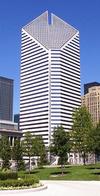 |
Modernism is the most common building style worldwide, evolved from the utilitarian forms introduced in the 19th century. Modernist buildings are generally simple in design and lack any applied ornament. Their architecture is basically a modification of the International Style but is less strict in its geometry. After about 1960, Modernism began to play more freely with shapes and structures, producing a wider variety of designs including cylindrical buildings, sloping roofs, and unusual shapes. This trend runs parallel to Postmodernism, which rebelled against the strictness of Modernism by reviving historical tropes; but during this period the aesthetic and economic advantages of simplicity kept Modernism alive in all parts of the world. |
|---|---|
 |
Futurism is the broad trend in modern design which aspires to create architecture of an imagined future, normally thought to be at least 10 years into the future. The beginnings of Futurism go back to the visionary drawings of Italian architect Antonio Sant'Elia, as well as the "Googie" architecture of the 1950's California and subsequent Space Age trends. Early features of Futurism include fins and ledges, bubble shapes and sweeping curves. The style has been reinterpreted by different generations of architects across several decades, but is usually marked by striking shapes, clean lines, and advanced materials. |
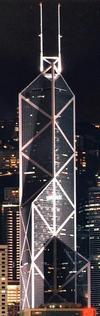 |
Structural Expressionism is also called "high-tech modernism". It is a specific branch of advanced Modernism in which buildings display their structural elements visibly inside and out. The larger design features are liberated by the possibilities of engineering, while detailing is generally faithful to the principles of the International Style. Common features include detached frames, exposed trusswork, and highly complex shapes requiring unusual engineering. Structures in this style tend to be metallic, in contrast to older brutalist styles which employs the use of concrete. |
Of course, these styles are predominently commercial type structures but can be incorporated into residential architecture without being overbearing and unartistic.
Here are some other historical styles more familiar in the Raleigh, NC area:
1. State Capitol Building (1840)
Union Square
The cornerstone of this Greek Revival masterpiece was laid in 1833 and the building completed in 1840. It was designed by Ithiel Town, A.J. Davis Paton. The granite used in its construction was excavated from a local quarry.
2. First Presbyterian Church (1900)
112 South Salisbury Street
The brick church is a rare surviving example of the Romanesque Revival style in Raleigh. The congregation was among the earliest in the city, organized in 1816 by Reverend William McPheeter, who was then serving as "Pastor of the City."
3. Odd Fellows Building (1924)
19 West Hargett Street
This eleven-story structure was build in 1923-24 by the Grand Lodge of the I.O.O.F., a men's fraternal organization. The building exemplifies the Chicago style (three façade segments, imitating the base, shaft, and capital of a classic column). Brick facades are highlighted by terra-cotta and limestone ornamentation.
4. Raleigh Banking and Trust Building (1913-1936)
5 West Hargett Street
This is the only tall office building in the city which has undergone an architectural change of style. Its first three floors were built in 1913 with classical detailing. The upper eight floors were added in 1928-29 in a more streamline style. The lower floors were remodeled in 1935-36 to complete the Art Moderne look.
5. Masonic Temple (1907)
133 Fayetteville Street Mall
Designed by Charles McMillan, this downtown landmark is perhaps the state's oldest surviving steel-reinforced concrete building. Indiana limestone clads its first three floors, with tan brick and decorative terra-cotta covering the upper stories.
6. Briggs Hardware Building (1874) and Raleigh City Museum
220 Fayetteville Street Mall
The red brick Briggs Hardware building is the only late nineteenth-century commercial downtown building to survive essentially unchanged since its construction. This was Raleigh's first skyscraper, and at one time the tallest building from Raleigh to the coast. The building's first floor houses Raleigh City Museum; its upper floors were recently converted into offices.
7. Capital Club Building (1930)
100 Fayetteville Street Mall
Built in 1929-30, this twelve-story structure was constructed by a prominent men's organization. Pairing classical form with Art Deco accents, the building visually expresses the propriety and high hopes of the 1920s. It underwent a thorough restoration in the mid-1980s.
8. Century Post Office (1874)
314 Fayetteville Street Mall
The associates of Alfred P. Mullet, supervising architect of the U.S. Treasury Department, designed this distinctive stone structure, the first federal project in North Carolina following the Civil War.
9. Wake County Courthouse (1970) and Office Building (1942)
336 Fayetteville Street Mall
This, the newest Wake County Courthouse, was constructed on the same site as several previous courthouses. The modern structure was designed by Alsen Associates. The fifteen-story Art Deco style office building next door was designed by architectural firm of Northrup and O'Brien, and originally housed the Durham Life Insurance Company.
10. Sir Walter Hotel (1924)
400 Fayetteville Street Mall
Once known as the "Second State House" because so many legislators gathered there, the ten-story Neoclassical Revival style building was long a center of Raleigh's social scene. The hotel was renovated as apartments for the elderly in the late 1970s.
11. Raleigh Convention and Conference Center (1977)
500 Fayetteville Street Mall
This modern facility, the south anchor to Fayetteville Street Mall, was designed by Odell and Associates. It accommodates conventions, exposition and community events. The building was significantly enlarged in 1997, and will be torn down in late 2005 to make way for a brand new convention center and Marriott hotel on the block immediately west.
12. BTI Center for the Performing Arts & Memorial Auditorium
2 East South Street
A new day for the performing arts dawned in Raleigh with the opening of the BTI Center for the Performing Arts. Three new theaters join Memorial Auditorium to offer an additional 2,470 seats daily for arts lovers of the Triangle to experience the magical and the glorious. With the addition of Fletcher Opera Theater, Meymandi Concert Hall and Kennedy Theater, Raleigh is taking the performing arts to magnificent new heights.
13. Shaw University (founded 1865)
118 East South Street
Shaw Collegiate Institute was established at the conclusion of the Civil War by Union Army veteran Henry Martin Tupper to provide education for African-Americans. In 1870, Mr. Tupper bought land for the school with $5,000 donated by Elijah Shaw, a Massachusetts textile manufacturer. The students built the original buildings with bricks that they made from the red clay found on the campus .
14. Rogers-Bagley-Daniels-Pegues House (c. 1855)
125 East South Street
This two-story Greek Revival frame structure is one of the few surviving antebellum homes in the southern part of the city. It has been the residence of Congressman Sion H. Rogers, Legislator William Henry Bagley, journalist Josephus Daniels and educator Albert W. Pegues.
15. City Market (1914)
200 Block East Martin
A new city market was needed to replace the old one in Metropolitan Hall on Fayetteville Street, when sanitation had become a major concern there. James Matthew Kennedy designed the new building in the Spanish Mission style. Today it is the anchor of a revitalized area of specialty shops and restaurants.
16. Moore Square (est. 1792)
The oak-and-evergreen-shaded four-acre park was part of Senator William Christmas' original plan to have a park in each quadrant of the city, equidistant from the Capitol. At the southern edge of the park is the permanent home of the giant copper acorn that serves as a symbol of the city.
17. Tabernacle Baptist Church (1881-1909)
219 East Hargett Street
The picturesque appearance of this late Gothic Revival church stems from the combination of three square towers and two gable-roof block, the result of six remodelings between 1881 and 1909. Raleigh architect James Matthew Kennedy is primarily responsible for the church's asymmetrical, yet balanced appearance.
18. Exploris (1999)
201 East Hargett Street
The 84,000-square-foot museum, with its striking architectural features, is the first and only museum about the world. Six permanent exhibits highlight environmental issues, population, technology and cultural geography, specifically designed for young people ages 8 to 14, and families.
19. Montague Building (1912)
128 East Hargett Street
The Montague Building, a combination of the Neoclassical Revival and Commercial styles, was the first large commercial building erected near Moore Square.
20. Heilig-Levine Building (c. 1870)
137 South Wilmington Street
Built in the Italianate style, what was once a downtown hotel is now a furniture store, restaurant and office building.
21. Horton-Beckham-Bretsch House (c. 1890)
11 South Blount Street
This one-story Eastlake style wood-frame building was relocated and restored for office use by the Historic Preservation Fund of North Carolina, Inc. (now Preservation North Carolina).
22. White-Holman House, "White Hall" (c. 1799)
209 East Morgan Street
This house, transitioning between Georgian and Federal styles of architecture, was built for Secretary of State William White. A two story, Queen Anne style wing was added in the 1890s.
23. Montgomery House (1906)
212 New Bern Avenue
Judge Walter A. Montgomery, a state Supreme Court justice, built this two-story frame house with classical detailing in the 100 block of East Edenton Street. It was moved in 1982 to it present location.
24. Haywood Hall (c. 1799)
211 New Bern Avenue
Built for John Haywood, State Treasurer for forty years, Haywood Hall remained home to Haywood descendants until 1977. The late Georgian/early Federal style house was then bequeathed to the state Society of Colonial Dames, which maintain it and its four dependencies as a house museum.
25. State Bank of North Carolina (1833)
123 New Bern Avenue
Raleigh's oldest surviving financial building was built in the Greek Revival style. Later used by Christ Church as a rectory, it was moved 100 feet southeast to its present location in 1968. The building is now occupied by the State Employees Credit Union.
26. Christ Episcopal Church (1854)
120 East Edenton Street
Christ Episcopal exemplifies the Early English style of Gothic architecture. Richard Upjohn, founder of the American Institute of Architects, designed the granite church. The stone bell tower was added 1861. Christ Church was designated a National Historic Landmark in 1988.
27. Richard B. Haywood House (1854)
127 East Edenton Street
The Greek Revival brick residence was designed by Richard B. Haywood, a founder of the North Carolina Medical Society. The outstanding feature of the house is its superb Doric porch. Still occupied by members of the Haywood family, it is the only private residence in the Capitol Square Historic District on its original foundation.
28. North Carolina Museum of History (1994)
2 East Edenton Street
A modernist counterpoint to the classically inspired government buildings near it, the building features a soaring lobby and multiple exhibit halls. Richard Petty's NASCAR race car and the smokestack from the Confederate ironclad "Albemarle" are among the artifacts on display.
29. Agriculture Building (1923)
2 West Edenton Street
Local architects Murray Nelson and Thomas W. Cooper designed this imposing Neoclassical Revival style building, the permanent home of the State Department of Agriculture. The rear wing, added in 1950, formerly housed the state Museum of Natural Sciences.
30. Labor Building (1888)
4 West Edenton Street
State Penitentiary Warden Col. William J. Hicks supervised convict labor and used convict-made bricks to achieve this architectural design created by A.G. Bauer. The original purpose of this building was to house the State and Supreme Court libraries. Offices of the Department of Labor have been in this building since the 1920s.
31. First Baptist Church (1859)
99 North Salisbury Street
Designed by English architect William Percival, the First Baptist Church is variant of the Gothic Revival style. The symmetrical brick structure is stuccoed and scored to give the appearance of stone. The church is one of four ecclesiastical anchors of Union (Capitol) Square.
32. North Carolina Museum of Natural Sciences (2000)
11 West Jones Street
This modern structure was designed by Durham architect Robert W. Carr. A reconstructed 40-foot long Acrocanthosaurus dinosaur skeleton is the focal point of the museum's glass-enclosed galleria. Other exhibits include whale skeletons, North Carolina wildlife dioramas, gemstone collections and more.
33. State Legislative Building (1963)
16 West Jones Street
This is the meeting place of North Carolina General Assembly. The building designer, Edward Durell Stone, incorporated outdoor courtyards and gardens into this concrete and marble Formalist-style building.
34. Executive Mansion (1891)
200 North Blount Street
The Queen Anne style mansion was designed by Philadelphia architect Samuel Sloan and his assistant, A.G. Bauer. Elaborate Eastlake style verandahs accent this beautiful home of the Governor and the state's First Family.
35. Andrews-London House (1918)
301 North Blount Street
The Andrews-London House is a fine example of the Georgian Revival style. Designed by James A. Alter, this 2-1/2 story brick house, with its magnificent interior detailing, is home to the Capital Area Visitor Center.
36. Heck-Andrews House (1870)
309 North Blount Street
Architect G.S.H. Appleget designed this house for industrialist Jonathon McGee Heck. The Second Empire style house is capped by a mansard roof and a dramatic central tower. The patterned slate and ornate brackets, window surrounds, and porch posts makes this one of Raleigh's most distinctive Victorian houses.
37. Henry Clay Oak (marker)
Northwest Corner of Blount Street/North Street intersection
Under the great white oak that stood on this site, Presidential candidate Henry Clay is said to have written the famed "Raleigh Letter" which may have cost him the election of 1844. Expressing his opposition to statehood for Texas he was reported to have said, "I would rather be right than President." Disease finally took its toll on the ancient oak; a bronze marker stands in its place.
38. Andrews-Duncan House (1874)
407 North Blount Street
G.S.H. Appleget designed this symmetrical Italianate home for Confederate captain and railroad executive Alexander Boyd Andrews. The original stable, with it steep hip roof surmounted by a cupola, is located to the rear of the house. The buildings are now used for state offices.
39. Higgs-Coble-Helms House (1878)
417 North Blount Street
The overall design of this two-story, wood-frame house is Italianate, but is has the asymmetrical composition typical of the Queen Anne style. The second-story windows are capped by pedimented surrounds supported by brackets, a design echoed throughout the house. The building also features the only tin roof on North Blount Street.
40. Lewis-Smith House (c.1855)
515 North Blount Street
The Lewis-Smith House is an excellent example of Greek Revival style, with its two-story pedimented portico supported by Doric columns on the first level and Ionic columns on the second. It is one of the few remaining antebellum houses in Raleigh. The house was moved from its original location on North Wilmington Street in 1974.
41. Merrimon House/Wynne Hall (1876)
526 North Wilmington Street
This boldly ornamented Italianate villa features full-length segmental arch windows and ornate porches. It was originally the residence of Augustus Merrimon, judge, senator and state Supreme Court justice, and later of Stanley Wynne, whose wife deeded the property to Peace College in 1919. It was later sold to the state which converted it into offices in 1975.
42. Peace College Main Building (c. 1860)
15 East Peace Street
Name for William Peace, who contributed eight acres and $10,000 toward the establishment of a Presbyterian school for girls, Peace Institute was chartered in 1857. When the main building was only half-finished, the Confederate Army used it as a hospital. After the war, it housed the Freedmen's Bureau, where freed blacks could get food and health services. During Reconstruction, the founder of Shaw University, Henry Tupper, created a stock corporation to reclaim the land for use as a girls' school. Today the school offers both baccalaureate and associate degrees to women.
43. Dr. Hubert Benbury Haywood House (1916)
634 North Blount Street
This is a locally rare interpretation of the "Prairie" architectural style popularized by Frank Lloyd Wright. The house was significantly expanded in 1928, but has remained virtually unchanged since.
44. Leonidas L. Polk House (1881)
612 North Blount Street (rear yard)
The Shingle style Polk House is significant primarily for its builder. Leonidas L. Polk was an influential agricultural leader who founded Progressive Farmer magazine (parent of today's Southern Living) and urged the establishment of the North Carolina College of Agriculture and Mechanic Arts, which became North Carolina State University. The house was moved from North Person Street to its present site in the 1960s. Plans call for relocating the building again, to the 500 block of North Blount Street.
45. Gray-Fish-Richardson House (1881)
530 North Blount Street
The eclectic details of this 2 ½ story residence draw from several late 19th-century architectural styles. It now serves as a bed and breakfast inn.
46. Capehart House (1898)
424 North Blount Street
Lucy Catherine Moore Capehart, daughter of a prominent state legislator, had this imposing tan brick house built on then-fashionable North Wilmington Street. Designed by A.G. Bauer, it is one of the finest examples of Queen Anne style architecture remaining in Raleigh. It was moved to its present site by the state and the Historic Preservation Foundation of North Carolina in 1979.
47. Lee House (1899)
422 North Blount Street
This two-story house features details and characteristics of the Neoclassical Revival style. Its wrap-around porch is supported by slender Ionic columns; the pedimented front entry is particularly noteworthy.
48. Murphey School (1916)
443 North Person Street
Designed by James Kennedy, architect of the City market, this 1916 structure is the oldest standing public school building in Raleigh. In 1960, the school became the testing ground for desegregation in the city. The first black child to attend was William Campbell, who later became Mayor of Atlanta. In the 1980s, the building was adaptively renovated by the city into apartments for senior citizens.
49. Tucker House (1915)
418 North Person Street
This impressive, Neoclassical style house was the home of G.S. Tucker, owner of Tucker Furniture Co. Originally located directly west on Blount Street, the building was moved to its present location when the state began developing the Halifax Street Government Mall. Now owned by the city, it serves as a community center and can be rented for special occasions.
50. Hawkins-Hartness House (c. 1882)
310 North Blount Street
According to tradition, this house was built as a surprise gift by Dr. William J. Hawkins for his brother and sister-in-law, Dr. and Mrs. Alexander B. Hawkins. Mrs. Hawkins had the 92-foot Eastlake verandah added to soften the towering brick façade.
51. Bailey-Bunn House (1922)
302 North Blount Street
This two-story Georgian Revival style house was built in the side yard of the Hawkins-Hartness House for Mr. Hawkins' niece, Martha Hawkins Bailey. It is now the state headquarters for the United Daughters of the Confederacy.
52. Raleigh and Gaston/Seaboard Coast Line Railroad Building (c. 1862)
413 North Salisbury Street
One of the city's earliest surviving office buildings, the Italianate, three-story structure served as railroad office for over 100 years. The building was moved by the state from North Halifax Street to its present location in 1977.
53. North Carolina School for the Blind and Deaf Dormitory (1898)
216 West Jones Street
This Chateauesque style building was designed by Frank P. Milburn and stands on Caswell Square, one of the five public squares in the city's original 1792 plan. Only this building remains of the first state-supported School for the Blind and Deaf in North Carolina. It is now used by the state for offices.
54. Edenton Street United Methodist Church (1958)
228 W. Edenton Street
This is the fourth building on the same location for this church, which was founded 1811 and sent the first Methodist missionary, Melville B. Cox, to Liberia in 1833.
55. Dr. Andrew Watson Goodwin House (1903)
220 Hillsborough Street
Significant as a vestige of this formerly residential street, this grand Neoclassical Revival house was the home of a prominent local physician. Dr. Andrew Watson Goodwin taught medicine at Shaw University Leonard Medical School and was chief physician at St. Agnes Hospital (at St. Augustine's College). Today the building serves as the state Democratic Party Headquarters.
56. Sacred Heart Cathedral (1924)
200 Hillsborough Street
This Late Gothic Revival building, designed by Reverend Father Michael. S. B., of Belmont Abbey, is perhaps the smallest cathedral in the United States. The surrounding complex also includes a rectory (1917), Dominican convent (1927), and a school building (1938).
57. All Saints Chapel of the Church of the Good Shepherd (1875)
125 Hillsborough Street
All Saints Chapel, a one-story board-and-batten Carpenter Gothic building, was planned by the Reverend M. Ortel as the original home of the Church of the Good Shepherd, whose members left Christ Church in opposition to the selling of pews.
58. Raleigh Water Tower (1887)
115 West Morgan Street
Originally topped by a water tank, this octagonal brick tower, with a small two-story office building attached, was built to supply Raleigh's water needs. It became Raleigh's first example of adaptive use of a historic property in 1938 when architect W. H. Deitrick converted it to use as his office. It now serves as the headquarters for the N.C. Chapter of the American Institute of Architects.
59. Raleigh Police Headquarters and Municipal Building (1960/1983)
200 block West Hargett Street
The complex houses city government administration. The complex was named for late Mayor Avery C. Upchurch in 1994. The McDowell Street building was designed in the International style. The parking deck and municipal building were completed in 1983.
60. Nash Square (1792)
One of the original five squares from the William Christmas plan, this (with Moore Square) is one of the two that remain without buildings. Its present landscape design, implemented with Works Progress Administration funds, dates from 1940.
61. Dodd-Hinsdale House (1879)
330 Hillsborough Street
The Victorian home of Raleigh Mayor William H. Dodd and later of attorney and legislator John W. Hinsdale sports and Italianate bracketed cornice, a Second Empire style mansard-roofed tower, and an ornate Eastlake porch. The house narrowly escaped the wrecking ball in the 1970s and 1980s. It is now renovated as a restaurant, The Second Empire.
62. St. Paul A.M.E. Church (1910)
402 West Edenton Street
The church building is an example of High Victorian Gothic Revival architecture. The church was established in 1849 when members withdrew from Edenton Street Methodist Church to form the first separate black congregation in Raleigh. The current brick church was built on the site of two previous church buildings. An education building, emulating the sanctuary's architectural style, was added in 1998.
63. Elmwood (c. 1813)
16 N. Boylan Avenue
Elmwood, a two-and-one-half story frame residence, has been home to many distinguished North Carolinians including two Supreme Court chief justices, an associate justice, an ambassador and a historian. The house, which displays many federal-period characteristics, is now used as offices.
64. Tucker Carriage House (Late 19th Century)
16 St. Mary's Street
This rare Shingle Style dependency survived when the grand Tucker Mansion that it served was demolished in 1968. The building displays unusually detailed features for an outbuilding, including patterned shingle walls and a multi-colored slate roof. Today it is the home of an arts organization.
St. Mary's School (founded 1842)
900 Hillsborough Street
Raleigh's oldest private educational institution for girls is located on approximately 160 acres. Its earliest buildings, East and West Rock, were built from stone quarried for construction of the State Capitol. The school chapel was designed by Richard Upjohn, architect of Christ Episcopal Church.
Whitaker-Castleberry House (1875)
79 Hillsborough Street
This two-story Queen Anne style brick building is an example of the elegant homes that once lined Hillsborough Street. Builder Joel Whitaker was a Raleigh businessman who also operated Whitaker's Mill on Crabtree Creek.
Joel Lane House (c. 1760)
728 West Hargett Street
Wakefield, the gambrel-roofed home of Colonel Joel Lane, has been restored to its 1790-95 appearance by the Society of Colonial Dames. Colonel Lane became known as the "Father of Raleigh" after he sold 1,000 acres of land to the state in 1792 to establish a permanent state capitol.
Monfort Hall (1858)
308 South Boylan Avenue
Designed by William Percival, this antebellum Italianate style plantation home of prominent citizen William Monfort Boylan is a landmark at the northern entrance to the Boylan Heights Historic District.
Historic Oakwood (1870-1912)
A Victorian neighborhood listed on the National Register of Historic Places, with restored homes built between 1870 and 1912. This 20-block area may be enjoyed by driving or walking. Self-guided walking tour brochures available at Capital Area Visitor Information (#65/#28 on the map). Bordered by Franklin, Watauga, Linden, Jones and Person Streets.
Mordecai Historic Park/President Andrew Johnson's Birthplace
Featuring an antebellum plantation house museum that was home to five generations of the same family, plus other historic structures grouped together along a "village street," providing a unique glimpse into 19th-century Raleigh life. Seventeenth U.S. President Andrew Johnson's birthplace also is preserved here.
Copyright 2005
Xtreem Designs
1017 Limeberry Court
Clayton, NC 27520
