
Materials and Methods
Varieties of different materials and methods have been used over the past fifteen years in the study of Celiac disease. The earliest studies were conducted as case studies of individuals who exhibited symptoms of Celiac. In recent years, the methods have evolved from simple case studies to elaborate research projects that are being completed by the world’s top academic and medical institutions. Researchers at the Institute of Molecular Medicine and Gastroenterology at John Radcliffe Hospital, Oxford University used human cases with an antigen challenge in their study of Celiac. The study invited sixteen individuals, three of which served as control because they lacked the defunct HLA DQ2 antigen, to participate by voluntarily ingesting gluten on a daily basis. PCR was used to determine the genotype of each individual, while techniques and equipment such as mass spectrometry, HPLC, SDS-PAGE, Ficoll-Hypaque density centrifugation, ELISPOT assays, and an Applied Biosystems Procise protein sequencer were used to conduct the analysis.
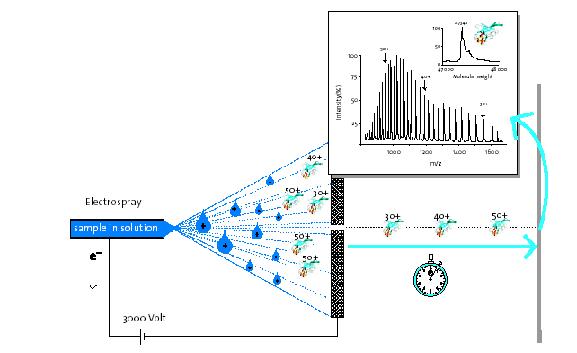
Researchers at the Leiden University Medical Center in the Netherlands have recently studied the link between common cereal grains and Celiac disease. The symptoms of Celiac only present themselves after the ingestion of the protein gluten, which is typically found in a variety of grains. In this experiment, it was attempted to find a correlation between several different types of grain, which contain different compositions of amino acids and the onset of Celiac disease. Researchers used synthesized peptides that were verified for purity by HPLC and mass spectrometry. The peptides were then treated with tissue transglutaminase and incubated. The treated peptides were again visualized using electrospray ionization mass spectrometry. The thumbnail picture below shows a diagram of electrospray technology, click on it to see a full view. T-cell clones from Celiac patients were used again in T cell proliferation assay.
The research team at Stanford has conducted its research with the goal of finding a cure for Celiac disease that would take the form of an oral vaccination or daily supplement. Therefore, their research has focused on the understanding of the relationship between tissue transglutaminase, the gliadin epitopes and the t-cell response. Techniques employed have been relatively similar to those used by other such as mass spectrometry and HPLC; however, they have also employed a combination technique that couples liquid chromatography with mass spectrometry and ultraviolet spectroscopy (LC-MS/MS/UV). Human tissue biopsies and rat tissue were treated with digestive enzymes and the results were analyzed using the previously mentioned technique. Another research project is underway at the University of Oslo that is working in conjunction with the ongoing project at Stanford. Much of the research at Stanford is based on the findings of the earlier work conducted at the University of Oslo, which used similar techniques to those used at Stanford. The most important difference was the use of recombinant technology to produce the gliadin peptides used in the experiment. SDS-PAGE, HPLC, and anion exchange chromatography were used in the purification and the quantification of purity of the proteins. The tissue transglutaminase was also produced using recombinant technology. The gliadins were digested using pepsin, trypsin and chymotrypsin, placed in culture with the tTG, gliadin specific T-cells and biopsies from patients exhibiting Celiac disease. Proliferation and binding assays were also used to determine the binding proliferation and binding affinity of the HLA DQ2
To learn about the results of the experiments click here.
To return to the Welcome page click here.
Feel free to email me with any questions!!

