Introduction
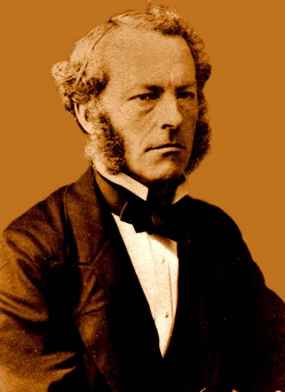 The history behind fluorescent lighting (which ultimately
led to the understanding and invention of black lights) dates
back to the mid 1800s when British physicist and mathematician
George Stokes began his study pertaining to this light emitting
phenomenon. In 1852 Stokes was credited with the discovery
proving that within certain substances fluorescence could be
induced by stimulation with ultraviolet light. Later he formulated
a theory of great magnitude that would become influential
in both his understanding of the subject matter, and future
understandings as well. Stokes' law, as it is known, states that
in fluorescent light the wavelengths are greater than that of
exciting radiation.
In the links provided one can find information pertaining
to fluorescent lighting, and in particular, black lights.
Likewise, provided are examples that would allow one to gain a
greater understanding of the ways in which fluorescent lighting and
black lights can have, and have had, beneficial impacts within
our society.
While the technicalities described go into great detail to
provide a comprehensive explanation of the specifics behind this
science (which may be somewhat confusing), one should pay particular
attention to key terms and ideas that relate specifically
to the discipline of physics. Simplify if you will! As a complete
understanding of the science behind black lights and fluorescent
lighting may be a difficult concept to initially grasp, although
we’ll try to help you with that, an understanding can be made easier
if looked upon with the mindset that fluorescence is nothing more
than a system of smaller and more easily understood concepts. If
some of the specifics that relate more directly chemistry are
temporarily ignored, fluorescent lighting and black lights can be
broken down into nothing more than simplified ideas of visible light
and wavelengths, magnetism (as it can be found in the engineering of
certain fluorescent lights), and the conservation and transformation
of both matter and energy.
*Introduction*|Physics of Blacklights|Question 1|Question 2|Links|Conclusion|Works Cited|People
The history behind fluorescent lighting (which ultimately
led to the understanding and invention of black lights) dates
back to the mid 1800s when British physicist and mathematician
George Stokes began his study pertaining to this light emitting
phenomenon.  In 1852 Stokes was credited with the discovery
proving that within certain substances fluorescence could be
induced by stimulation with ultraviolet light.  Later he formulated
a theory of great magnitude that would become influential
in both his understanding of the subject matter, and future
understandings as well.  Stokes' law, as it is known, states that
in fluorescent light the wavelengths are greater than that of
exciting radiation.

In the links provided one can find information pertaining
to fluorescent lighting, and in particular, black lights.
Likewise, provided are examples that would allow one to gain a
greater understanding of the ways in which fluorescent lighting and
black lights can have, and have had, beneficial impacts within
our society.

While the technicalities described go into great detail to
provide a comprehensive explanation of the specifics behind this
science (which may be somewhat confusing), one should pay particular
attention to key terms and ideas that relate specifically
to the discipline of physics.  Simplify if you will! As a complete
understanding of the science behind black lights and fluorescent
lighting may be a difficult concept to initially grasp, although
we’ll try to help you with that, an understanding can be made easier
if looked upon with the mindset that fluorescence is nothing more
than a system of smaller and more easily understood concepts.  If
some of the specifics that relate more directly chemistry are
temporarily ignored, fluorescent lighting and black lights can be
broken down into nothing more than simplified ideas of visible light
and wavelengths, magnetism (as it can be found in the engineering of
certain fluorescent lights), and the conservation and transformation
of both matter and energy.


*Introduction*|Physics of Blacklights|Question 1|Question 2|Links|Conclusion|Works Cited|People

