|
|
 |
| Brazil | Ecuador |
| Bolivia | Peru |
| Colombia | Venezuela |
|
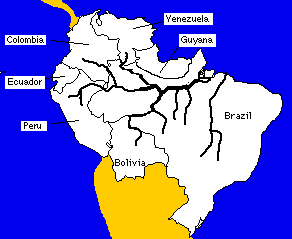
All these countries contain parts of the drainage basin of the Amazon. All are altering it in ways which may prove harmful. The pre-colonial pattern of the rainfall was that moist air drifted west from the Atlantic and dropped its water as rain over the areas closest to the Ocean. From there most of it evaporated into the air which drifted further west and dropped it again. It is the trees which cause the evaporation. The rain which falls in the west of the Amazon basin has fallen many times and transpired through the vegetation. Cutting the forest interrupts this process. It is possible to imagine a treeless Amazon basin in which all the rain falls on the Atlantic coast and drains back into the ocean at once. The interior would then become a dry desert. The coastal plain would rapidly lose its topsoil to the heavy rain. This process has begun and the rainfall pattern has already changed, though it has not yet reached the extreme imagined. Probably it is the cause of the increasing aridity and poverty of the Brazilian Nord Este. If more than a certain percentage of the forest is cut down the climate could change rapidly. The Amazon is believed to affect the climate in other parts of the world but there are so many variables that it is not possible to predict the effects of changing it. Any change is likely to be bad. For example, there have been more frequent frosts in southern Brazil (the coffee growing area) in recent years. This has had a serious effect on the coffee industry. So far it is estimated that 11% of the forest has been destroyed. This is not yet fatal. Droughts Then there was another drought in 2010. Is this a sign of climate change? Almost certainly.
| Betty
J Meggers - Amazonia  Amazonia: Man and Culture in a Counterfeit Paradise  |
 South America
 Americas
 World Info

