| Do not walk barefoot. |
| Always wear proper fitting seamless socks with extra
depth shoes for protection.
|
| Never use tight fitting socks or stockings. |
| Do not trim calluses or thickened nails on your
own especially if you have altered sensations in your feet. |
| Always check the temperature of water before putting
your feet in the water. |
| Apply good lotion to your feet and avoid getting
the lotion between your toes. |
| Dry well between your toes to prevent skin break
down. |
| Check your feet at least daily for any problems
such as signs of irritation or redness, sores, and bring it to the
attention of your podiatrist. |
| See your medical and podiatric doctors on a regular
basis to help avoid problems. |
| Control your diet. High blood sugars contribute
to complications of your diabetes. |
| Proper exercise and diet are important in controlling
your diabetic condition. |
| Wear the right footgear for the activity. |
| Check your shoes for foreign objects such as nails,
stickers, and toys that can injure your feet, Do not use
over the counter nail or callous products without checking with your
foot doctor first. |
| Trim your nails straight across if you do not have
numbness otherwise have your podiatrist trim them for you to avoid
problems. |
| Do not wear open toe or open back shoes or shoes
with straps. |
| Report any problems with your feet promptly to your
foot doctor to help avoid serious problems with your feet. |
| Check new socks, shoes, or othotics frequently especially
when new to make sure they are not causing irritation that could lead
to skin breakdown, ulcers, and infection or limb loss. |
| See your foot doctor with any questions or problems.
|
| Following these guidelines will help to prevent
amputations due to complications of your diabetes.
|
| Protect your feet…this is the only
set you get and they need to last a lifetime. |
Custom Diabetic orthotics
Custom diabetic orthotics are very helpful to protect feet. They can
provide functional control and protection. They are constructed to provide
some control of your foot function and protect your feet. These are
great in helping prevent calluses and ulcers from abnormal prominences
of the feet.
All people with diabetes, poor circulation, burning
or numbness in your feet or who have had previous ulcers absolutely
need to see their foot doctor before and after obtaining any type of
foot device including diabetic custom orthotics to prevent injury to
their feet that could lead to loss of their feet.
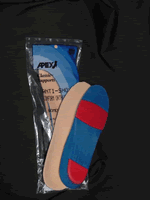 Apex
Anti-shox:
Apex
Anti-shox:
This is a high quality supportive type over the counter insert. It is
recommended especially for people with poor circulation or diabetes
as they offer excellent cushioning. They do not provide a large amount
of foot control.
All people with diabetes, poor circulation, burning
or numbness in their feet or who have had previous ulcers absolutely
need to see their foot doctor before and after obtaining any type of
foot device including diabetic custom orthotics to prevent injury to
their feet that could lead to loss of their feet.
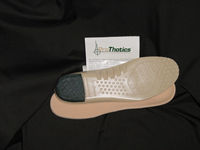 Prothotics
therapeutics:
Prothotics
therapeutics:
This insert is also a good aver the counter device
to offer protection and support.
Diabetic Foot Kit:
The diabetic foot care kit has items in it to check your feet. It is
especially made for individuals with diabetes, however can be utilized
by anyone with numbness in their feet or poor circulation. This kit
makes a wonderful gift. The kit can also help prevent ulcers that can
lead to amputations.

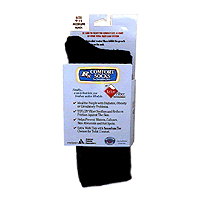
RX Comfort Socks:
The Rx comfort sock is a high quality seamless
sock, which does not bind and still stays in place. We strongly recommend
diabetic individuals to wear socks such as these socks. The reason these
are needed is to protect feet that have poor circulation and/or numbness
to reduce the risk of injury. You will find that these socks are very
comfortable and very effective in preventing injury to feet at risk.
Non-diabetic people will also find these socks excellent to wear.
Extra Depth Shoes:
All individuals with diabetes and or poor circulation should wear shoes
that provide sufficient room to accommodate the foot. Extra room needs
to be available for foot and to prevent irritation when wearing thick
socks and orthotics. The socks and orthotics should be purchased first
and then the shoes tried on for fit with the socks and orthotics toward
the end of the day to account for normal foot swelling.
Monitor your feet frequently with new socks, orthotics and or shoes
to protect your feet from skin breakdown. These shoes can be obtained
at foot stores that specialize in orthopedic shoes.
All people with diabetes, poor circulation, burning
or numbness in their feet or who have had previous ulcers absolutely
need to see their foot doctor before and after obtaining any type of
foot device including diabetic custom orthotics to prevent injury to
their feet that could lead to loss of their feet.