
Indian Traditional Dances

Kathak- A Classical Dance of Northern India
The origin of word
kathak, the major classical dance form of northern India, means "to
tell a story." It is one of the six major classical dances of India
and one of the most dynamic theater acts in the world. Kathak is derived from
the dance dramas of ancient India. It was primarily associated with an
institution known as the tawaif. It was a profession that demanded the
highest standards of training, intelligence and, the most important, civility.
It was common for royalty to send their children to the tawaifs for instruction
in etiquette. However, when the British got hold over India in 19th century,
this great institution was branded and outlawed. This caused the art form of
kathak to downfall that was not reversed until Independence when the interest in
traditional Indian art forms reawaked.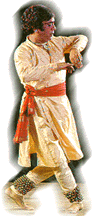
Nowadays, the story-telling aspect of kathak has been lowered and the dance is primarily an abstract exploration of rhythm and movement.
Manipuri- A Classical Dance of North-Eastern India
Manipuri,
the classical dance from the north East Indian state of Manipur, is performed
only on religious occasions and in temples throughout the area. Originally, this
dance style was called jogai, which means circular movement. In ancient
times, Manipuri was compared to the movement of the planets around the sun.
There is a characteristic style of music for Manipuri dance that is generally
similar to other northern Indian music. However, the style of presentation of
this dance is somehow different than others. Manipuri is unique among the
classical Indian dances because the instrumentation is a central part of the
dance, not only a side accompaniment. 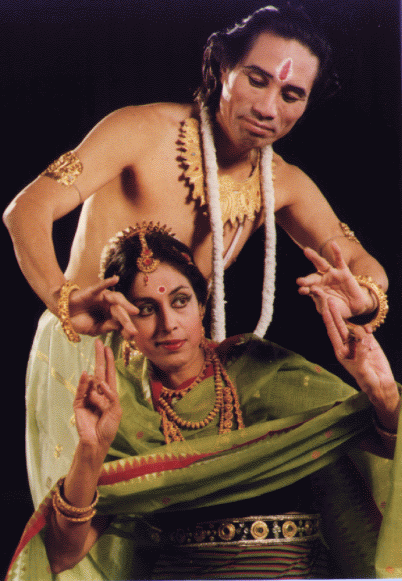
Currently, Manipuri is generally known as a classical dance form of very high artistic and technical standards.
Mohini Attam- A Feminine Dance of South-Western India
Mohini Attam is the feminine dance form of Kerala, a state in the south western part of India. It is known for its very sensual themes and extremely slow seductive quality. A typical costume is generally simple and white with a gold brocade or with a border of red. Mohini Attam is characterized by swaying moments of the upper body. It has only been in recent years that this dance style has risen in popularity. Over the past decades, the performance of Mohini Attam has been been developed and expanded by enthusiastic performers who have ensured that this beautiful dance style will keep its unique identity among the classical dance styles of India.
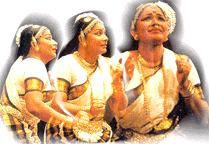
Apart from mythology, Mohini Attam contains a range of themes from nature.
