


Prepare The Dowel Rods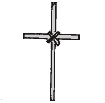
|
Notch the two wooden dowel rods(one 30" and one 24") at each end with a knife or scissors.(Adult assistance recommended) Measure down the 30" dowel and mark off 8". Measure down the 24" dowel and mark off 12"(the middle). Cross the pieces at right angles to form a plus shape at the two marks as shown to the left. Tie the two dowel rods together with string and then add some glue for strength and let it dry completely. |
Make A Frame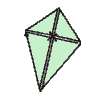
|
Run a string around the outside of the dowels, through the notched ends, to form a frame. Tie a knot in the string and then glue to hold securely. Measure and cut the fabric, allowing about an inch of overlap all the way around the frame. Then fold and attach the fabric over the frame by gluing, sewing, taping or stapling. There are many different materials you can use to make a covering for your kite. You can use old sheets, fabric reminants, newspaper, brown package wrap, old christmas wrapping paper, plastic garbage bags, cellophane or mylar. |
Attach The String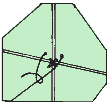
|
Poke two holes in the center of the kite. A little trick to keep the holes in the fabric from fraying, use hole reinforcements on each side of the fabric. Then tie a string loosely through the holes, coming back out the back of the kite. Attach your roll of kite string to this loop and add a fabric tail to your kite and all you need is a windy day ! |


Finished Kite
|
You can decorate your kite any way you wish, but be careful not to add too many things that weigh it down making it unable to fly. Big bold colorful designs work best so that you can see them far away. Most kites will spin if they don't have a tail. A tail keeps the kite balanced and upright. It's important to remember that wind resistance is the purpose of the tail, not weight. The friction of the wind blowing over the tail helps keep the kite upright. Make sure the tail is long, at least six times the width of the kite. Lightweight materials work best for better aerodynamics. |

