|
Guide to the Continent of Altir
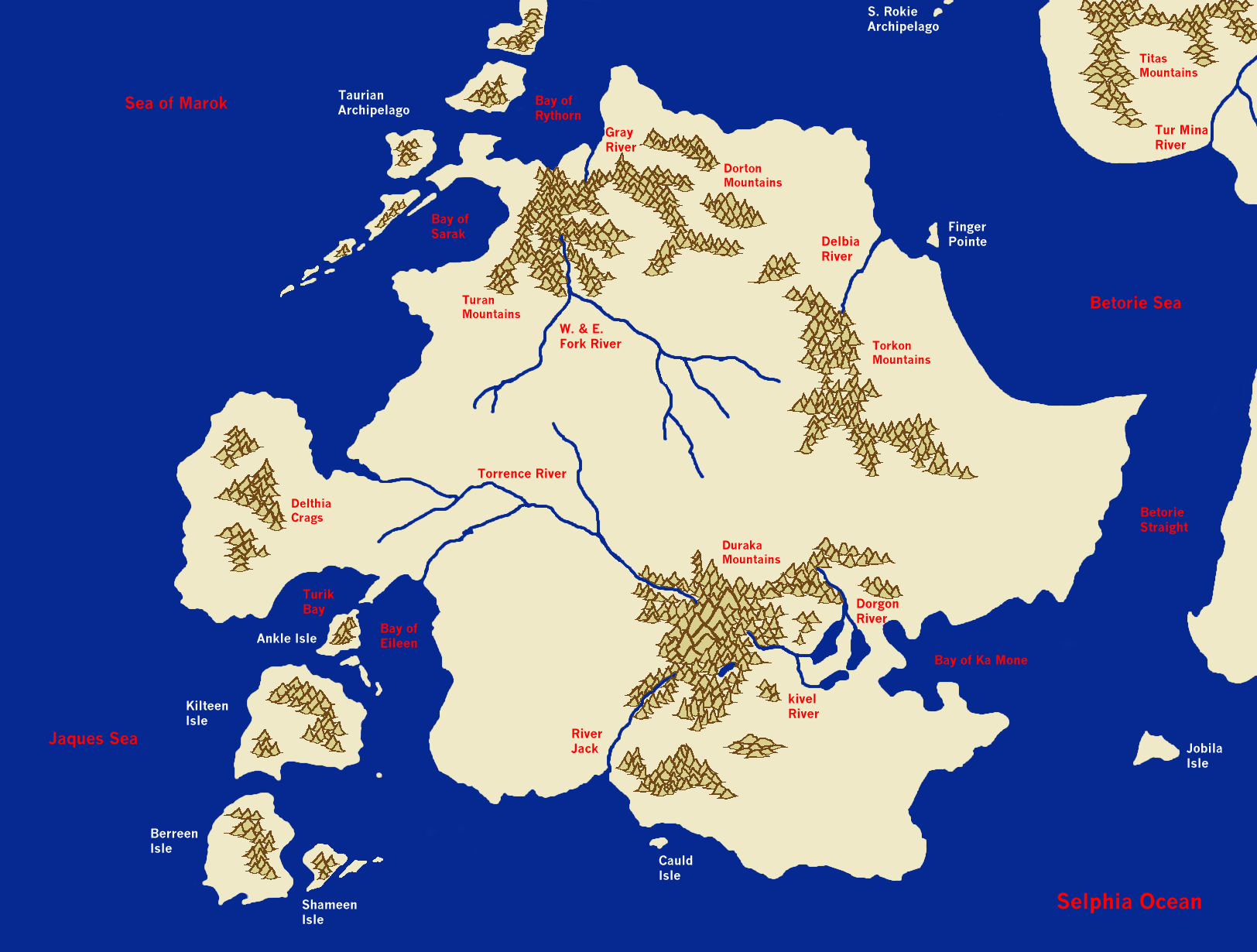
The purpose of this section is like a tourist’s guide to the ten regional sections of the World of Jade. It is a guide to the land formations and anomalies, plant and animal life, local races, best inns, smithies, and magic shops, guilds, and political nature of the region. It is easier to follow if you have the map window open.
NE Altir:
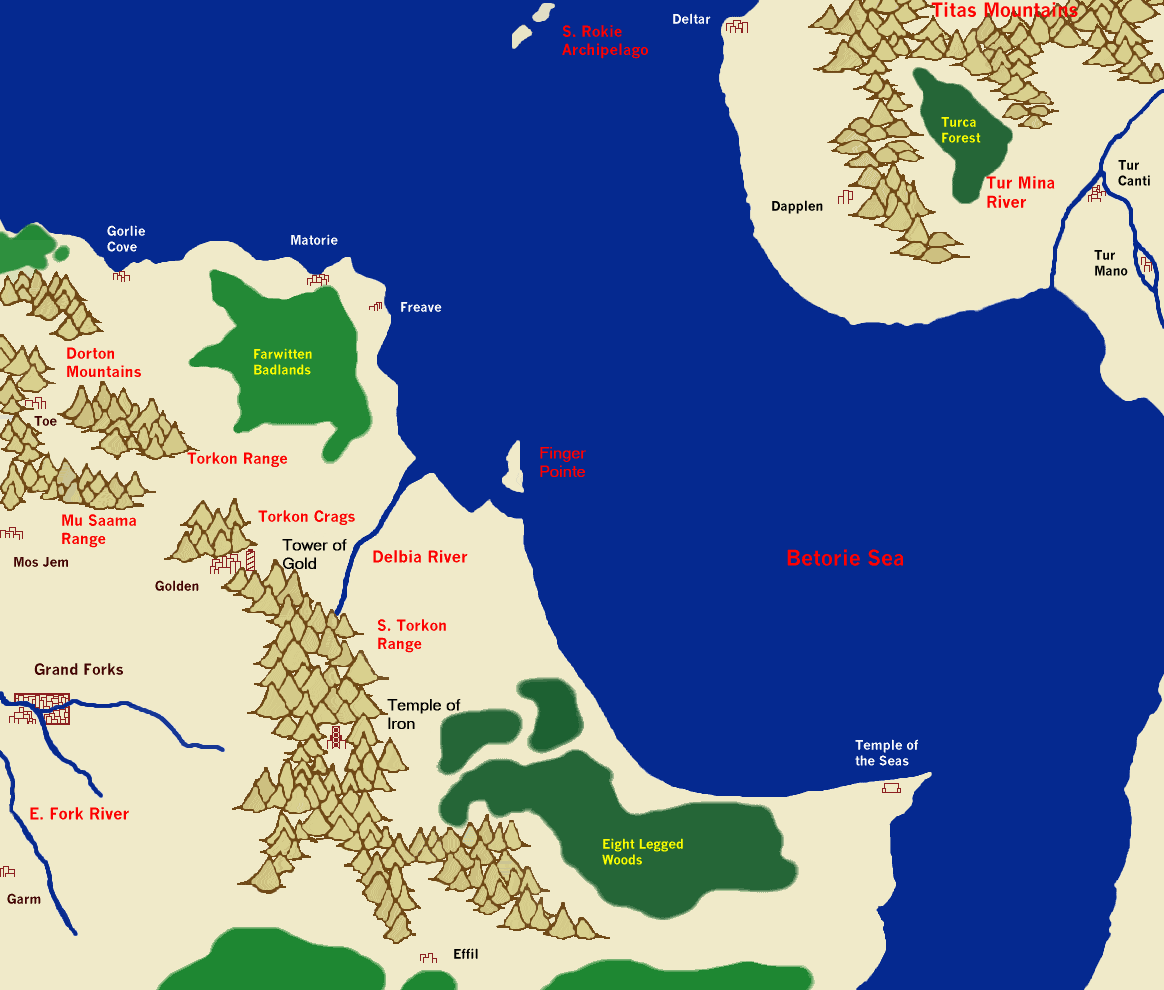
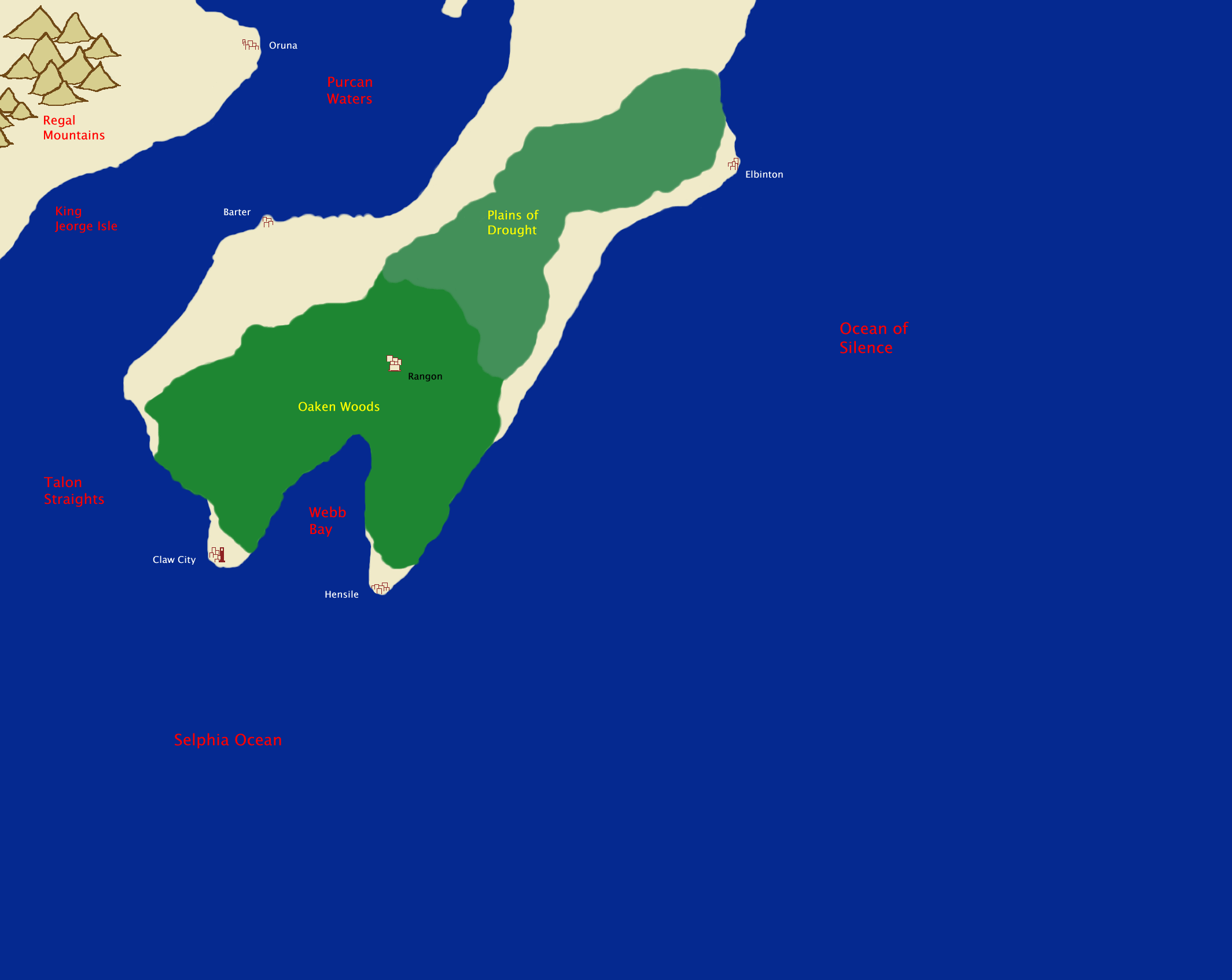
Landscape: Northeast Altir, despite the geographical placement of the continent has a vast array of land features. It is mostly flat or mountainous with little in the way of hills. Where the land ends, mountains or coastline begin. The mountain heights are nothing compared to others in the world, but they are sharp, jagged, often without snow (unless in the southern regions), and colored a tan-redish hue. The lands around them are more rocky and filled with man sized boulders and larger. The land itself, outside of its rocky nature becomes more and more fertile as one goes south with one exception and that is the Farwitten Badlands. This is by far the most fertile land in the region, possibly the continent, but it is rather wild and considered unworkable land for farming. The only true forest to note is the Eight-Legged Woods in the south. Further south, the land picks up smaller ranges of mountains, but they are few. Two large water sources split the land here, the Delbia and East Fork Rivers. These are relatively large rivers and require fording to cross. Only one bridge crosses either river and that is on the East Fork where the great city of Grand Forks is. Populated as much as it is, the landscape holds few inhabitants in any municipality. Grand Forks is the largest city in the area with Golden, and Matorie to follow. The smallest townships are Freave along the coast and Effil in the far south of this region. The land is known for its big mines of gold, silver, copper, and slagstones (dwarves call this garbage rock, but it is heavily used in making roadways). The weather of the region is rather dry and stays relatively warm in the winter seasons. It is so mild that it rains less than the soil demands. However, the Farwitten Badlands are the exception. This area appears to be milked in clouds in the winter and is far more dangerous then. Further south, the land will be dusted with snow, but more rarely is this seen. More often the rainy season hits then and resurfaces the land with rich green colors.
Plant and Animal Life: There are all kinds of plants and animals in this region. The most common forms of trees found are thick maples and rare families of oaks. These trees are inherent to the Eight-Legged Woods region in the south. Ash trees can be found in the north and west of the Dorton Mountains. The mountains themselves carry very little in the way of tree vegetation, but in the south in the Mu Saama and Torkon Ranges, cherry trees dot the few areas they can grow. The Farwitten Badlands however, tend to invent their own types of trees and odd forms of vegetation. Trees no taller than fifteen feet grow there, but they do carry great thorns all about them. Willows will dot the region, but in singular form. Never do willows grow near another. The vegetation there is limitless, but somehow always involves thorns or prickly types of bushes. Scraggy tumbleweed and tall grasses twice a man’s height and arm thick also fill the void of the Badlands. In the southwest of this region of Altir lay more fertile lands where great troves of fruit trees for oranges, grapefruits, peaches, lemons, and limes. Barley and wheat can also be found throughout the area of NE Altir. Animal life is simplistic, yet diverse. The working order begins with various forms of insects, mostly biting forms, and slowly moving their way up to the many swallows, pheasants, quail, weasels, ferrets, and open range hogs that run the areas. Deer are common, but antelope are the niche animal with hooves in the region. Natural predators include coyotes, an occasional fox, and many warm weather cats (lynx and cougar). Up further upon the ladder, dragonkin found in the region are Reds and Ruby (Reds are fire breathing and Ruby are lava breathing).
Common Humanoids: Most common in this portion of Altir are humans. Humans seemed to have inhabited this area in recent years and have had no true resistance because nothing really challenged them for the area. Following humans, centaurs are common in the Farwitten Badlands along with Satyrs and many other types of half man/beasts. Then there are Gnolls scattered throughout the mountain ranges, but are in very small clusters. Hobgoblins are the most common, no human race in the region. They however, live in the many cave regions near the Torkon Crags and the Southern Torkon Ranges. Tarantids and other forms of Arachnids live heavily in the Eight-Legged Woods. The spider beasts are usually giant in form and represent the menace in the forest.
Political Structure: NE Altir has very little political structure except in the cities of Grand Forks and Golden. Both have soldier municipalities that contribute to the protection of their cities and reconnaissance of the roadway between the two cities. Grand Forks rules the region near the East Fork River, but none have reign over any of the regions in NE Altir. No rulership or king lays claim to the area. The region is still heavily uninhabited.
Guilds: There are few guilds out in this region of Altir, but the few that are around include a Merchants Guild, Carpenters Guild, Builder’s Guild, Guild of the Golden Gauntlet, a small Thieves Guild, and Artist’s Guild.
Best Inns and Shops: The best and most well known Inns include: The Inn of the Red Dragon in Gorlie Cove, The Beaten Wand and the Golden Torch in Golden, Taggot’s Return in Mos Jem, the Inn of the Copper Trout, Kerkin’s Hammock, and the Inn of the Underground in Grand Forks. Effil has a small respite called the Keg and Cross, but it sleeps few and drinks many. Golden is known for its magic shops since it also has the most prestigious magic school. Three shops come to mind when entering Golden, the Lightning Twig, Gold Pots, and Harrik’s House of Horrors. In Grand Forks, it is more known for it’s smithies. Garth’s Anvil and the Dwarven Smelter are the largest and quickest to serve. Mos Jem boasts a great produce store known as Citrits. It is much like a local grocer. In Gorlie Cove, the Mill with no name is famous for it’s breads. Matorie carries a great fresh fish shop that is called Jasper’s Fish House.
NW Altir:
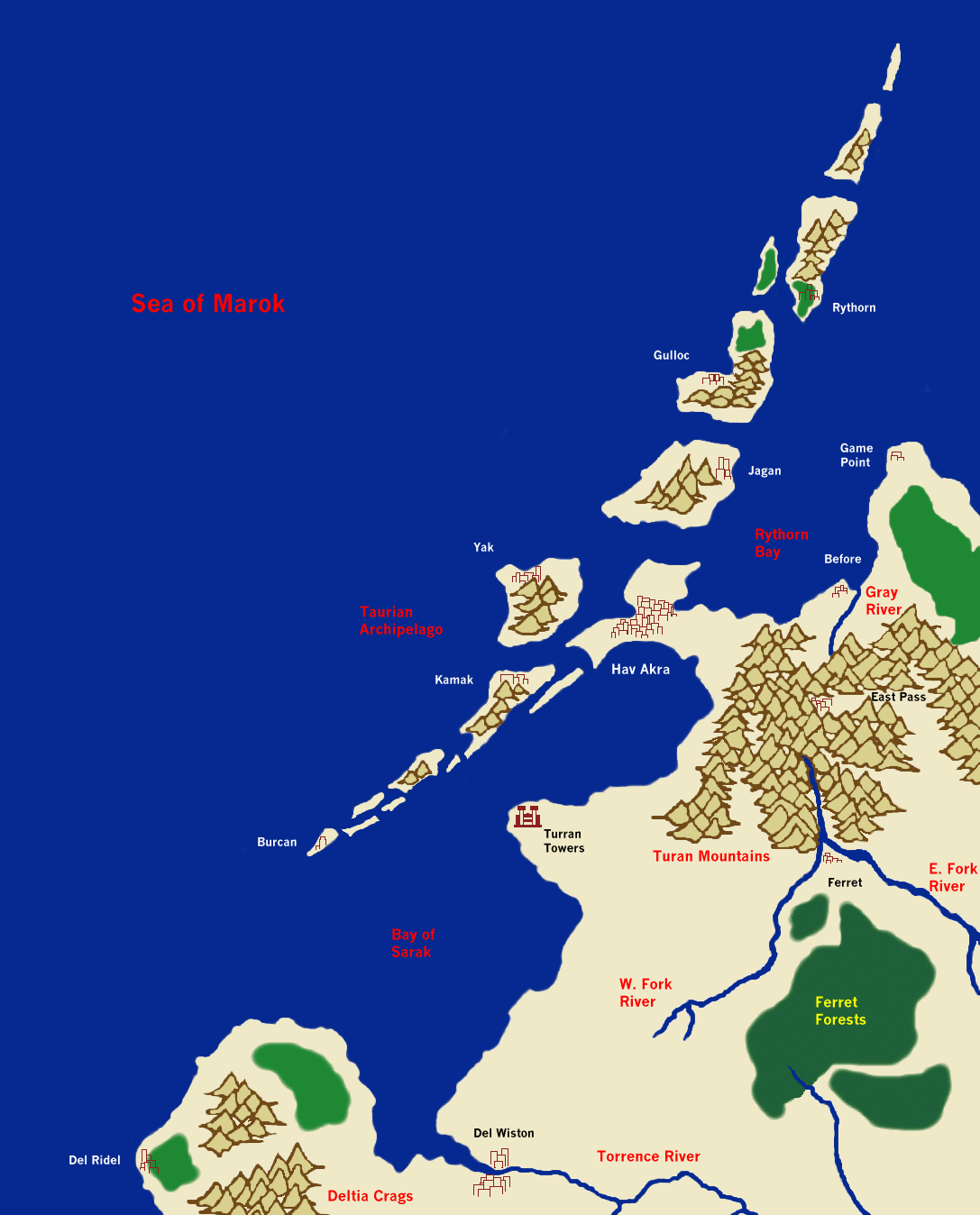
Landscape: NW Altir is probably the more diverse and majestic of the lands on this continent. Not only does it carry immense mountains, vast rivers, and lush rolling hills, but it also has the largest archipelago in the known world of Jade. The variety of landscapes provides the region with the heavy ability to produce many products: mountains to mine ores, rock, marble, and silver; lush hills for farming; great rolling plains for domestic animal use; flatlands and river flats for nutrient dependent rivers that are full of freshwater fishes; and coastlines full of all kinds of shellfishes, big finned fishes, and great terrors in the deeps. The land varies in temperature from near the top of the spectrum to the lower levels that force snow onto the land. In the northern regions, the land is more interesting, carrying the Taurian Archipelago, mixed in with the compacted Turan Mountains. The race of minotaurs rule the islands and peninsula around the Taurian Archipelago. Here, the land is semi-mountains and very ancient. The mountains are crumbling and softening with an occasional ancient volcano upon the islands. Most of it is very fertile and tropical. The islands then lead to the peninsula where the great minotaur city of Hav Akra is. As the land lessens in flatness to the southeast, it becomes more mountainous. Here, the mountains were once immense and greater than the Titanus Mountains on Quinron, but now they are old and crippled. Still magnificent, they are compacted together in tight formation to look like they form one growing mass of crumbling rock and earth. The soil here seems reddened and similar to that near the NE Altir regions. Beyond the mountains and south of them, the land becomes more rolling in hills before it flattens to grassy plains, river flats, and tundra. The area in the south central portion of the region is covered with the Ferret Forests. Finally, there are the great rivers that split the land around the beginning of the East Fork River, which starts in the Turan Mountains before even it splits into the West and East Forks. To the south, the Torrence River, known for its roughness, rages across the land. This river is fed by the Duraka Mountains in the southeastern portion of Altir. Further west, the land seems to continue endlessly into a large peninsula also named the Del Peninsula. It holds a large city known as Del Wiston where it meets the Torrence off-flow into the sea. The regions biggest cities are Hav Akra in the north, Del Wiston in the south, Yak, and then Del Ridel. The smallest townships consists of Burcan, Before, and Game Point.
Plant and Animal Life: The differences between NE and NW Altir are small, but defined by the common land features that dot their individual landscapes. NW Altir is more of a tropical clime and has more variety than the drier climate to the east. Due to this, NW Altir holds giant leafed trees such as palms and ferns and also several short leafed trees and tall stands of bamboo. It is like this throughout the Taurian Archipelago. As the land becomes more mountainous, the trees change into more oaks, maples, and scraggy pines. Olive trees are a staple amongst the northern regions in the Turan Mountains. Outside of the standard vegetations, mixed shortened bushes with poisonous berries are dotted throughout the region. However, raspberries and red grapes are also seen. On the southern end of the Turan Mountains, the landscape is more feasible in regards to farming and herding. Wheat, cotton, and vine-like vegetation like peas and beans are often farmed. When the landscape changes into tumbling hills south of the Turan Mountain chain, livestock are found dominating the area feeding on the rich grasses that surround the West Fork and East Fork Rivers. On the delta between the rivers the land flattens out and becomes more hostile for herbivorous animals. Several forms of predators fill the area especially lions and jaguars as well as rabid beasts of unnatural likeness strut the land. Further south towards the Torrence River, animal life simplifies into documented birds, flying squirrels, and dormant amphibians. Horses are very common here, thus barbarian tribes thrive heavily in the area. The Delthia Crags hold nothing unusual outside of unusual types of bears. Ferrets and weasels are seen here as well, but they are more likened to the Ferret Forests in the central portions of NW Altir of which they are named. Sea life is the most abundant in this area. Anything from whale to squid to great marlin, all sharks, and great arthropodic creatures as well as common fishes. The rivers hold great schools of trout and salmon. Dragonkin remain to be reds and ruby, but copper dragons have been known to roam the region.
Common Humanoids: NW Altir commonly serves as the area where all minotaur kin live within. They have ruled the land for long decades and have grown a mighty empire due to it. Outside of this, humans are the second most common group, but they live more in the southern end near the Delthia Peninsula. Barbarian and nomadic humans are very common in the area north of the Torrence River and south of the Fork Rivers. Among the more bestial of the humanoids, ogres can be found in the Turan Mountains along with earth elementals. Yet, the third most populated race in the region are the Mantiraz, a mantid-like humanoid race. They ravage the area near the Torrence River and north to the East and West Fork Rivers. In the sea, the Sahuagin are avidly as common as the minotaurs, their enemies. They are like sea lizards in humanoid form.
Political Structure: Of what political structure there is, there is little to define reign in the entirety of the region. In the northern portion, the city of Hav Akra, the native city of the minotaurs, a king reigns supreme in the entire archipelago and south to the Turan Mountains. In the waters, there is the matriarchal society of the Sahuagin where a queen rules. There is constant sway between the two races for the lower coastal beaches and reefs. In the southern portion of NW Altir, humans have a knighthood that reigns in both cities of Del Ridel and Del Wiston, but the merchants of the cities appear to rule as a silent mutiny at times. Other than this, the land is fairly young in it’s humanoid relationships.
Guilds: The guilds in this region are more common to the structure of the land and economy. Most of this is due to river and sea economics. Shipbuilder’s Guild, Carpenter’s Guild, Fisherman’s Wharf (also a guild), Sea Merchant’s Guild, Banker’s Guild, Marble Mason Guild, Guild of Netters, Guild of River Merchants, Guild of Magic Craft, Guild of Mirror Masons, Fighters Guild, and an Assassins Guild.
Best Inns and Shops: Hav Akra, being the biggest city in the western portion of Altir boast many Inns and Taverns of fame. However, the more infamous ones are the Inn of the Red Eye, Gorgon’s Rest, Arkan’s Inn, Taurvak’s Brewhouse, the Bullhorn Pub, and the Hammer and Mug. Burcan, on the southern end of the Taurian Archipelago, has a tavern called the Mangled Shark that specializes in fried fish on a stick and a gallon mug of ale. The town of Before, has the Inn of Past. The municipality of Ferret has the Fur of the Ferret Inn and Bar. Del Wiston and Del Ridel boast the first franchise taverns and inns known as the Sleep All Inn. As for shops, there are many infamous ones, but the ones that stand out the most are, Mak’s Marble, Havik’s Anvil, and Korvin’s Shipmaster Shop in Hav Akra. In Del Wiston there is Lorrin’s Wand, Jack’s Fish and Net, and Ivan’s Antiquates. Ferret has a fur trade shop known as the Ferret House. East Pass is a human/minotaur town that mines rock and marble and has a trader’s post known as Rocker’s Pound and Pieces. Yak, is known for its healing shops and has a town franchise known as Arik’s Balm.
SE Altir:
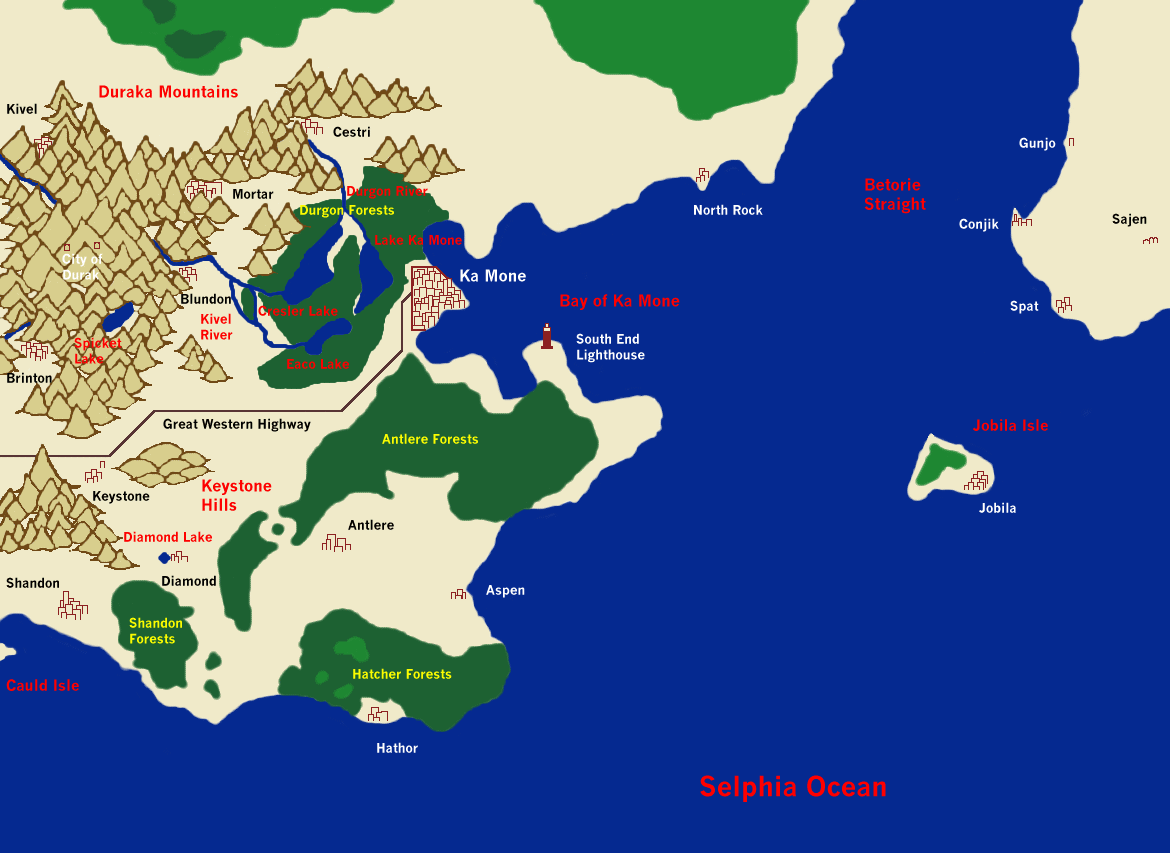
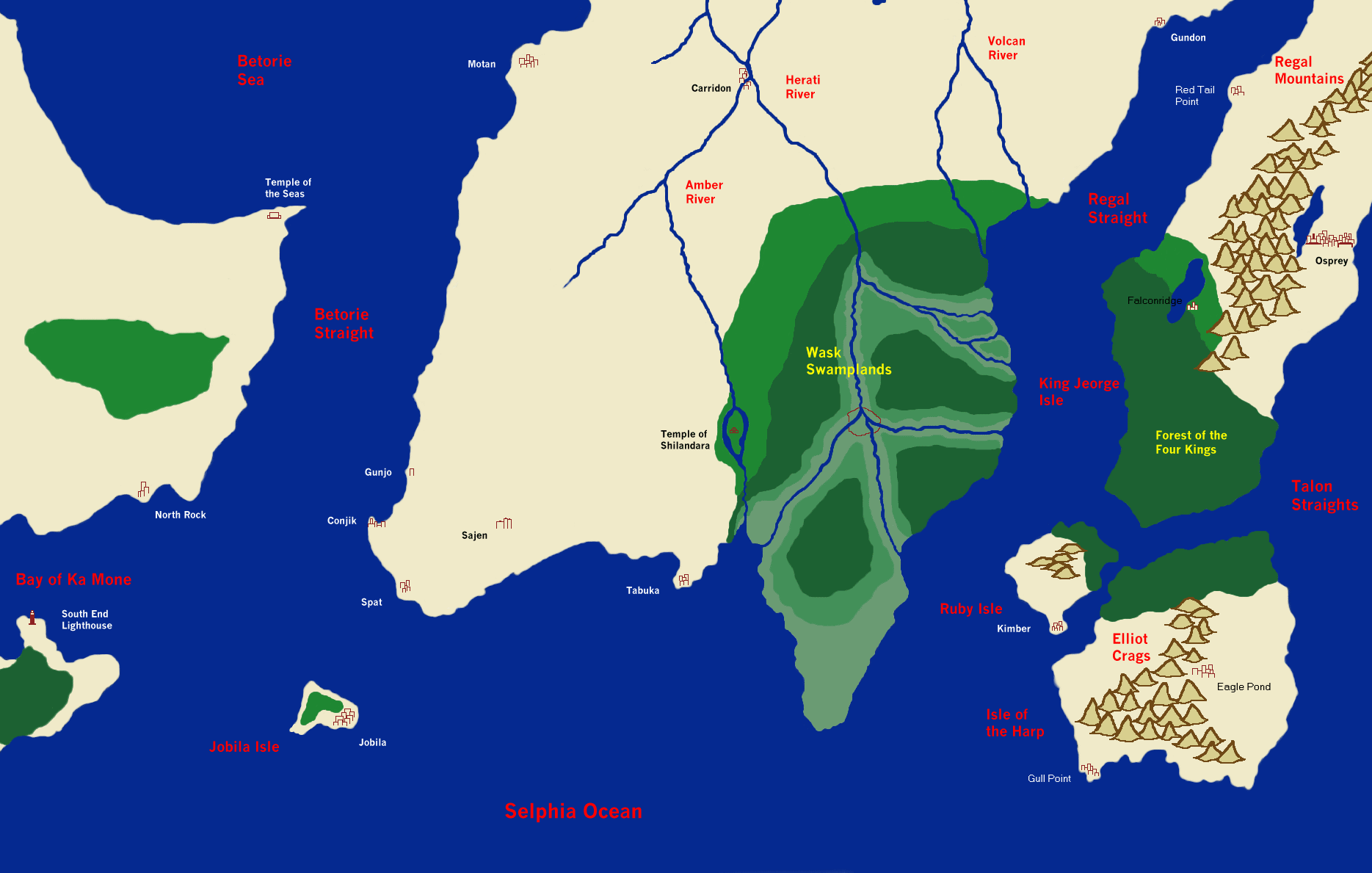
Landscape: The region of SE Altir is more vivid than the other three section on Altir. First and foremost are the great mountains that are the largest on the continent and rival the Titas Mountains on the continent of Quinaron. They are known as the Duraka Mountain chain and contain a density that takes up nearly half the region. They vary from rich browns in the south to more tan-reds in the northern portions where the climes are slightly warmer. However, the mountains seem to define a temporary equator between the heat of the north and the cool of the south making the land more cool here. They are most often packed with snows year round, except for the valleys that are packed around them. In these very mountains the mountain dwarf clans reside. They have a grand city called Durak deep within Mount Rantok. From there, great hills spill into flatlands and lush river and lake environs that filled with many kinds of animal life and forests. These forests contain great conifers and are mixed in with deciduous trees that only leaf for six months out of the year of ten months. The lakes are the only ones of their size on the continent and are known as the Tricon Lakes as a group and individually as Cresler, Ka Mone, and Eaco Lakes. They are joined by the short but powerful rivers of Durgon and Kivel. Further east is the Bay of Ka Mone, the largest softwater bay on the continent. Here, the soft waters provide for great fishing. Thus, the great hill dwarven city of Ka Mone lies. Further south the land changes greatly to more flat and forested lands. The Great Western Highway lies in between the area where trade is common. Further south is the Antlere Forest and Keystone Hills. In this region Gnelves arecommon. This race is half-elf and half-gnome. They control this great land that could be considered elvish, but it is more wild and less trained. Their lands are surrounded by the Hatcher Forest in the south, Shandon Forest to the southeast, and the Antelere Forest in the north. Within, little is there outside of the grassy tundra and the city of Antlere where the Gnelves reside. The remaining cities and townships are Gnelven in nature as well. Outside of this, the cool oceanic waters of the Selphia Ocean reside in their wild unyielding atmosphere. Only the Cauld Isle and Jobila Islands are the only landmarks left in the ocean. These islands are rather flat. Jobila is a mixed race city that is a major trade stop before heading further north, west, or east. South is a very uncommon route due to the southern continent of Zoria.
Plant and Animal Life: Typically, the plant life in this region is limited in variety. It is heavily related to the cooler temperatures of the area. The mountains are full of mostly thrush types of vegetation, but as the elevation decreases, trees become more prominent. These are primarily conifers; pines, spruce, ponderosa, and fir. Spread throughout the great conifers are bushes of thrush, weed, thorn, and berry (huckleberry, blueberry, and raspberries are common). These can be harvested and are a primary staple for many of the animals in the region. Dwarves prefer these berries because of the trade value they bring. Grasses aplenty are found, but seem to have little value to the locals here. Gnelves like the taller weedgrass in their lands because they are great hiding places. The ocean has little value in vegetation. The rivers provide great sources of water for creating canals to farm wheat in the hills. The animals vary little. Most common are furred types of animals. Mammals of all types thrive here. Mountain lions, sabertooth tigers, and great carnivorous bears can be found as well as all types of other bears, members of the weasel family, foxes, and coyotes, deer, moose, horses, giant rat, and so on. Dragon types are mostly the White and Silver, but even these are rare. More of late, blues have been found traveling the mountains. The ocean holds man types of sea creatures in this region, but they are migratory. These are mostly whale-types, sea lions, porpoise, and giant salmon. Shrimp is a largely fished item in the Selphia Ocean.
Common Humanoids: The prominent race in SE Altir are the dwarves. They populate close to sixty percent of the entire area. Not only do they have the great mountain kingdom of Durak, but also they have the second largest city on the continent created by the hill dwarves known as Ka Mone after its founder. Hill dwarves break into a much smaller group known as Timber Dwarves or Forest Dwarves. They are more nomadic and less common. They have no known village or city. The next largest populant are the Gnelves. Although they are a young race to the world of Jade, they also multiple rapidly. They are roughly twenty percent of the population. Their greatest cities are Shandon and Antlere in the south of the area. The remaining race of any significance are humans. They are surprisingly the minority in this region of the continent, but also multiply quickly. Their largest following is in Ka Mone and Jobila City on the Isle of Jobila. The rest of the humanoid races are mixed orcs, who live in their region north of Durak called Ugluke; ogres, and very few others.
Political Structure: The area is mostly run by the dwarves, with the exception of the Gnelven Territories to the south. The Kingdom of Durak is run by a king and spreads mostly throughout the region, but mountain dwarves are unique in that they live underground and prefer it that way. In reality, the outside area is rarely patrolled by them and thus is covered by their bretheren, the Hill Dwarves. The Hill Dwarven communities, although young, are much more populated than the mountain kingdom. The mountain dwarves lay claim to all the mountain areas, but because of their dislike for the outdoors, they let the hill dwarves patrol the region at will. The Hill Dwarves actually have a capital city in Ka Mone after their greatest king whom is still living, but has deferred rule to his son. The region has several prefects that act as policing groups and are centered in each township that has a mayor. The mayor defers power during war time to the local prefect. The Gnelves on the other hand are a little more unique in that they are ruled the Guardian. This can be called a king, but it is more like a head sheriff of some grand stature. In many cases, these are heroes of some sorts. For example, Harquin Jackhands was Guardian for two years because he killed an ogre that wandering into their lands with his jacket. He simply choked him to death. Human political structure is handled on the south side of Ka Mone where the city’s wharves are at. They are primarily seaman that have majority powers due to a land grant from the king of the hill dwarves.
Guilds: There are many guilds throughout the region, but many have to do with smithing. Armor, weapon, and supply smith guilds are as abundant as dwarven alehouses in SE Altir. Outside of these standard guilds, the dwarves all train for smithing excellence at the Guild of the Iron Fist in Ka Mone unless you are a mountain dwarf. There, they train in the Guild of the Steel Fist. Both Guilds are related and can be used by either race. Other Guilds include the Woodsman Guild, the Pick and Axe Guild (for Miners), the Rockman’s Guild (random rock miners), Miller’s Guild, Ales Guild, Hopps Guild, the DoH (department of highway for the Western Highway Repair and Maintenance), Guild of the Iron Warrior, Guild of the Underdark (mountain dwarf defender guild), Seaman’s Guild, Shipbuilder’s Guild, Carpenter’s Guild, Bookbinder’s Guild, Guild of Engineering, Guild of Storytellers, Guild of the Flute, Thieves Guild (also a brothel known as Hookman’s Noose), and many others.
Best Inns and Shops: Durak has very little use for Inns due to the lack of visitors to the mountain dwarven nation. However, when hill dwarves need a place to stay, they stay at the Quarry Inn. Durak does have many shops of value, most known is Graystone’s Anvil and Supply which is a franchise in Durak that supplies all things armor, weapons, and the workingman’s needs. There is also the Simonstone Gallery of Rock, a popular shop of dwarven rock carving artistry; Hagger’s Alley, a dwarven alley of all sorts of produce and fine meats. The town of Kivel in northern SE Altir has King’s Corner Inn. Mortor, famous for its invention of mortar, has Redbeard’s Brick Shop. Blundon, is known for its Silverale Inn. Ka Mone, the big city has several small inns that are also big taverns and alehouses; Tavern of the Hammer, Jackknife Spirits and Food, Ka Mone Inn, Slagstone Bed and Breakfast, and Hammerfell Inn. Of the shops, the School of Smithing provides good supplies, Dagstone’s Smithy, Ka Mone Supply, and Hobart’s Pastries are all good shops there. Antlere in southern SE Altir has a good bone handle making shop called Rumblebelly’s Carve-outs. Diamond is most famous for its diamond shaped lake, but ironically, it has the best jeweler in the region, Kimkisser’s Jewels, due to the mining of such jewels in the nearby Keystone Hills. Shandon, the largest gnelven city is known for its bookstores, Gramfinger’s Books, Dinlkledoor’s Storyhouse, and Nanny’s Bookbinding. Also, there are many famous pastry shops in Shandon due to the gnelves love for sweets; The Candystore is a franchise throughout the gnelven territories, Gramdma’s Cookies, and Jinglebat’s Icing are also famous. Muddyboots Inn is well known for its service, despite the lack of beds and good food.
SW Altir:
Landscape: SW Altir is much like NW Altir in that it is mostly islands. Yet, in this area, the islands are larger. Surrounding the region are the Selphia Ocean and Jaques Sea. From the north, the climate begins to get much cooler until in the south, the islands receive enough snowfall to last half a year. The land itself has few rises and is vastly flat except for on the islands and the Delthia Peninsula to the west. Most of this land is river delta and tundra-like flats. The land is rather moist, and has thickened grasses mixed in with rounded flat rocks. Even the areas that have rises or hills appears to have been carved by water forces and glacial activity. Large steppes appear throughout the land. The Torrence River breaks into many smaller rivers as well as the South Torrence River. The Delthia Woods are the only woods that are Far to the east of the SW Altir, the River Jack runs due south and rather slowly, almost as slowly as life moves in this part of the land. The last remnants of the Duraka Mountain Range appears here in the east before giving way to the Mantara Grasslands. These grasslands are no more than one foot at first, but they steadily climb in height until their center which reaches heights of twelve feet. To the west, the land turns to sea where the Bay of Eileen and Turik surround the gnomish isles. Just north of these isles lays a peninsula, shaped somewhat like a finger, that holds the gnomish city of Turik. Back down to the isles, the land slowly becomes cooler and much more rugged. Old volcanic mountains cover the islands throughout. The volcanoes are so old they are no longer in thermal use. This area is also the home of the Blue Spruce trees. These trees dot the islands only, but for the ones in SE Altir. Farming is rather uncommon, but herding is a staple, thus the gnomes are more hearty in this part of the world.
Plant and Animal Life: The plant life in SW Altir is very limited to vegetation that can handle the cooler months. More often than not this is limited to thickened grasses, tumbleweed, bushy-type creations, and random flora and fauna. Ferns have been known to be found in the Delthia Peninsula. Also common are the tall grasses that are found in the Mantara Grasslands. These as mentioned, can reach up to twelve feet in height. The tree-life is more adherent to the cooler climate. Most often, these are coniferous types of trees like pines, ash, and blue spruce, but also include the various others. Mixed in are the deciduous types, like chestnut and maple. Yet, it is still the home of the Blue Spruce and is rather vivid in the wintery months with these blue-green trees dotting the land. Animals that are most common are mammalian in nature. Cougar, wolves, bobcats, bears, few weasels, buffalo, deer, moose, reindeer, a few wooly rhinos and supposedly mammoths, and snow leopards and tigers are a rarity, but found. All forms of rodents are found everywhere. Sea lions, walrus, whales, and other oddities are the ocean types nearby, but found mostly near the islands. Insects are seasonal, but birds such as ducks, geese, and a few penguin are commonly found. Sparrows, robin, woodpeckers, bluejays, and great hawks and eagles are viewable as well. The types of fishes are mostly bay and cold water fishes like halibut, salmon, sturgeon, sand darts (a breed of sand dwelling tuna), grunion, shrimp, octopus, trout, sunfish, and colored gill fishes.
Common Humanoids: The most common humanoids are the gnomes. They populate all the islands, and most of the finger shaped peninsula. Their largest dwellings are Turik City, Mao (their capital), Temao, and Selphia Watch on the various isles. Humans are the next composite, but they are found mostly in Turik City where they share the rights to the city, despite the affiliation. Humans are not allowed on the isles. Humans also maintain the city of Dartony, but little is known about their affiliations. As for the bestial humanoids, there are very few; there are a few forms of lycanthropes: wererats, werebears, wereleopards, werebuffalo, werehawks, werewolves, and werewalrus. Others include the Mantiraz, whose kingdom is known to be in the Mantara Grasslands; Gibberlings, and small-sized ogres.
Political Structure: Gnomes are the primary ruling body in the area. They rule by a king known as the Big Wig. The area is little patrolled, but for the waters. The gnomes are very protective of their island homes and will go to any lengths to prevent unwanted persons. Thus, they are cautious and have never had a non-human visitor outside of a dwarf in nearly seven hundred years. The humans living in the region are mostly in Turik City, but these cannot rule outside of controlling those of their own race. The city of Dartony is also human, but it has closed walls and is said to trade with none. How the continue living remains unknown. Some think they are all lycanthropes. Outside of this, there are little areas to be controlled. It should also be noted that a small, mostly unknown community, lives near the Tower of Garnet. This tower is one of the five great towers of magic and houses a more evil group of followers with little political bind to the region.
Guilds: Engineering Guilds appear to be the most prominent guild in SW Altir, but these remain stronger on the isles and in the gnomish territories. These guilds break down into four main categories: Engineering Guild of Structures, Engineering Guild of Sea Craft, Engineering Guild of Locomotion, and Engineering Guild of War. Although these aren’t all true engineering feats, the gnomes appear to think so. Outside of these gnomish guilds, the others appear to be the Guild of Echos, the Guild of Seabearing, the Guild of Seamanship, the Guild of the Black Fist (a warriors guild for those more evil than good), the Guild of the Garnet Ring (a magic users guild for all things magic, it has a secret location), the Fisherman’s Guild, the Armorer’s Guild, Guild of Furs, Guild of Guidance, and so on. The Librarians Guild is more unique in that it supplies the world’s best librarians whom also know how to bind books. Thus, they are commonly bookstore owners.
Best Inns and Shops: SW Altir is not known for Inns as much as its various shops. However, in Turik City, there are many Inns due to the human influence there. These are slowly becoming popular establishments due to the traffic allowed in the city from other various nations and races. The best ones are the Marquee Anchor Inn and Jackson’s Bed and Brew. Any gnomish inn is yet to be establish due to the pure lack of access to the Isles. Most just stay at relatives and friends houses if needed. The better shops in SW Altir are the pastry and hardware shops in the gnomish areas. Turik City has Jibjan’s Cinnamon Rolls and Gifts, THE House of Waffling Things, Donuts, Donuts, Donuts, Inc. (a sort of gnome franchise throughout the isles), Hardware Aplenty and a Cookie, Hammer and Machinations Alike, Finker’s Nails and Screws, and Puttin’s Yard Wares. Dartony, although closed off to the world at one point had a good ring shop known as Kraken’s Rings. Mao City is known for its seafood restaurants, but that is by word of mouth from the gnomes that have used them. One claims there is a chain called Crab’s and Things. Outside of these, the isles have no proven greatness due to the lack of visitors.
|