
Tim Allison: A Virtual Portfolio
'Traditional Instruction:' The Experience
Throughout my life as a student, most of my learning experiences involved traditional (behaviourist) instruction. It was refreshing to learn, upon beginning classes at the faculty of Education, of the constructivist model, which was promoted in five of my nine classes. Ironically, however, it was only actually used in two of them. I believe that this demonstrates the resistance which exists in the teaching community towards these methods. The results of my experience? I had two classes in which I actually had to think; and in which I actually learned something, one class in which there were some interesting conversations, but nothing earth-shattering, and six classes which were dry, boring, and entirely uneducational; even if I am getting ninety or ninety-five percent as a grade in all of them.
In the end, the only good that has come out of that 78% of my experience here is that I've learned to jump through hoops, like a trained Border Collie, and I have learned that traditional teaching methods are something I'd like to avoid as much as possible. While those may have been the goals of the 'powers that be,' I sincerely doubt it.
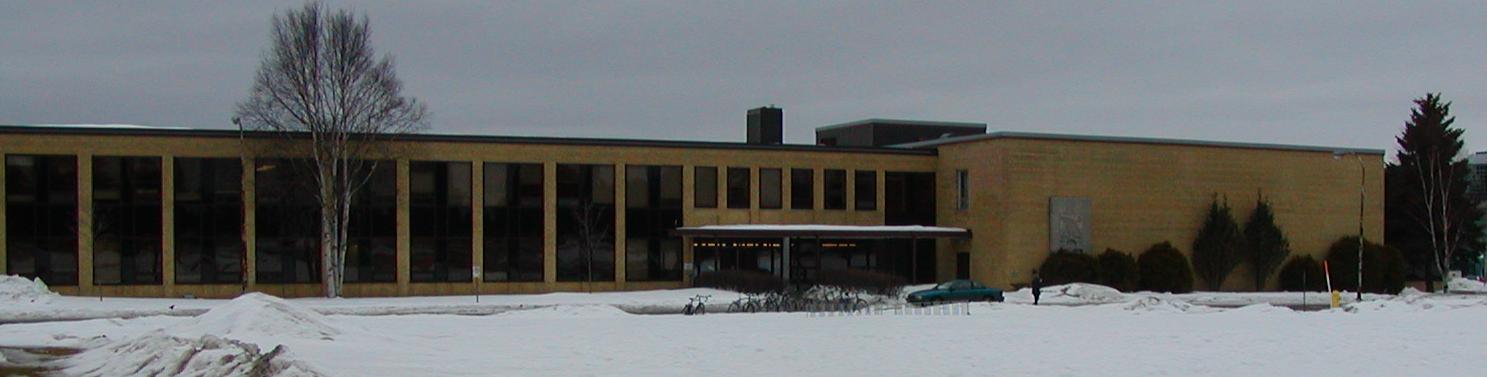
As teachers, our goal should be that our classes have an "enabling rather than an alienating function" (Millar and Driver, p. 56). Allowing children to direct their own learning, based on their curiosity, and within broad parameters set by the teacher, enables students to come to an understanding of the class materials. Millar and Driver (p. 56) suggest that effective teachers "promote active learning...by devising activities which involve students in such activities as observing...classifying, hypothesizing...inferring, experimenting, problem-solving...negotiating meanings, clarifying purposes, evaluating alternatives, [and] developing logical arguments." And Yager (pp. 2-3) indicates that exemplary teachers "[seek] out and [use] student questions and ideas to guide lessons and whole instructional units...[and use] student thinking, experiences, and interests to drive lessons." In other words, Yager believes that the faculty of Education, which is supposed to be training teachers, has only a very few exemplary teachers among its members. Those who do not have one of the sciences as a teachable are probably leaving, less knowledgeable than when they came in.
