Tagging and Releasing Sharks from the Beach
Click the hyperlinks for photos
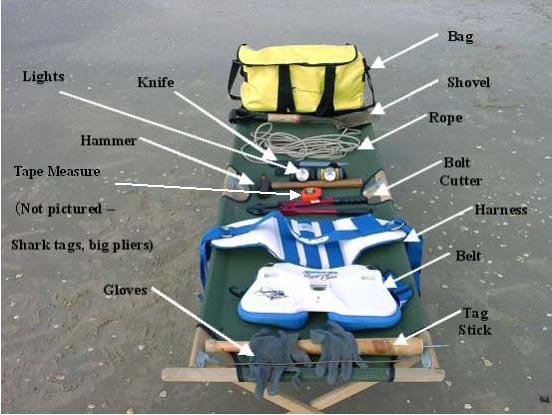
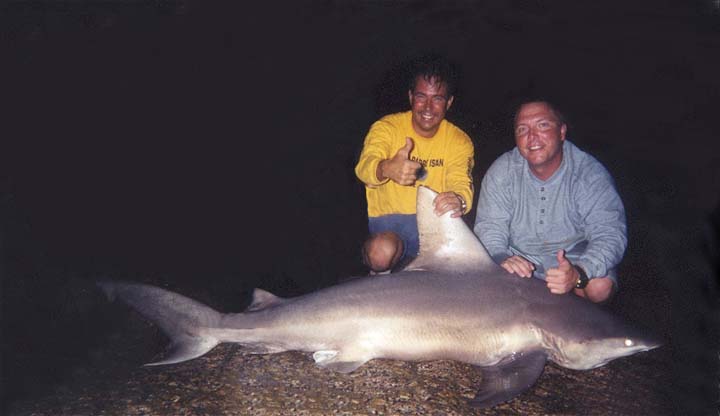
Successfully tagging and releasing a sharks takes practice, teamwork, and a certain degree of luck. Being prepared is one of the biggest factors in this process. Certain supplies are needed to facilitate the tagging process. Many of them can be kept in a bag or bucket for easy access. People who are serious about catching and releasing sharks from the beach take great pride in their willingness to land the shark, get it measured, photographed and released as quickly as possible. Since sharks need a constant flow of water through their gills to stay alive, it is imperative that the amount of time spent out of the water is minimized to ensure the best chance for survival. My first shark release came a few short months ago. I had no idea what I was doing, I was ill-prepared for the task at hand, and I had to walk the shark around for about 20 minutes before it was able to swim off. Since then, I have revised my technique, with the help of some serious fishermen. Each tag and release since then has improved. Removing the hook in a shark's mouth can be a dangerous task, and I would recommend several tools, including a large pair of pliers, gloves, and something to keep the shark from clamping down on you while you are attempting to remove the hook. A friend of mine, (Chris Deaver) showed me a technique using a small sledge hammer to keep the mouth open, and that is the technique I have adopted. Place the sledge hammer in the shark's mouth and carefully remove the hook using your pliers. If the hook is lodged and cannot be removed without damaging the shark's mouth, cut the hook with your bolt cutters. We use 20/0 circle hooks to prevent gut hooking the sharks and to increase the odds that a shark can be released successfully. After the hook has been removed, get a good measurement from the nose to the fork and tip of the tail, check the sex, tag the shark near the dorsal fin with the tag facing backwards, take a few pictures and send it on it's way. During the tagging process, it is helpful to have someone write down the key information on a tagging card to give accurate data regarding your catch. Memories seem to fade in the excitement, and having someone write down the key info will prevent you from forgetting details. The release is one of the most important aspects of this process. After everything mentioned has been done, take the shark into the water. Never grab the shark by the tail, as this seems to send the shark into frenzy mode. Stand on one side of the shark and walk it into the waves, holding the dorsal fin and the back of the pectoral fin. Keep the shark moving into the waves to allow the water to flow through the gills. If you have done your job, and were prepared for the tagging, the shark will take off without difficulty. If you are unprepared like I was my first time, You might need to walk with the shark for several minutes. Remember, sharks don't have a backbone, and they can spin around and bite, so be prepared for anything. If you have ever caught a shark, you know that they have rough skin. Be aware of this, as they can cause some nasty burns on your arms and legs if you aren't careful. I don't condone putting yourself at risk of injury when releasing a shark, but I would rather see the magnificent creature live to fight another day, so I walk with them until I am sure they will survive. Never turn your back on a shark you have released, as sometimes they get disoriented and might even come back to shore. I generally watch them until they are out of sight, and then I walk backwards to shore scanning the water in front of me as I walk.
Shark fishing is not a solo sport. To be successful, each member of a group needs to be crossed- trained, knowing each aspect of the process. If one person knows all aspects, and the others don't, chaos can take over, especially if the one who knows all aspects is the person fighting the fish. Key points in shark fishing include securing, rigging, and deploying bait, the hookup, fighting, landing, tagging and releasing. For this to work, all members of the team need to know their roles and each person needs to fill a role. Anticipating what the angler needs can make a huge difference in the successful catch and release. This team approach comes from fishing experiences shared together, and can rarely be learned from reading a book or an article. Use quality bait, surround yourself with quality equipment and quality people, and you will be successful in your endeavor. If any of these aspects is missing, the road to success will be bumpy.