
Germany and the Western Front
|
| Previous Continue |
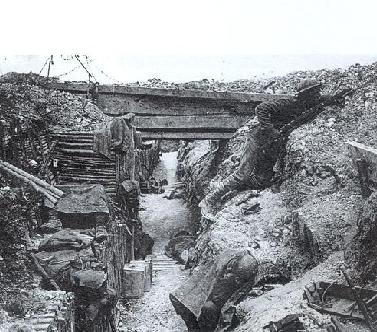 The western front however was deadlocked. From the start of the war in 1914, the two sides had become entrenched. The Battle of Marne in 1914, ensured that German troops would not invade France, the two sides now became embroiled in trench warfare for the rest of the war along the western front. Key battles such as Ypres, Verdun and the infamous Battle of the Somme, all ended in millions of casualties but no breakthrough for either side.
By 1916, both sides were growing in exhaustion. The sides continued in the hopeless stalemate that was seeing millions dying each year. On such event that showed the extremity of war was seen in the Battle of the Somme in 1916; 60,000 allies died during just one day of fighting. It was the Russians however that were the most seriously affected. Her war of attrition with Germany in the east was losing millions of lives for very little success and the general public were becoming disatisified. |
The growing disillusionment with war on the Russian side was leading to civil unrest. The year of 1917 was that of two revolutions, the first removed the Tsar, the second brought in the anti-war, Bolsheviks. The Bolsheviks under the leadership of Lenin and Trotsky successful remvoed Russia from the war in the infamous, Treaty of Brest-Litovsk.
 The Bolshevik Revolution of 1917, was serverly damaging to the western front in that the Germans now victorious in the east could move and concentrate their troops to ensure a western victory. However by 1917, the Germans were now facing an allied side revitalised by America's entry into the Great War.
|
