|
Tsar Nicholas II at the turn of the century was still highly regarded by his people. The Russian people had a long tradition of loyalty to their leader despite the country's socio-economic problems. However 1905 proved a difficult year for the Tsar and his people's loyalty would be severely tested.
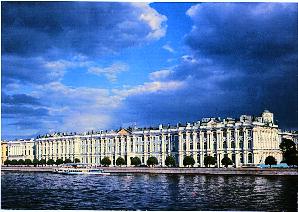
On the 22nd January 1905, in a peaceful protest requesting more civil liberties, a crowd of 200,000 marched to the Winter Palace, residence of the Tsar. They intended to hand in a formal letter of protest and then leave. The Tsar at that moment was not in residence at the Winter Palace and the nervous guards, fearing anarchy, fired upon the protesters. Hundreds were killed and many more were injured. All blame fell on the Tsar. This event tarnished the image of Nicholas II and the support for the underground political groups such as the Social Revolutionaries grew. The Russo-Japanese War of 1904/5, further added to the Tsar's problems. Russia despite its size was not a superpower. She was resticted in her industry, military and agriculture. She was regarded as backward compared to the strong western democracies of Britain and France. A dispute with Japan over the country's authority of Manchuria and Korea, led to the Russo-Japanese War of 1904/5. The Tsar, in reality, used the war to exercise the Russian armed forces and attempt to prove it's military might to her neighbouring countries. However the Japanese struck the Russians quickly and a series of well operated attacks left the Russian fleet destroyed by only in May 1905. The Treaty of Portsmouth, that ended the war, allowed two outcomes; Japan was now a major power - the first non-European and non-American imperialist modern state and Russia had been humiliated on the world scene - opposition to the Tsar was growing.
Russian history [Continue]
Russian history [Previous]
|
In June 1905, the Russian Navy mutinied in the ports of Odessa and Kronstadt. The navy at this time was largely made up of the lower classes and so any matter that concerned the Furthermore the Tsar faced growing domestic concerns; Overcrowded prisons, religious persecution and national uprisings in Poland, Georgia and Finland. Also the Tsar's refusal to grant the people a constitution and civil liberties led to a General Strike in October 1905.
By the end of 1905, despite remaining in power, the Tsar's position was not secured and it was essential he made concessions. The 1905 revolution however made it clear to the Tsar that he was not infallible and the people were willing to rebell against their leader, he now knew had to focus on giving the people their reforms they badly craved. The next few years were regarded as being prosperous for Russia. Some gains were made in agriculture and industry and despite this being considerably less than levels of the west, it allowed the Tsar to regain some of the support he had lost following 1905.
|

