


Introduction
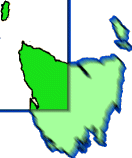
Beyond the rich cropping and dairy farmlands of Tasmania’s Cape Country
is a vast unsettled region of forests, rivers and endless beaches.
Easy to reach and spectacular to see, they provide some of the best opportunities
for outdoor recreation in the state. Top
Seafood, Surf and Ancient Shell Middens
Pack your rod and reel to fish the Cam River at Somerset or drop a
line from the wharf at Wynyard, where you can lunch on fresh fish and chips
if you haven’t had a bite. Spring is tulip time, when spectacular
Table Cape explodes with colour and Wynyard is transformed in a weekend
of celebration. Take a dive charter tour or your mask and snorkel
to the magnificent white sands and turquoise waters of Boat Harbour and
join surfers and sailboarders year-round at one of the coast’s most popular
resorts. Follow the old Postman’s Track or drop down to deserted
beaches on one of the walks in the Rocky Cape-Sisters Beach National Park.
Look for native orchids and Christmas bells among the wildflowers which
cover the hills in spring and summer. Visit the birdlife centre at
Sisters Beach and the caves at Rocky Cape, where middens of shells discarded
by Aboriginals thousands of years ago, are scattered on the floor.
Prise wild oysters from the rocks of Detention River. Detour to Dip
Falls and walk to the base of the falls, then drive a further kilometre
for an easy walk to the Big Tree, a massive stringybark which has stood
for centuries. Watch the cows being milked at the Lacrum dairy farm
and taste cheeses from some of the richest pastures in Tasmania.
Top
Cruise Into The Rainforest
 Drive
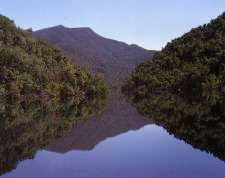
40 minutes south of Smithton to the remote tall forests of the South Arthur
region. Short walks and picnic spots are signposted and the Julius
River rainforest walk and the Milkshake Hills are suited to all levels
and ages. Leave the road and go bush on rugged four-wheel drive tracks
to more remote areas or on to the Pieman River, on the recently constructed
link road. Cruise the Arthur River for 15 kilometres into the rainforest
to the junction of the Frankland, or drop a line for trout, blackfish or
blackback salmon. Experienced rafters or kayakers can ride the rapids
from the river’s upper reaches. Be at Marrawah in February for wave
ski championships or on any other day for some of the best surfing in the
state. Top
Drive
40 minutes south of Smithton to the remote tall forests of the South Arthur
region. Short walks and picnic spots are signposted and the Julius
River rainforest walk and the Milkshake Hills are suited to all levels
and ages. Leave the road and go bush on rugged four-wheel drive tracks
to more remote areas or on to the Pieman River, on the recently constructed
link road. Cruise the Arthur River for 15 kilometres into the rainforest
to the junction of the Frankland, or drop a line for trout, blackfish or
blackback salmon. Experienced rafters or kayakers can ride the rapids
from the river’s upper reaches. Be at Marrawah in February for wave
ski championships or on any other day for some of the best surfing in the
state. Top
Heritage on a Headland
 Spend
a day in and round the historic fishing village of Stanley, the earliest
settlement in Tasmania’s north-west. Settled in 1827 by the Van Dieman’s
Land Company, Stanley and the seven-kilometre-long peninsula on which it
is situated, is registered on the National Estate. Shop for superb
craft work in Tasmanian native timbers in the cottage stores. Visit
the Plough Inn House Museum and Discovery Centre to trace the town’s maritime
heritage. Drive to the Green Hills overlooking Stanley for superb
views of the township and to the V.D.L. Co. headquarters, Highfield Estate,
built in 1832. Wander around the historic house and among its bluestone
outbuildings. In Stanley’s main street stands the humble timber cottage
which was the birthplace in 1879 of one of Tasmania’s greatest statesman
and its only Prime Minister, Joseph Lyons (1932-39). Cast a line
from Stanley wharf and reel in a fish for tea. Watch the local fishing
fleet return from a day at sea. Buy crayfish fresh from holding tanks.
Top
Spend
a day in and round the historic fishing village of Stanley, the earliest
settlement in Tasmania’s north-west. Settled in 1827 by the Van Dieman’s
Land Company, Stanley and the seven-kilometre-long peninsula on which it
is situated, is registered on the National Estate. Shop for superb
craft work in Tasmanian native timbers in the cottage stores. Visit
the Plough Inn House Museum and Discovery Centre to trace the town’s maritime
heritage. Drive to the Green Hills overlooking Stanley for superb
views of the township and to the V.D.L. Co. headquarters, Highfield Estate,
built in 1832. Wander around the historic house and among its bluestone
outbuildings. In Stanley’s main street stands the humble timber cottage
which was the birthplace in 1879 of one of Tasmania’s greatest statesman
and its only Prime Minister, Joseph Lyons (1932-39). Cast a line
from Stanley wharf and reel in a fish for tea. Watch the local fishing
fleet return from a day at sea. Buy crayfish fresh from holding tanks.
Top
Ride The Chairlift to Then Nut
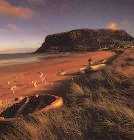
Rising 152 metres and sheer on three sides, The Nut is formed from
solidified lava and is estimated to be 13 million years old. Ride
the chairlift or walk the trail to the top and be treated to panoramic
views. From November to April, stay till dusk to see flocks of Tasmanian
shearwaters (mutton birds) return to burrows and watch for seals, whales
and dolphins throughout the year. Walk among the headstones of the
region’s founding fathers in the historic graveyard at the base of The
Nut or join a group tour to Woolnorth, the V.D.L. Co. property on Tasmania’s
fat north-western tip. Top
Explore Nature on an Island
Fly by light aircraft from Smithton or Wynyard to one of the far north-west’s
most beautiful off-shore havens. Three Hummock Island, north of Robbins
Island. Spend your days walking the solitary beaches and take your
camera. The island nature reserve abounds with Forester kangaroos
and Cape Barren geese and in spring the already diverse population of birds
is swelled by migratory species including the rare Orange Bellied Parrot.
Top
