Site hosted by Angelfire.com: Build your free website today!
Home Schedule Ratings Results Games History

GAMES FROM THE 1999 PIKES PEAK OPEN

August 7-8, Colorado Springs

Richard Buchanan, Director

Article Courtesy of the Colorado Chess Informant

See Also: Results from the 1999 Pikes Peak Open

Pikes Peak Open Games

Selections and annotation courtesy of Andy Rea unless otherwise noted.

ROUND 1

Shane Gaschler - Sean Cabrera
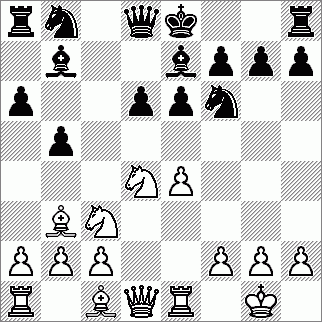
1.e4 c5 2.Nf3 d6 3.d4 cxd4 4.Nxd4 Nf6 5.Nc3 a6 6.Bc4 e6 7.0-0 b5 8.Bb3 Bb7 9.Re1 Be7 [The spirit of this opening suggests 9...b4 to hit on e4 10.Nd5 exd5 11.exd5+ Kd7 (11...Be7 12.Nf5 Would be very annoying! But if Black can (in theory!) survive the Fried Liver Attack, he ought to be able to handle this piece up position!?) ]

10.Bxe6! Sac anyway! 10...fxe6 11.Nxe6 Qd7 12.Nxg7+ Kf7? Kd8 may give more shelter, as White's pieces are aiming kingside 13.Nf5 Nc6 14.Nd5 Qd8 15.Nxf6? tempting, to remove the defender of h5, but [15.Ndxe7 Nxe7 16.Nxd6+ seems much stronger] 15...Kxf6 16.Qh5 Ke6 17.Ng7+ Kf6 18.Bg5+ Kxg7 19.Bh6+ Kg8 20.Qd5# 1-0

Sepp Hochreiter - Michael Munafo
1.Nf3 d5 2.g3 Nf6 3.Bg2 Bf5 4.d3 e6 5.0-0 h6 6.c4 c6 7.Be3 Nbd7 8.Qb3 Qc7 9.Nc3 Bd6 10.Rac1 A reason that 8...Qb6 might have been better - Black loses time w/ 10...a6, Qb6, or Qb8 - or allows a fork. 10...0-0 11.Nd4? Gaining the bishop pair w/ 11.cxd5 exd5 12.Nb5 Qb8 13. Nxd6 Qxd6 is preferable - White has a small edge, and bigger if he can open the position. 11...Nc5 12.Qd1 dxc4 13.Nxf5 exf5 14.dxc4 Rad8 15.Qc2 f4 16.Bxc5 Bxc5 17.Qf5 Bd6 18.Rcd1 fxg3 19.fxg3 Qb6+ 20.Kh1 Qc5 21.Qh3 Be5 22.Rxd8 Rxd8 23.Qf5 Bd4 24.Qd3 Qb4 25.e3 Bb6 26.Qe2 Re8

27.Rxf6 gxf6 28.Qg4+ Kf8 29.Qf4 Bxe3 30.Qxf6 Re6 31.Qh8+ Ke7 32.Bf1 Qd6 33.Qc8 Qd7 [33...Qd2 34.Qxb7+ Kf8-+ - Fritz4] 34.Qxd7+ Kxd7 35.Bh3 Kd6 36.Bxe6 Kxe6 37.Kg2 Bd4 38.Nd1 a6 39.Kf3 Kf5 40.h3 b5 41.cxb5 axb5 42.Ne3+ Bxe3 43.Kxe3 Ke5 44.a3 c5 45.b3 Kd5 (Sepp's scoresheet has a strange notation here, which I'm guessing means he considered the move dubious - Fritz4 took it from a .15+ to a .65+ for White after this move; Now the stronger player wins the race. - mike) 46.Kd3 h5 47.h4 f5 48.a4 bxa4 49.bxa4 c4+ 50.Kc3 (All is now lost - in order to stop the a-pawn, the c-pawn must fall, and the Black king will be unable to make it back to the kingside in time - Michael tries to make something happen - mike) 50...Ke4 51.a5 Kf3 52.a6 Kxg3 53.a7 f4 54.a8Q f3 55.Kxc4 Kf2 56.Kd3 Ke1 57.Ke3 Kd1 58.Qa2 Kc1 59.Kd3 f2 60.Qa1# 1-0

Robert Anderson - Aleksandr Arustamyan
1.Nf3 d5 2.g3 Nf6 3.Bg2 c5 4.0-0 Nc6 5.d3 e5 6.Nbd2 Be7 7.c3 0-0 8.Qc2 Bf5 9.e4 Bg6 10.Nh4 Bh5 11.Nf5 d4 12.Nxe7+ Why the rush? - So often seen in trades on g6 or g3. Rather than the immediate trade, Re1 allows Nf1, improving White's position. If Black plays dxc3, bxc3 yields the b-file for White. 12...Qxe7 13.a4 Na5 interesting! 14.b4 cxb4 15.cxb4 Rfc8 [15...Qxb4 16.Ba3 Qc3 17.Qxc3 dxc3 18.Bxf8 Kxf8 19.Nb1 c2 20.Na3 Be2 21.Nxc2 Bxd3 yields a pawn for Black - Fritz4] 16.Qb1 Nc6 17.Ba3 Qe6 18.h3 Rc7 19.Nc4 b6 20.Qb2 Rb8 21.Qd2 b5 22.axb5 Rxb5 23.Na5 Nxa5 24.bxa5

Rc3 25.Bb2 Rcb3 26.Rfb1 Nd7 27.Bf1 Nc5 28.Qc2 Qa6 29.Bc1 [29.Ba3 Rc3 30.Qd2 Nb3 31.Qg5 h6 32.Qxh5 Nxa1 33.Rxa1 Rxa5 is not much better for White.] 29...Rc3 [29...Bd1] 30.Rxb5 Qxb5 31.Rb1 Qe8 32.Qb2 [32.Qd2 Nb3 A) 33.Qe1 Qa4 (33...h6 leaves White with all his problems) 34.Bd2 Rc2 35.g4 Bg6 36.Be2 Qa2 37.Rxb3 Qxb3 38.Bd1 Qb2 39.Bxc2 Qxc2 40.Qc1=; B) 33.Qg5 33...f6] 32...Rb3 33.Qa2 Qb5 34.Rxb3 Qxb3 35.Qa3 Qxa3 36.Bxa3 Nb3 37.Bb4? White should play g4 first - de-activating the Black bishop, and enabling his to be available for attack 37...Bd1 38.f4 f6 39.Kf2 Nc1 40.Ke1 Ba4 41.fxe5 fxe5 42.Bd6 Bb5 43.Kd2 Nb3+ 44.Kc2 Nxa5 45.Bxe5 Nc6 46.Bd6 Kf7 47.Kb3? White must activate his light-squared bishop via h4 47...Ke6 48.Bc5 a6 49.Be2 Ke5 50.Bf8 g6 51.Bc5 Kf6 52.Bf8 g5 53.Kc2 Kg6 54.Bc5 h5 A nice plan - while White babysits the a-pawn and d3, Black sets to invade via f4! 55.Kd2 a5 56.Kc2 h4 57.gxh4 gxh4 58.Bd6 Kg5 59.Bg4 Nb4+ 60.Bxb4 axb4 61.Be2 Ba4+ 62.Kb2 Kf4 0-1

ROUND 2

Mike Emerson - Bruce Berquist
1.d4 Nf6 2.c4 e6 3.Nc3 Bb4 4.Qc2 0-0 5.a3 Bxc3+ 6.Qxc3 h6 7.Bf4 b6? (Not in itself bad, but h6 and b6, giving up bishop pair without doubling pawns, White can hold e4 in one move, and Black has problems with both ...d5 or ...c5.) 8.e3 Bb7 9.f3 d6 10.e4 Qe7 11.Bd3 a5 12.Ne2 Na6 13.0-0 Rac8 14.Rae1 Rfd8 15.Ng3 c5 16.d5 e5 17.Bd2 Ba8 18.Nf5 Qf8

19.f4! exf4? [19...Nd7] 20.Nxh6+ Kh8 21.Rxf4 Rd7 22.Rh4 Re8 23.Ng4+ (Notice how White’s pieces were ready to pounce on the Black error!) Kg8 24.Nxf6+ gxf6 25.Rg4+ (Qg7 is too high a cost to prevent mate) 1-0

Andy Rea - Kerry Buckey
1.d4 d5 2.Nf3 Nc6 3.c4 Nf6 4.Nc3 Bf5 5.e3 [5.Qb3 e6 6.Qxb7 Na5] 5...e6 6.Bd3 Bg4 [6...Bxd3 7.Qxd3 Nb4 8.Qe2 dxc4 9.0-0 Nd3 10.b3 Nxc1 11.Rfxc1 Is Benkoesque for White, good development!] 7.cxd5 Nxd5 8.h3 Bh5 9.0-0 a6 10.Be2 Bg6 11.Qb3 Ndb4 12.e4 Nxd4 13.Nxd4 Qxd4 14.a3 Bd6 15.Be3 Qe5 16.f4 Qa5 17.axb4 Qxb4 18.Qxb4 Bxb4 19.f5 exf5 20.exf5 0-0-0 21.fxg6 fxg6 22.Rad1 Rde8 23.Bd4 Bxc3 24.Bg4+
1-0

Joe Bihlmeyer - Renard Anderson
1.d4 Nf6 2.Nf3 g6 3.Bf4 Bg7 4.Nbd2 0-0 5.e4 d6 6.Be2 b6 7.c3 Bb7 8.Qc2 Qe8 9.Bg3 Nh5 10.Ng5 Nxg3 11.hxg3 h6 12.Ngf3 c5 13.d5 Nd7 14.a4 a6 15.Nc4 Qd8 For now, ...e6 is stopped, but not forever, so White should castle now - kingside is safer. 16.Ne3 Qc7 17.Ng4 h5 How does this get exploited? It doesn't, since Black regains the initiative! 18.Ne3 Nf6 19.Rd1 Bc8 20.0-0 Bd7 With g6 unsafe after ...e6, Black aims queenside. 21.Ra1 b5 22.axb5 axb5 23.Nd2 Rfb8 24.Nb3 Qb6 25.Nd2 Bh6 26.Qd3 c4 27.Qd4 Qxd4 28.cxd4

Ng4 29.Nxg4 hxg4 30.f4 gxf3 31.Nxf3 Be3+ 32.Kh1 Bg4 33.Rxa8 Rxa8 34.Rb1 Kg7 35.Nh2 Bxe2 36.Re1 Bxd4 37.Rxe2 Ra1+ 0-1

Ron Rossi - LeRoy Nickelson
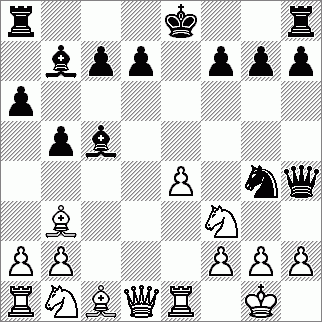
1.e4 e5 2.Nf3 Nc6 3.Bc4 Nf6 4.Ng5 d5 5.exd5 Nxd5 [There's a reason 5...Na5 is more popular. It surely is less stressful for Black!]

6.Nxf7 Kxf7 7.Qf3+ Ke6 8.Nc3 Ncb4 9.Qe4 c6 10.d4 Bd6 11.a3 Na6 12.Bxd5+ cxd5 13.Qxd5+ Ke7 [13...Kf6 14.Ne4+; 13...Kd7 14.dxe5 Qe7 15.Qxd6+ (15.Bf4) ; 13...Kf5 14.Qf7+] 14.Bg5+ 1-0 (26)

Jon Tindall - Eric Billaux
1.d4 Nf6 2.c4 Nc6 3.Nf3 e6 4.a3 d5 5.e3 Be7 6.Nc3 0-0 7.Bd3 dxc4 8.Bxc4 b6 9.0-0 Na5 10.Bd3 c5 11.dxc5 bxc5 12.Rb1 Rb8 White can be satisfied with the opening - his stronger opponent has 2 isolated pawns, and a less than stellar attack. He can't be thrilled about the hole on b3, but is otherwise fine. 13.Qe2 Qc7 14.Rd1 e5 15.e4 h6 16.Nd2 Be6 17.Nc4 Nb3 18.f3 Nd4 19.Qf2 Rfd8 Black has also manuevered skillfully! 20.Qg3 Bxc4 21.Bxc4 Bf8 22.Be3 [22.Bxh6 Nh5 23.Qh4 Nf6 24.Bg5] 22...Rb7 23.Qf2 Bd6 24.Nd5 Nxd5 25.Bxd5 Rb6 26.Qf1 Rdb8 27.Rd2 c4 28.Qxc4 Qxc4 29.Bxc4 Bxa3 30.Bxd4 exd4 31.b3 Bb4 32.Rd3 Bc3 33.Rc1 White wants the a-file 33...a5 34.h3 Rb4 35.Bd5 a4 36.bxa4 Rxa4 37.f4 Rb2 38.Kh2 Rab4 39.Rg3 Re2 40.e5 g5? 41.Rf1 Rb5? 42.Bc4 And White went on to win in 32 more moves
1-0

ROUND 3

Dain Lewis - Joe Bihlmeyer
1.e4 e5 2.Nf3 Nc6 3.Bb5 a6 4.Ba4 Nf6 5.0-0 b5 6.Bb3 Bc5 7.Re1 Bb7 8.c3 Ng4 Black's already gotten an active attack, but can't White block the diagonal? 9.d4 exd4 No! 10.cxd4 [10.Ng5 Nge5 11.Nxf7 Nxf7 12.Bxf7+ Kxf7 13.Qh5+] 10...Nxd4! 11.Nxd4? Qh4 Thud! 12.Nf3

Qxf2+ 13.Kh1 Qg1+ White missed the smother mate! 0-1

Daoud Zupa - Josh Smith
1.Nf3 c5 2.g3 g6 3.Bg2 Bg7 4.0-0 Nf6 5.d3 d6 6.e4 Nc6 7.c3 Bd7 8.h3 0-0 9.Be3 e5 10.a3 a5 11.a4! Black may have been better advised to counter the threat of 11.b4 with 10...Rb8 11.b4 b6 12. b5 Ne7, when Black's kingside potential is no less dangerous than White's queenside assault. The text allows White a cost-free grip on the light squares. 11...Ne8 12.Nfd2 Nc7 13.Na3 Ne7 14.f4 f6 15.Nf3 Nc6? The move itself is okay, but reflects a loss of the thread of the position: Since Black disdains ...f5, can he aim for ...d5? Is the king safer on h8? The latter allows ...Be6-g8. The rook is a target on a8 - better placed at b8? What does the text really do to improve the position and protect against White's plans? 16.f5 gxf5 17.Nh4 fxe4 18.Bxe4 Bxh3 19.Qh5 f5 20.Nxf5 Bxf1

21.Nxg7 Rf7 22.Qxh7+ Kf8 23.Qh8+ Ke7 24.Bg5+ Rf6 25.Qh4 Qf8 26.Rxf1 Ne8 27.Nxe8 Rxe8 28.Rxf6 1-0

Sepp Hochreiter - Jon Tindall
1.Nf3 d5 2.g3 Nf6 3.Bg2 Bg4 4.d3 Nc6 5.0-0 Qd7 6.c4 Bh3 7.Bxh3 Qxh3 8.cxd5 Nxd5 9.Qb3 Nb6

White's innocuous play conceals a wicked fork, as Black does not have everything under control! 10.Qxf7+! Kxf7 11.Ng5+ Ke8 12.Nxh3 Nd4 13.Nc3 Black hung in there for awhile, but a pawn down coupled with the weak e-pawn led to his demise after 39 moves. 1-0

Phillip Ponomarev - David Rice
1.d4 Nf6 2.Nc3 d5 3.Bg5 e6 4.e4 Be7 5.e5 Nfd7 6.Bxe7 Qxe7 7.f4 a6?! 8.Bd3 Qb4? 9.Nge2 Qxb2 10.a3 Qb6 11.0-0 Let's assess - for Black, a pawn, king in center, 4 pieces at home, and a knight able to reach ...f8. White has 2 files, a safer king, ready to attack Black's king on e8 or g8. Advantage White! 11...c5 12.Na4 Qa7 Optimistic! At least 12...Qc7 helps support f7. The poor lady has no help for her "attack." 13.c3 cxd4 14.cxd4 Nc6 15.Bc2 f6 16.exf6 Nxf6 17.Rb1 0-0 18.Nb6 Rb8 19.Qd3 Virtually a queen up, this should be a simple attack! 19...Ne7 20.g4 g6 21.Ba4 Nc6 [It's not, but 21...Nxg4 22.Nxc8 (22.Bd7 Bxd7 23.Nxd7) 22...Rbxc8 23.Bd7 is trouble, even if 23...Rc6 is playable. This line may have been the best practical chance, albeit a little less fun for White.] 22.Rb3 Nxg4 Anyway! White could have played 22.h3 with a strong position. Now he's down 2 pawns - but can Black defend? 23.Qh3 [23.Qg3] 23...h5 24.Qg3 Kg7? [24...Rf7] 25.Kh1 Rf7 26.Rg1 Ne7 27.Be8

Rf6 28.h3 Nh6 29.Qg5 Nf7 30.Bxf7 [30.Qxh5] 30...Rxf7 31.Qxh5 Rf5 32.Qh4 Rf6 33.Qg5 [33.Ng3] 33...a5 34.Ng3 Kf7 35.Qh6 1-0

ROUND 4

Dan Avery - Renard Anderson
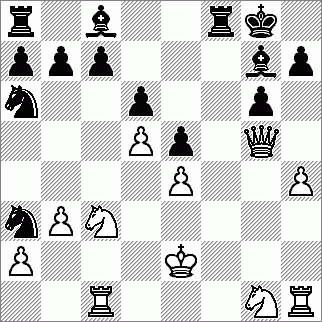
1.Nf3 Nf6 2.c4 g6 3.Nc3 Bg7 4.e4 d6 5.d4 0-0 6.Be2 e5 7.0-0 Nc6 8.d5 Ne7 For those looking for pearls of opening theory, I am not a good source. I do know that currently 9.b4 is the "hot" move in this KID, but the text, as well as 9.Nd2, have at times been most popular. 9.Ne1 Ne8 10.f3 f5 11.Be3 f4 12.Bf2 h5 13.c5 g5 Let the un-subtleties begin! 14.cxd6 cxd6 15.a4 Rf6 16.a5 Rg6 Possibly h6 is better for the rook, then Nf6-g4 to hit the fan. But the text is clearly not a phantom menace for White! 17.Kh1 g4 18.Nb5 g3 19.Bxa7 Black wants his queen to help the kingside attack, so we see the most spectacular move of 1999 so far! (?-mike)

19...Nf5!! All or nothing! 20.exf5 Rxa7 21.Bd3! [21.fxg6?? Qh4 22.h3 Bxh3 23.Rf2 Bxg2+ 24.Kxg2 Qh2+ 25.Kf1 Qxf2#; 21.Nxa7 Qh4 22.h3 Bxf5 Mates] 21...Ra8 [21...Qh4 - Fritz4] 22.Qc2 Rh6 The smoke has not cleared, but now that White has defensive prospects, Black's problem is not so much the pawn deficit, but that White has strong queenside pressure. 23.h3 Bd7 24.a6!? bxa6?! 25.Nc3 a5 26.Bb5 Rf6 27.Bxd7 Qxd7 28.b4 This shot puts Black on the brink of defeat - no kingside attack, bad bishop, how to stop the passer and not see White's queen & rooks switch to the exposed kingside? (Fritz4 actually rates this position with a slight edge to Black - mike) 28...Rxf5 29.Rxa5 Rc8 30.Qd3 Rf7 31.Ne4 Bf6 32.Ra6 Be7 33.Nc2 Rb8 34.Nc3 Ng7 35.Rfa1 Nf5 36.b5 Nd4 37.Ra7 Qc8? [37...Qf5= Fritz4] 38.Nxd4 exd4 39.Ne2 Rg7 40.Nxf4 Qe8 41.Ne6 Rh7 42.Nxd4 Qf7 43.Nc6 Re8 44.Nxe7+ Rxe7 45.Rxe7 Qxe7 46.Qg6+ 1-0

Mike Emerson - Sepp Hochreiter
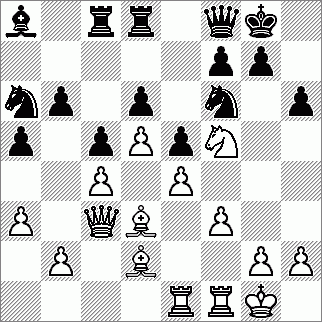
1.d4 Nf6 2.c4 g6 3.Nc3 Bg7 4.e4 d6 5.Nf3 0-0 6.Be2 e5 7.0-0 Nc6 8.d5 Ne7 9.b4 Ne8 10.Nd2 f5 11.c5 f4 12.Bg4 12...a5 13.bxa5 leaves Black with queenside issues to deal with, so no need to lose time - 12...h5 13.Bxc8 Rxc8 14.f3 g5 15.a4 Ng6 16.Nc4 Rf7 [Supporting g4 via 16...Nf6 looks fine, seeing as d6 is safe - but since ...g4, even ...g3 lack follow-up, this suggestion could face problems from Bc1-a3 and Rac1. So Black leaves his base protected.] 17.Na5 Rb8 18.Ra2 Bf8 19.c6 b6 20.Nc4 Until Black gets in ...g4, his bishop is a tall pawn - and the b8 rook is not a "tower of power" either! 20...Rg7 21.Kh1 Nh4 22.g3 fxg3 23.hxg3 Ng6 24.Ne3 Rh7 25.Rh2 h4 26.g4 Ng7 27.Nf5 Nxf5? [27...Be7 would be tougher to crack.] 28.exf5 Nf4 29.Ne4 Be7 30.Bxf4 gxf4? [30...exf4] 31.g5 Qf8 32.f6 Bd8 33.Rg1 h3 34.Qd3 Kh8 35.Qf1 Qg8 36.g6 Qxd5 37.Rxh3 with mate in 6 - Fritz4
1-0

ROUND 5

Josh Bloomer - Doug Hamilton
1.e4 c5 2.Nf3 e6 3.d3 d6 4.g3 Nc6 5.Bg2 Be7 6.Nbd2 Nf6 7.0-0 0-0 8.c3 Ne5 9.Qe2 Nxf3+ 10.Nxf3 Rb8 11.d4 b6 12.Rd1 Qc7 13.e5 Nd7 14.h4! Bb7 15.Bf4 The point of h4 - development with a purpose! 15...Rbd8 16.Kh2 h6 17.dxc5 Nxc5 18.Qe3 Bc6 19.Rd4 Nb7 20.Bxh6 dxe5 21.Bxg7 exd4 22.Qh6 f6 23.Bh3 Kf7 24.Ng5+ Ke8 25.Nxe6 Qe5 26.Bxf8 Bxf8 27.Qxf8+ Kd7 28.Nxd8+ [28.Nc5+ Kc7 29.Na6#] 28...Kc7 29.Ne6+ Kd7 30.Nc5+ Kc7 31.Na6#
1-0

Andy Rea - Mike Klein
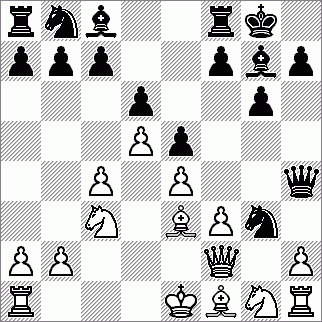
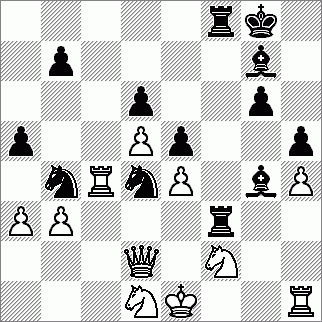
1.d4 g6 2.c4 Bg7 3.Nc3 Nf6 4.e4 d6 5.f3 0-0 6.Be3 e5 7.d5 Nh5 8.Qd2 Qh4+ This bit of imbalance is from Bronstein! White can evade with the queen trading 9.Qf2 Qxf2+ 10.Bxf2 f5 - not exactly bad for Black. Or 9.Bf2 Qf4. The text is book for a few moves. 9.g3 Nxg3 10.Qf2

Nxf1!! (Note to Andy - this is the most spectacular move I’ve seen this year! - Mike) 11.Qxh4 Nxe3 12.Ke2 Nxc4 Now the standard line is 13.Rc1 a6, but I try to be cute. 13.b3 The "natural" move seems to be 13...Nb6, met by 14.Nb5 Na6 15.Rc1. The text stops this, and keeps a view to d4. 13...Na3 14.Rc1 Na6 15.Qg5 [This seems fine, trying to hit the h-file, but 15.Nh3 to activate at f2 may be better.] 15...f5 Incredibly, with both knights developed on the edge, 2 so-so bishops, and two pieces and two pawns for the queen, Fritz4 still gives Black the slight edge - this game was fascinating to watch - Mike 16.h4 fxe4 17.fxe4

Black wants to play ...Bg4 to harass the king. Where there’s a will there’s a way! 17...h5 18.Nh3 [18.Qxg6 Bg4+ 19.Ke1 Rf6 20.Qg5 Kf7-+] 18...Bg4+ 19.Ke1 Nb4 20.Qd2 Rf3 21.Nf2 Raf8 22.Ncd1 The trick is to see if I can hit near g7 before his knights arrive, but Black has seen more! a5 23.Rxc7 [23.Rxc3 is barely not losing by force, since I figure to lose anyway, I go for the most offense…] Nb5 Black calls the bluff 24.Rc4 Nd4 25.a3 [Not liking the e-file or a pending ...Bh6 or ...Bg3, I resist the necessary 25.Rxd4 exd4 and try one last time to confuse the issue...]

25...Rxf2 He didn't buy it, so now I buy the farm... 26.Qxf2 Nd3+ 27.Kf1 Nxf2 28.Nxf2 Be2+ 29.Ke1 Bxc4 30.bxc4 Rc8 0-1

Charles Martin - Sean Cabrera
1.d4 Nf6 2.Nc3 d5 3.g3 e6 4.Bg2 c5 5.Nf3 a6 6.0-0 Nc6 7.e3 Bd6 8.a3 0-0 9.Re1 b5 10.e4 dxe4 11.Nxe4 Nxe4 12.Rxe4 Bb7 13.c3 Qc7 14.Rh4 Rfd8 15.Qc2 g6 16.Ng5 h5 17.Rxh5 gxh5 18.Qh7+ Kf8 19.Bh3 [19.Bf3 Seems to be the most promising offensive threat] 19...Re8 20.Nxe6+? 20.Nxe4 was still enough here - now Black survives! 20...Rxe6 21.Bxe6 [21.Bh6+] 21...fxe6 22.Bh6+ Ke8 23.Qg8+ Kd7 24.Qg6 Ne7 25.Qf7 Qc6 26.f3 Rg8 [This extends the game, the simple 26...Qxf3 forces a queen trade 2 pieces up. Still, Black held on to win on the 36th]
0-1

Shane Gaschler - Josh Smith
1.e4 c5 2.Nf3 g6 3.d4 cxd4 4.Nxd4 Bg7 5.Nc3 Nc6 6.Be3 Nf6 7.Bc4 Qa5 8.0-0 0-0 9.Nb3 Qc7 10.Bg5 d6 11.Re1 a6 12.Bf1 b5 13.a4 b4 14.Nd5 Nxd5 15.exd5 Ne5 16.a5 Re8 17.f4? Too ambitious, although black already has better pieces. Moves like 17. Rb1 are so uninspiring! 17...Ng4 18.Bh4 Bxb2 19.Rb1 Qa7+ 20.Kh1 Bf6 21.Bg3 h5! 22.Re2 Bd7 23.Qc1 Kg7 24.h3 Rh8! This was the idea behind 21...h5. Black's knight is very hard to dislodge. 25.Bh2? [25.hxg4 hxg4+ 26.Bh2 Rxh2+ 27.Kxh2 Rh8+ 28.Kg3 Bh4+ 29.Kh2 Bf2#] 25...Nf2+ 26.Rxf2 Qxf2 27.Bg1 Qg3 28.Bd3 Bxh3!? 29.gxh3 Qxh3+ 30.Bh2 Qf3+ 31.Kg1 Qxd5 32.Qe1 Rac8 33.Qe2 Rc3 34.Qg2 Rxd3! 35.cxd3 Qxd3 36.Nd2 Rc8
0-1

Mike Fuchs - Daoud Zupa
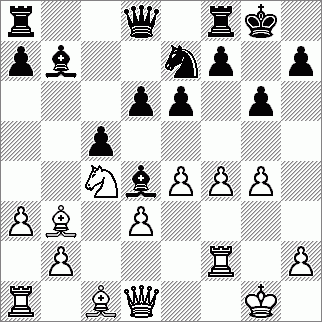
Andy suggested I should annotate this upset myself. Consider this The Return of the Psycho-B-Player, topic: "fixation." 1.e4 c5 2.Bc4 Nc6 3.f4 g6 4.c3 Bg7 5.Nf3 e6 6.d3 Nge7 7.Nbd2 0-0 8.Bb3 d6 9.0-0 b5 10.Rf2 Played to allow Nf1, but I don't have time for that. 10...b4 11.cxb4 Nxb4 12.Nc4 Bb7 13.a3 Nbc6 14.g4 Nd4 15.Nxd4 Bxd4

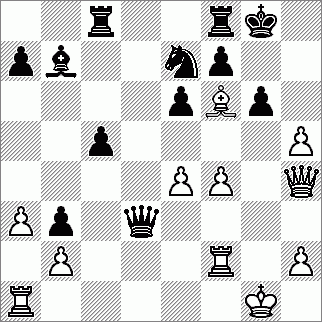
16.Be3?! [I am now committed (or should be) 16.Ne3 Is the safer alternative, but have you ever known me to be safe?! - I expected what follows, and was prepared to win in a blaze of glory or get shot down in flames. ] 16...d5 17.Bxd4 dxc4 18.Bf6 [18.Bxc5 cxb3 19.Qxb3 Qd7] 18...cxb3 19.Qf3 Qd7 This natural pin-breaking move is not necessary, and will cost Black a tempo later with a nice defensive tactic which won't be available. i.e - [19...Re8 20.Qh3 a5 21.Qh6 Nf5!] That Fritz4 rates me less than a pawn down, when I've sacrificed a piece gives me some solace. Maybe the sac wasn't totally unsound. 20.Qh3 h5 [20...Qd8 21.Qh6 (21.Qh4 Re8 22.Rf3) 21...Nf5-+; 20...Nd5 21.exd5 Qxd5 22.Re2+- (22.Kf1) ; 20...e5 21.Qh6 Qxg4+ 22.Rg2 Qxg2+ 23.Kxg2 Nf5 24.Qh3+-] 21.gxh5 Rac8 When Daoud played this mellow move, with a calm confidence, I suddenly realized that my attack was not entirely winning! 22.Qh4 Trying to at least put on some pressure and retrieve the piece. [22.hxg6 fxg6 23.Qh8+ Kf7 24.Qg7+ Ke8 And my attack falls short.] 22...Qxd3??

Fixation!! Daoud realized he could cover the h8 square via ...Nxg6, and although he had earlier noted the g7 square, he became fixated on the mate at h8. [22...Nd5 23.exd5 (23.hxg6 Nxf6 24.g7 Nh7 25.gxf8R+ Rxf8) 23...Qxd5 24.Kf1] 23.hxg6 Now it all mates. [23.hxg6 Qd1+ 24.Rxd1 fxg6 25.Qh8+ Kf7 26.Qg7+ Ke8 27.Qxe7#] 23...Nxg6 24.Qh6 I was very happy with this game, as Daoud is someone I've always feared and respected. I'm glad he let his guard down long enough for me to catch him once! 1-0

  buckpeace@pcisys.net  

Home Schedule Ratings Results Games History