


 MUSIClassical ALLEGRO

Topic: NEW CDs
 VIVALDI's The Four Seasons present a formidable challenge to the soloist's technical command, tonal variety and imagination; they have been recorded so many times that any violinist who wants to add to the discography must have something distinctive and personal to offer. Sarah Chang has both the brilliant technique and the extroverted personality needed to put her own stamp on the music. Her approach is essentially programmatic. She follows Vivaldi's instructions with obvious relish, using her dazzling virtuosity and all her instrumental resources to create mood and atmosphere and to conjure up vivid pictures of "seasonal" events. Tempi range from beautifully calm slow movements to fast passages at headlong speeds. Contrasting dynamics and articulation, ponticello, trills that give off sparks; colorful nuances, from unvibrated and glassy, to throbbing and passionate, serve to underline Vivaldi's imagery. The result is a dramatic, technically fearless, emotionally uninhibited performance, which, though far from baroque, is honestly felt and convincing in its own way. As an encore, Sarah Chang plays the familiar "G-minor Concerto" with charm and vivacity, and an almost romantically luxurious tone. Totally incongruous with the natural spontaneity of her playing, the booklet shows her in nine terribly affected poses, glamorously attired, amid autumn leaves and snowflakes. --Edith Eisler [amazon.com]
 The New Jersey Symphony Orchestra has made a deal to sell 30 stringed instruments, including Stradivarius and Guarneri violins. The collection has been something of an embarrassment for the orchestra since it acquired the instruments in 2003. Officials say that the sale will allow the orchestra continue to use the instruments for at least five years while paying off its debt, The New York Times reported.
 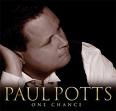 Paul Potts, tenor
 In books like "The Man Who Mistook His Wife for a Hat" and "An Anthropologist on Mars," the physician Oliver Sacks has given us some compelling and deeply moving portraits of patients in predicaments so odd, so vexing, so metaphysically curious that they read like something out of a tale by Borges or Calvino. In his latest book, "Musicophilia," Sacks focuses on people afflicted with strange musical disorders or powers — "musical misalignments" that affect their professional and daily lives.
  King's College Choir are one of today's most accomplished and renowned representatives of the great British choral tradition and this is reflected in their impressive discography with EMI Classics. This new recording, in which the choir are joined by viol ensemble Fretwork, widens that representation and is a beautiful addition to the choir's repertoire. Fretwork is a consort of viols based in the UK. Formed in 1986, the group consists of six players and is considered to be one of the finest groups performing music for viol consort. This disc features a stunning selection of anthems from the Tudor Times, featuring some of the period's most prestigious composers. The disc includes a "This is the Record of John" by Orlando Gibbons which must have been one of the most popular anthems of this era judging by the number of manuscripts that contain it. Orlando Gibbons himself had an association with Kings College, Cambridge as a chorister under the direction of his eldest brother from 1596 to 1598.
  It is a pity that this major cultural landmark in Romanian history is not as popular as it should be, for it is, without a doubt, one of the best museums in the country. Not only it is dedicated to the greatest Romanian composer, George Enescu, but it is also hosted in a beautiful villa, on the main avenue of the capital, Calea Victorie, No 141.
  Wilhelm Stenhammar died eighty years ago today, on November 20, 1927. At the beginning of the twentieth century Swedish born Stenhammar was the pre-eminent Scandinavian composer and pianist. He played his own First Piano Concerto with the Berlin Opera Orchestra conducted by Richard Strauss and with the Hallé conducted by Hans Richter, and the Berlin Philharmonic under Arthur Nikisch performed his concert overture Excelsior!
 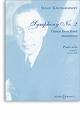 In the early 1930s, the great composer, conductor and concert pianist Sergei Rachmaninoff performed in San Antonio. According to "Sergei Rachmaninoff: A Lifetime in Music," by Sergei Bertensson and Jay Leyda (first published in 1956, reissued in 2001 by Indiana University Press), Rachmaninoff was suffering from a bad back and had to be assisted onto the stage. Since he did not want his condition to be a distraction, he asked that the curtain be raised and lowered while he was at the piano. Where was the performance held, when did it occur, who sponsored it, was it a solo recital or was an orchestra involved, and which works were on the program? Were there any reviews?
 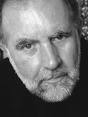 WILLIAM Boughton, founder and principal conductor of the English Symphony Orchestra, has been appointed as principal conductor of the prestigious New Haven Symphony Orchestra in the USA. Boughton beat off over 70 applicants for the coveted job. The orchestra boasts a concert hall with a capacity of 3,000. Boughton and his family are moving during July from their home in Wycombe, having left Malvern after over 25 years at the helm of the ESO.