
| RESISTOR | AMPLIFIER | TRANSISTOR | |
| INTEGRATED CIRCUIT | CELL | BATTERY | OHM'S LAW |
| GENERATOR | CAPACITOR | INDUCTOR |
Some Common Definitions
two-terminal ELECTRIC CIRCUIT component that generates heat by offering opposition to an electric current. The most common forms of resistors are made from fine wires of special alloys wound onto cylindrical forms or from a molded composition material containing carbon and other substances in varying amounts Resistors are rated for the maximum amount of power that they can safely handle.
Click here for a page on resistor color codes.
Go here to purchase a specific resistor.
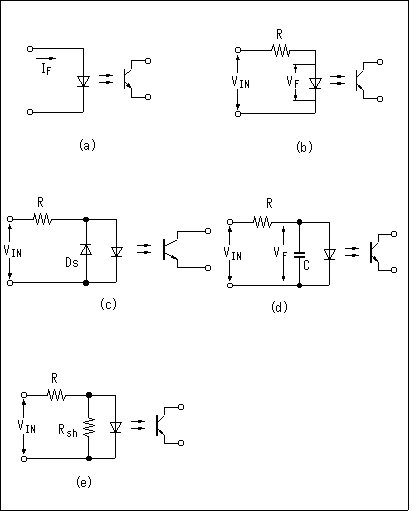
two-terminal device having a low RESISTANCE to electric current in one direction and a high resistance in the reverse direction. Diodes are thus useful as RECTIFIERS, converting alternating current (AC) into direct current (DC). Although ELECTRON-TUBE diodes were once common, almost all diodes today are SEMICONDUCTOR devices. In general, current flowing through a diode is not proportional to the voltage between its terminals. When the voltage applied in the reverse direction exceeds a certain value, a semiconductor diode breaks down and conducts heavily in the direction of normally high resistance; this effect can be exploited to regulate voltage. In another type of diode, the tunnel diode , the current through the device decreases as the voltage is increased within a certain range; this property, known as negative resistance, makes it useful as an AMPLIFIER. Some diodes are sensitive to light . A light-emitting diode (LED) produces light as current passes through it; some LEDs can act as lasers.
Click here for more information about diodes.
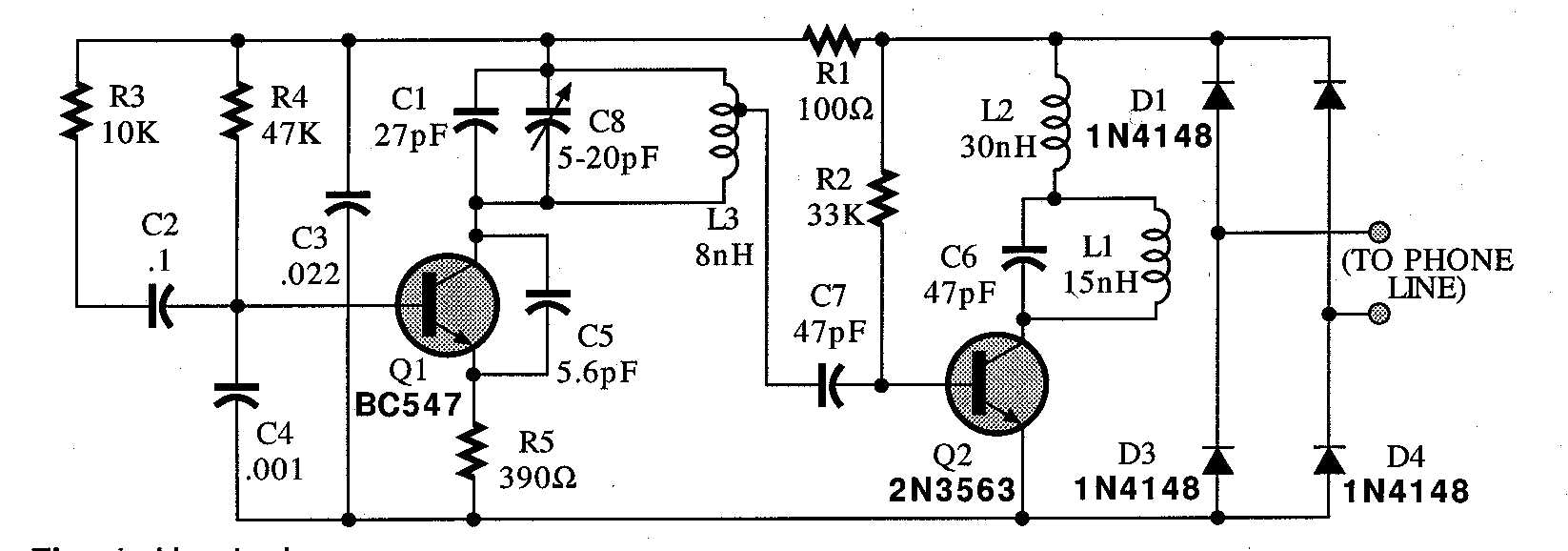
device in which a varying input signal controls a flow of energy to produce an output signal that varies in the same way but has a larger amplitude; the input signal may be a current, a voltage, a mechanical motion, or any other signal, and the output signal is usually of the same nature. The ratio of the output voltage to the input voltage is called the voltage gain. The most common types of amplifiers are electronic and use a series of TRANSISTORS as their principal components. In most cases, the transistors are incorporated into INTEGRATED-CIRCUIT chips. Transistor amplifiers are used in RADIO and TELEVISION transmitters and receivers, stereophonic sound reproduction systems, and intercoms.
electronic device used as a voltage and current AMPLIFIER, consisting of SEMICONDUCTOR materials that share common physical boundaries. The materials most commonly used are silicon and germanium into which impurities have been introduced. In n-type semiconductors there is an excess of free electrons, or negative charges, whereas in p-type semiconductors there is a deficiency of electrons and therefore an excess of positive charges. Transistors are a key component of INTEGRATED CIRCUITS and are used in many applications, including RADIO receivers, electronic COMPUTERS, and automatic control instrumentation. These are generally classified as bipolar or field effect. A bipolar transistor consists of three layers-the top and bottom layers, called the emitter and the collector, are of one conductivity type, while the middle layer, called the base, is of the other conductivity type. The dividing surfaces between the conductivity types are called p-n junctions. The electrons pass through the junctions from one layer to the other. The transistor action is such that if the electric POTENTIALS on the segments are properly determined, a small current between the emitter and base connections results in a large current between the emitter and collector connections, thus producing current and amplification. A field-effect transistor functions in a similar fashion except that the resistance to the electron flow is modulated by an external electric field. In a junction field-effect transistor (JFET), the controlling electric field is produced by a reversed bias p-n junction (one in which a voltage is applied so as to make the p side negative relative to the n side); in a metal oxide semiconductor field-effect transistor (MOSFET), the electric field is due to a charge on a CAPACITOR formed by a metal electrode and an insulating oxide layer that separates the electrode from the body of the semiconductor.
Transistor page with some explanations about them.
miniature ELECTRIC CIRCUIT containing large numbers of electronic devices-including TRANSISTORS, RESISTORS, CAPACITORS, and DIODES-and packaged as a single unit with leads extending from it for input, output, and power-supply connections. All the electronic devices are formed by selective treatment (doping) of a single chip of SEMICONDUCTOR material. Integrated circuits are used as computer memory circuits and MICROPROCESSORS. They are categorized according to the number of transistors or other active circuit devices they contain; an active circuit device is one that receives power from a source other than its input signal. An ordinary, or small-scale, integrated circuit (SSI) may contain up to several tens of such devices; a medium-scale integrated circuit (MSI), many tens to several hundred; a large-scale integrated circuit (LSI), several hundred to a few thousand; an extra-large-scale integrated circuit (ELSI), a few thousand or more; and a very-large-scale integrated circuit (VLSI), several hundred thousand or more.
For more integrated circuits click.
in electricity, device that converts chemical energy into electrical energy, commonly called a battery. A cell consists of two dissimilar substances, a positive ELECTRODE and a negative electrode, and a third substance, the ELECTROLYTE, that acts chemically on the electrodes. The ELECTROMOTIVE FORCE, or voltage produced between the positive and negative electrodes, depends on the chemical properties of the substances used but not on the size of the electrodes or the amount of electrolyte. When the electrodes are connected externally by a piece of wire, electrons flow from the negative electrode, through the wire, and into the positive electrode. There are several kinds of cells, differing in electrode material and electrolyte. The Leclanché cell has a zinc negative electrode, a carbon positive electrode, and an electrolyte consisting of ammonium chloride solution. It is the basis of the common dry cell (the standard flashlight battery), so called because the electrolyte is in the form of a paste instead of a liquid. An alkaline dry cell, which can operate up to ten times longer than common dry cells,N has a zinc negative electrode, a manganese dioxide positive electrode, and an electrolyte of potassium hydroxide. A mercury dry cell, with a zinc negative electrode, a mercuric oxide positive electrode, and a potassium hydroxide electrolyte, has a constant output voltage and may be stored for many years. Rechargeable flashlight batteries are nickel-cadmium (ni-cad) cells or alkaline cells. A wet cell contains a number of alternately positive and negative plates in a liquid electrolyte. Positive plates are connected to form the positive electrode; negative plates are similarly connected. A true BATTERY consists of a group of cells that are connected to act as a source of direct current.
device that consists of a group of CELLS that are connected to act as a source of direct current. The term is also commonly used for a single cell, such as the alkaline dry cell used in flashlights and portable tape players. A storage battery usually consists of several wet cells (cells with a liquid electrolyte) connected in series, and can be recharged many times. In the U.S. the lead storage battery is commonly used in automobiles. Its cells consist of alternate plates of lead (negative plates) and lead coated with lead dioxide (positive plates) immersed in a sulfuric acid solution (the electrolyte). Negative plates are connected to form a cell's negative electrode; positive plates similarly form the positive electrode.
law stating that the electric current i flowing through a given RESISTANCE r is equal to the applied voltage v divided by the resistance, or i (= (v/r. In alternating-current (AC) circuits, where INDUCTANCES and CAPACITANCES may also be present, the law must be amended to i (= (v/z, where z is the IMPEDANCE. The law was formulated by the German physicist Georg Simon Ohm, 1787-1854.
More on Ohm's Law.
electrical device used to convert mechanical energy to electrical energy. It operates on the principle of electromagnetic INDUCTION. The generator moves a conductor through a magnetic field and directs the current produced by the induced voltage to an external circuit.
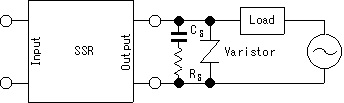
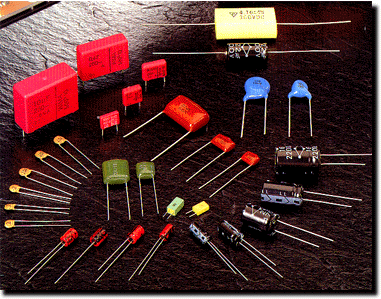
A capacitor is a two-terminal element that is a model of a device consisting of two conducting plates separated by a nonconducting material. Electronic charge is stored on the plates, and the area between the plates is filled with a dielectric material. The capacitance value is proportional to the dielectric constant and surface area of the dielectric and is inversely proportional to its thickness. To obtain greater capacitance, a very thin structure of large area is required. The unit of capacitance is coulomb per volt and is called farad(F) in honor of Faraday.
If you would like to learn more about capacitors click here.
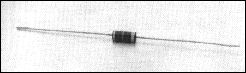
An Inductor is a two-terminal element consisting of a winding of N turns for introducing inductance into an electric circuit. Inductance is defined as the property of an electric device by which a time-varying current through the device produces a voltage across it. An ideal inductor is a coil wound with resistanceless wire. When current exists in the wire, energy is stored in the magnetic field around the coil. A constant current in the coil results in zero voltage across the coil.
Buying Inductors or doing more research is easy on this Inductor link.
If you have engineering questions click.
Click here to see another interesting theory page.
To go to the virtual library click here.
