
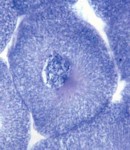
 Cells are the tiniest unit of life. There are trillions of cells in your body.
 The human body is made up of 4 types of tissue.

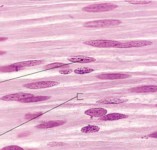 Smooth muscle = intestines, urinary tract, organs, etc.
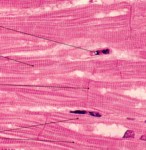 Cardiac muscle = heart tissue.
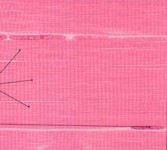 Skeletal muscle = biceps and other muscles that attach to bone.
Muscle move your body parts. Most muscles are attached to bones, though not all muscles are. Your bicep is an muscle on your upper arm which is attached to the humerus bone. Your heart is made up of muscle but does not touch any bone.
Muscles contract (move) by electrical impulses which are messages being sent from the brain.
More on Muscles


Connective tissue connects the different parts of your body together. Some examples are bones, tendons, blood, cartilage.
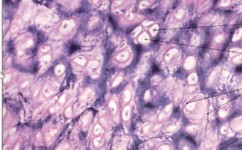 This is a close-up of ear cartilage.
Tissues working together to perform a specific job in the body form organs.
Organs work together to form organ systems.
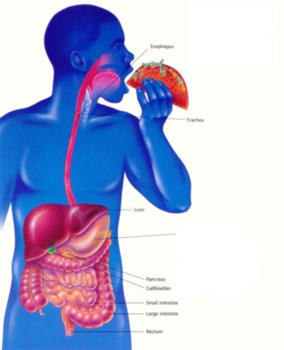 For example, the stomach, esophagus, small intestine, pancreas, and large intestine are all organs. They work together to make the digestive system.
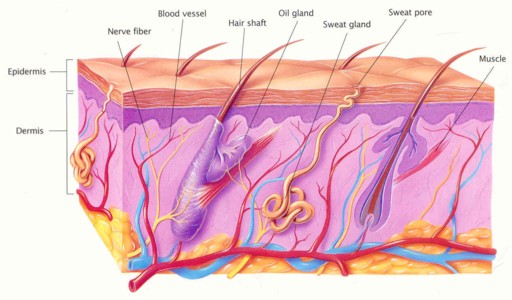
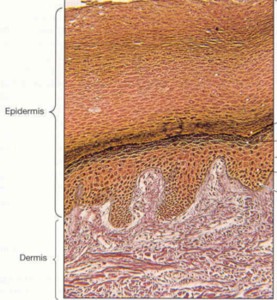
The skin is made up of 2 main parts: Epidermis and Dermis.
The dermis contains nerves which allow you to feel, muscles to cause hair to stand when cold or afraid, blood vessels for nourishment, and glands to sweat and cool the body.
Your skin has 2 different types of glands. Sweat glands secrete salt-water. Apocrine glands secrete proteins and fatty acids (oil). Bacteria on your skin feed on these substances and they multiply. That is what causes body odor.
The epidermis is made up of dead cells which make the outer layer. The layers of living cells is deep down in the skin. These layers are quickly replaced by new cells growing and are pushed upwards. Eventually no blood or nourishment can reach these cells and they die.
Skin color ranges from very fair to very dark. The amount of melanin present in the skin determines darkness. People with dark skin have high amounts of melanin and their skin does not need as much sunblock as someone with fair skin.
Acne
 is caused by bacteria on your skin which gets into your pores. Your face secretes sebum, an oil which the bacteria feed on. Whiteheads are an accumulation of oil inside of a clogged pore. Ways to treat acne is to prevent the bacteria from overgrowing. Wash with soap frequently, do not touch your face with hands that may have bacteria on them, use face scrubs to unclog pores, and there are many over the counter (OTC) products on the market such as benzoyl peroxide.
 The sun's ultra violet rays (UV) contains radiation.
This radiation can mutate DNA causing skin cancer. 99% of skin cancer causes the epidermal skin cells to divide out of control. They form odd-shaped moles. These are treatable if caught early. 1% of skin cancers is called Melanoma. This is cancer in the melanin cells of the skin. This type of cancer is very dangerous.
Calcium & Phosphorous are 2 minerals that help make bone.
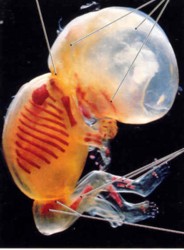
As an infant, you did not have many bones. A babies body is made up of mostly cartilage instead. As the baby gets older, that cartilage is replaced with hardened bone.
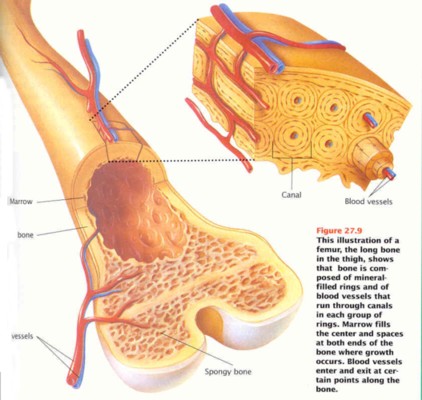
 Breaking a bone is very painful. Luckily bones can repair themselves. A crack in the bone is called a fracture. However, a compound fracture is very severe. When this occurs, bone breaks through the skin.
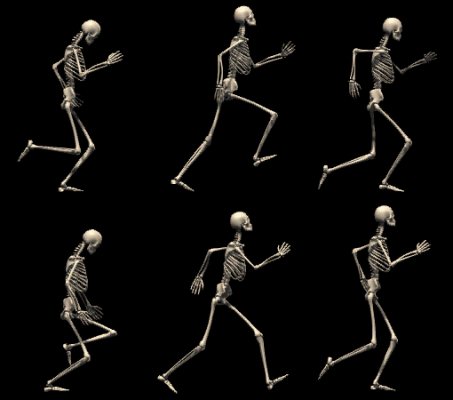

The human skeleton is made up of 206 bones and has 3 main functions:
1. support body weight 2. move 3. protect internal organs.
 Bones join together at joints.
There are 5 different types of joints which create a different type of movement.
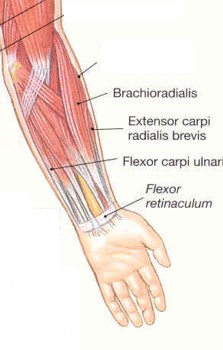
Bones that connect to another bone have a connective tissue between them called a
The muscles that attach to bones have a connective tissue between them called a
1. Chapter 27 Worksheet on tissue, bone, and muscle
2. Owl Pellet Lab (identifying bones)
3. Read and answer Chapter 28: p. 655 #1-4 & p.662 #1-4
4. Chapter 28 Worksheet on the nervous system
5. Left/Right Brain Test
6. Chapter 30 Worksheets on How Drugs Affect the Nervous System.
6. Rat Dissection
