Master Thespian |
Master Thespian
How To Memorize Monologues and Scenes:
Gouging the Gray Matter
Page 2 |
Last Updated February 10th, 2001
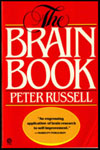
| I'm utilizing The Brain Book, (© 1979) by Peter Russell for most of these tips on memory improvement. The other books weren't quite so concise, even though they are much more recent.
|
|
 |
 |
 |
Hermann Ebbinghause
Spent six years memorizing lists during his experiments on the human memory.
He found that the more times he went through the list in his original learning, the less time was needed to relearn the lists. He discovered that even if he stopped going through the lists, prior to having them memorized completely, that the relearning was still easier.
The Reminiscence Effect For a while after you first learn lines, your memory may improve a little rather than worsen. This is the opposite of forgetting and is termed the reminiscence effect. It has been found that children who were given a poem to memorize but not allowed to memorize it perfectly, remembered it better a day after learning than they did the first day. Often they were able on the second day to recall lines they could not remember on the first day.
Primacy and Recency I'm sure you've noticed that it's easy to remember the first few words or lines of a script.  That is termed the primacy effect. And the fact that you can usually recall the last words of lines is called the recency effect. Something you needed to know for the next cast party and the next paragraph.
Rest Periods Ebbinghause discovered that when he introduced short rest periods between successive periods of memorization, his learning efficiency improved. This was partly due to the reminiscence effect. And partly due to the primacy and recency effects. If your memorization session is broken into a number of smaller blocks, with short breaks in between, there are more times at which the primacy and recency effects can occur. Somewhere between blocks of fifteen to forty five minutes memorizing With a break of five to ten minutes in between should produce optimum results.
This is why, your Master Thespian (under heavy disguise) learns much easier at the Border's Coffee Bar than while relaxing at the manse. At Border's I am often distracted from my memorizing, usually by photographers, directors, reporters, autograph hounds, and large breasted women jiggling by, for what results in several five to ten minute breaks. These breaks have unwittingly allowed these reminiscence, primacy and recency affects to occur !
 During the walk he counted some three hundred objects and many more items that he associated with these objects. He wrote: "Samples of my whole life had passed before me. ... Many bygone incidents, which I have never suspected to have formed part of my stock of thoughts, had been glanced at as objects too familiar to awaken the attention. I saw at once that the brain was vastly more active than I had previously believed it to be ..."