Master Thespian |
Master Thespian
How To Memorize Monologues and Scenes:
Gouging the Gray Matter |
Last Updated April 18th, 2002
(Looks Best Using MS Explorer 5.0
800x600 Using 'Smaller' Text)

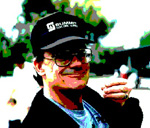
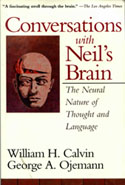 Greetings, fellow Thespians! What's afoot? I have searched the World Wide Web and located very few articles that would actually help me, or you, in memorizing monologues, scenes or entire plays. I have carefully poured through four books that were entirely focused on the subject of how our brains function and I will use that knowledge here. I have read and clipped countless articles on the brain, all the while keeping in mind how I might make memorizing monologs, scripts and screenplays simpler.
Here are some points to keep in mind. This is the method Master Thespian uses to work these pieces, you can do as you wish, but since you have come to this page, I would assume that you are looking and open for new ideas. So, here we go.
- Number one. In regards to memorizing and life in general, you must concentrate on what you want. If you concentrate on what you want, your chance of actually getting your desires, your dreams and accomplishing your goals, are so much greater as to be unquantifiable. Remember, goals must be attached to a specific date.
A goal without a date is only a wish.
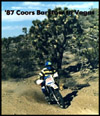
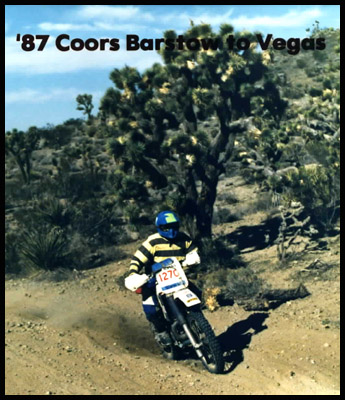
In example, your Master Thespian used to race motorcycles in the deserts of the Southwest. There was a time when if I saw a Neon-sized boulder in the desert ahead, I used to groan to my pitiful self as I began to stiffen my torso, "I'm going to hit that boulder and crash. Don't hit that boulder! Stay away from that rock! Gawd, I hope I don't run into that boulder!" Guess what usually happened? I hit that boulder AND crashed.
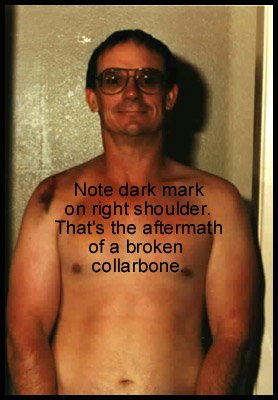
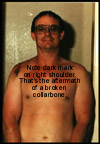 After intimately examining the headliners of one too many ambulances while listening to dumb-assed pussified paramedics as they droned on about 'murder-cycles,' I began to adopt the following thought pattern whenever a boulder, or other obstacle appeared in the path of my dirt bike: "Concentrate on the opening on either side of the boulder. That is where I'm going to place my tires. That's where I'm headed." So now, more often than not, I missed the boulder. And also, during practice rides, I programmed myself to believe that even if I did slam a boulder during the ride or the race, that that alone did not mean I must crash! Due to my newly adopted thought patterns, I not only smashed into less boulders and other obstacles, but when I did, I just bounced off of them and kept going. Likewise, in acting, you can adopt the attitude that you will remember your lines and even if you muff one of them, you can program yourself to believe that you will still perfectly recall, or ad lib, the remaining lines. Isn't that a much better attitude? An attitude like this can make acting fun again!
Once again, concentrate on what you want ... not on what you do not want.
-
 The first line of your monologue must be bullet proof. If you get in a car accident and the air bags explode and your body is dusted with searing baby powder curling the hairs on your arms and your scalp is bleeding from a severe cell phone wound but yet, when the paramedic asks you a question, you must be able to answer with the beginning line of your monologue.
- As you are memorizing, visualize through the eyes of your character, what you are seeing, feeling, touching, hearing and smelling. Do not visualize through the five senses of some omnipresent being standing outside of the scene, but through the eyes of your character. Your eyes, your nose, your ears, your fingers. This is not an out-of-body experience. You should not be floating up in a corner of the scene looking down on your character. (Although I spent many a high school summer afternoon in this very position, floating in a corner of the room looking down at the class.) You should be involved the scene.
- I memorize without saying the lines out loud. It takes a while to get used to, but this is not as challenging as it sounds. Or doesn't sound. If you put yourself in the place of your character (accepting that you are the character) and use your five senses, it is not so difficult. Also, if you memorize silently, you can be memorizing while in waiting lines at the DMV, in your car or on the subway, and in all kinds of places that would normally be 'wasted' times. You can memorize in public without being considered a schizophrenic. (Then again, in my barrio, as I walk to my neighborhood gym, I often do practice my Shakespearian monologs out loud. This has earned me the moniker of "El Loco" among the Latino yard workers up and down my streets.)
- Don't fret about remembering what tactics you used to to memorize any lines. The reason, even I, Master Thespian have taken so long to codify a few of my unique and patented memory techniques, is that I myself soon forget the memory tricks I used and am left with only the blissful memory of the lines themselves. And that is the point! To remember the lines, eh?
This monologue is taken from Lakeboat, and was penned by the awesome David Mamet. Here Joe discusses what he really wanted to be and his frustration, as a deck hand, with the passengers of his employer's lake boat. I have taken parts of sentences and whole sentences, in italics, and then I have explained how I go about memorizing them.
 (I also wandered down to the local Border's Bookstore and grabbed a couple of books that had photos of these huge ore carrying lakeboats. While staring at the photos of these massive ships, I then, for twenty or thirty minutes at a time, imagined how it would be to walk on their decks and what industrial fragrances would be assaulting my nose and how the lake breeze would feel against my neck and hands. I'd live in my mind the same type of day the imaginary Joe lived.)
- You get paid for doing a job. You trade the work for the money.
- Notice how both sentences begin with the word You? Easy, so you know you have two sentences, one after the other and they both begin with the word you.
- You trade the work for the money, am I right?
- The letter 'W' in work usually comes after the letter 'M' in money but this time 'W' comes before 'M'. Easy. "Work comes before Money." And unless you are on welfare that's the normal course of events.
- And I wanted to be a cop. What does a kid know?
- Notice how both 'cop' and 'kid' begin with the same 'k' sound. So all I have to do is remember that 'cop' comes before 'kid.'
- And can I tell you something that I wanted to be? One thing that I wanted to be...
- Notice how 'thing that I wanted to be' repeats?
- It may sound peculiar, but it was my purest heart's desire. If you were there you would have known, it was my purest heart's desire.
- Once again, we have a repeating phrase.
- It just wasn't important. I saw myself arriving late...
- Both sentences begin with the letter 'I', so all I have to do is remember, "This sentence begins with 'I' and so does the following sentence."
- I saw myself arriving at the theater late doing Swan Lake at the Lyric Opera.
- Notice how the two words 'at the' repeat? Also we have three words that begin with 'L', 'late', 'Lake' and 'Lyric'. So, even though it may not be normal speech to use 'at the' twice in one sentence, I can remember that for this sentence it is. In reference to the 'L's', once I get the first 'L' word out, lake, I can easily remember the remaining two, Lake and Lyric. Note also that the last two 'L' words begin with capital 'L's.'
- With a coat, with one of those old-time collars. It was winter.
- See how the word 'with' repeats? Also, notice how we have four words beginning with a 'w' within the fourteen words in the sentence.
- ... tights catching these girls ... beautiful light girls.
- Here we have the word 'girls' (one of my favorite words) repeated twice in the same sentence.
- And I'm standing up straight on stage with this kind of expression on my face ...
- This time I made a word out of the first letters of a few of the words in the sentence. The word is S U S O S, it means nothing, but helps me visualize the sentence.
- Like these passengers we get. Guests of the company. Always being important.
- See how the last word begins with a hard 'g' get? Then the first word of the very next sentence begins with a hard 'g' Guests.
Also examine the phrase Guests of the company. I've made the initials of the company, ABI, because the next sentence is, Always being important.
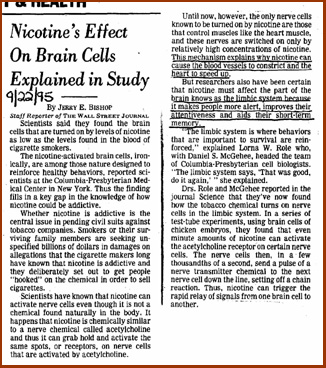
I hope these few hints on how to remember lines have given you some new ideas. Remember, since Master Thespian destroyed countless thousands of brain cells during FDA sanctioned drug and alcohol testing during the 60s, 70s and 80s, he must resort to these memory tricks. However, you can keep your own brain healthy, not by gobbling countless bottles of undocumented, untested, possibly unsafe herbal-drugs purchased at great expense at the local 'Health Food' store, but by simply never using illegal drugs and by not drinking yourself blind more than once or twice a year. (Smokers, read an article about
how nicotine affects brain functions here. Takes a moment to load. Light up a fag and wait.)

 After intimately examining the headliners of one too many ambulances while listening to dumb-assed pussified paramedics as they droned on about 'murder-cycles,' I began to adopt the following thought pattern whenever a boulder, or other obstacle appeared in the path of my dirt bike: "Concentrate on the opening on either side of the boulder. That is where I'm going to place my tires. That's where I'm headed." So now, more often than not, I missed the boulder. And also, during practice rides, I programmed myself to believe that even if I did slam a boulder during the ride or the race, that that alone did not mean I must crash! Due to my newly adopted thought patterns, I not only smashed into less boulders and other obstacles, but when I did, I just bounced off of them and kept going. Likewise, in acting, you can adopt the attitude that you will remember your lines and even if you muff one of them, you can program yourself to believe that you will still perfectly recall, or ad lib, the remaining lines. Isn't that a much better attitude? An attitude like this can make acting fun again!