by Kimberly A. - site creator "If you have fun,
Angélique Kidjo is one of music's finest performers. She is an energetic dancer who encourages her crowd to get up and dance with her. No one in the crowd seems to mind that her songs are in different languages that no one can speak. They are way too absorbed and hypnotized by the petite singer onstage in front of them.
And so began the
stage career of Angélique Kidjo. Things were going great for
Angélique until she learned about apartheid in South Africa.
This traumatized her so badly she didn't speak to her family
for a whole day, which, for her, is a very long time, considering
the bond her family has. She was already upset after learning
about slavery and how Benin citizens had been exported to Brazil
as slaves. (This is where Black Ivory Soul gets its name, black
ivory being the name given to the slaves.) She recalls,
"My parents
were wise enough to let me go on and on," Kidjo says. "When
I calmed down, they told me, 'We understand your feelings, but you
cannot react like that. It's nobody's fault. It's the past. In the
future, your duty as a human being is to make your life and work
bring all human beings together.' It was at this point she began
to have the musical "trilogy" in her mind, that being
Oremi, Black Ivory Soul, and Oyaya.
Of course, they were not titled yet, but she had the basic idea
to do a trilogy. "Even though the project came very early into my brain,
I knew I was not mature enough to do it," she says. "I
needed still to deal with the anger I had in me. There is one thing
that I don't want my music to do, which is to bring hate. I had
to be in the mind-set to be able to enrich myself and not to improve
the pain but to heal." Angelique was raised in the religion called Voodoo, which does not have the negative image portrayed in the media. She was also raised as Catholic. The two religions are very similar. Angelique explains: "When the missionaries arrived in Benin, for example, and they brought the religion, they asked everyone to be baptized, and everybody had been baptized but, we told them from day one that our religion we wanna keep it because our religion is very important for us. And they were obliged to accept that, there was no way for them not to accept that because people wouldn't go to their church and not go into their Voodoo ceremony after. So the first cathedral that had been built in the history of the Catholic religion in Benin was built right in front of the Temple of Python. And those two priests were very close friends. And how did those affect my life and I incorporate them in my life? It's simple. In the Voodoo religion they teach us to respect the nature and to respect every human being. Everything that is alive on this earth we have to have respect for because we believe in Voodoo religion that without the nature, a man would not exist, a human being would not exist. Therefore, we choose to believe in the thunder, in the lightning, in the water, in all the elements that are surrounding us, our lives. Snake is very important because they say in the mythology of the Voodoo religion that this world had been created by two snakes, male and female; during 40 days they created all the planets. And at the dawn of the 41st day, they embraced themselves and left the earth to leave the human being to do what they have to do. And those snakes are called aida-wedo, which means what belongs to the earth belongs to you. And when those gods come to reward somebody who works for a community, they come in terms of rainbow. And they call these two rainbows rainbow snake. And in Haiti, they call it aida-Houeda, and everything stays like that because, what is very important for me is the care of each other. That's what Catholic religion teaches us: You have to love each other. God doesn't send us on the earth to kill each other. He sent us for us to use our brain and our self-conscience to work for a better life for every individual and for everybody. And that's one of the things I really appreciate, too, in the Voodoo religion, where we deal with community." In 1983, Angélique snuck out of Benin and moved to Paris due to the political situation in Benin. "Benin at that time was still Communism dictatorship. And the government step by step moved on putting pressure on the musicians for them to sing about Communism. And one thing that I say that my music will never do is to praise an ideology and a political ideology. So, the reason to move was obvious. If I didn't move and I stayed there and expressed the way I felt about it, I'd put myself and my parents and my family in danger. So I had to move." She attended college there, originally planning to be a lawyer of human rights. She quickly discovered that Europe was a long way from home and very different. "It was very difficult," she recalls, "especially when you come from a very loving family where you know that anything happens, somebody's always gonna be there to back you up and support you. It was kind of disappointing. And being a student and having these stupid questions from students asking me, 'You arrive on the monkey back?' or 'Did you arrive on an elephant back?' I'm like, 'Hey, get out of here. We're in 1983, you're still asking those stupid questions?' They're like, 'Yeah. You have cars?' I'm like, 'Oh, man, what is going on here?' And it had been like that for a year, then I told them, 'You know what? Give me a break. I don't ask you if you still wear the clothes of the 18th Century. Give me a break, man, leave me alone. Why did you ask me such a stupid question?' And they go, 'Oh, you have no sense of humor.' As soon as you refuse any racist joke, you have no sense of humor. And that drove me nuts and still drives me nuts now 'cause it's still the same thing going on." It didn't take Angélique long to discover she could better help the public through music. That's when she entered a jazz school. She soon met her future husband, Jean Hébrail, a white man from Paris. She then joined a band called Pili Pili, a jazz band from Holland. She toured with them for a few years and recorded five albums with them, including a live album which reflects the same energy Angélique shows on her own stage. In 1990, Angélique began her solo career, releasing an album called Parakou. "This album got me the Island contract. Someone sent it to Chris Blackwell, and he sent a fax: 'Chase her down; she can be in a hole up there, I don't care. Chase her down!' I still have the fax." More albums would soon follow, including 1991's Logozo, which featured the dance hit "Batonga." These were all on Island Records. In 1998, she, her husband, and their daughter, Naima, moved to New York. She released the first of her childhood idea for a trilogy, Oremi, which would explore American R&B and its relationship to Benin and Africa. This album contined her cover of Jimi Hendrix' "Voodoo Child (Slight Return)" minus the guitar, preferring to use her vocals as the instrument. She would join some of the Lillith Fair shows that summer and make TV appearances that fall on Jenny Jones and Sessions at West 54th. Of course, she was also touring on her own. From 1999 through 2001, she worked on many side projects, including two appearances on two Trilok Gurtu albums, as well as contiuing to tour and travel to Brazil to start the second part of her trilogy.
|
 |
 |
 |
 |
 |
 |
 |
 |
 |
 |
|


 people have fun."
 It
all began on the continent of Africa. Angélique was born in a
village called Ouidah in Benin,
West Africa, which has quite a history itself and is worth investigating.
She was born July 14. Regarding her year of birth, she prefers
it not be announced. She has Portuguese
and English ancestry. "I grew
up surrounded by Beninese kids and Brazilian Portuguese kids." Angélique is one of
nine children.
It
all began on the continent of Africa. Angélique was born in a
village called Ouidah in Benin,
West Africa, which has quite a history itself and is worth investigating.
She was born July 14. Regarding her year of birth, she prefers
it not be announced. She has Portuguese
and English ancestry. "I grew
up surrounded by Beninese kids and Brazilian Portuguese kids." Angélique is one of
nine children. Her mother had a theater group in Benin. Her
brothers decided to form their own band, the first modern music
group in Benin. They covered songs by Jimi Hendrix and James
Brown. Angélique was inspired by the music she heard back then,
not understanding the words since she did not speak English
first. When she was six, she toured around with her mother and
the theater group. "When I was six years old, my mother put together a theater group
because she loves music and she loves theater. My mom used to play
clarinet, too. And she was a choreographer, and she wanted to put
that theater group together because she liked drama. And impossible
to find the money, impossible to find any support, but she said
to herself, 'I'm gonna do it.' So she used to have a shop
where she sold clothes. So, she put all the money of that store
in there to benefit, everything just going to it. So she did the
costumes, she did everything. And the rehearsal. And in the middle
of that theater playing, it was, that piece was based on the life
of a king of Benin called Akaba, who was in love with one of the
most beautiful princesses of the history of our country who was
called Nagazi. And the king liked singing and dancing. So that's
where I come into that piece because I sing for the king and dance
for the king. When she first grabbed me, she was looking for a little
girl, and no one would give her any child to play on the thing.
And she goes, 'You spend your day in that house, killing our
ears, screaming, singing, telling stories, come here, come and do
it on stage.' I'm like, 'I can't do that!' She goes,
'All right, go.' So the first time she put me on stage,
I was like, shaking! She pushed me, and she goes, 'Now
you go. Just do it. Just think you're home. Just have fun for yourself
first. If you have fun, people have fun.' That's how I started
being on stage."
Her mother had a theater group in Benin. Her
brothers decided to form their own band, the first modern music
group in Benin. They covered songs by Jimi Hendrix and James
Brown. Angélique was inspired by the music she heard back then,
not understanding the words since she did not speak English
first. When she was six, she toured around with her mother and
the theater group. "When I was six years old, my mother put together a theater group
because she loves music and she loves theater. My mom used to play
clarinet, too. And she was a choreographer, and she wanted to put
that theater group together because she liked drama. And impossible
to find the money, impossible to find any support, but she said
to herself, 'I'm gonna do it.' So she used to have a shop
where she sold clothes. So, she put all the money of that store
in there to benefit, everything just going to it. So she did the
costumes, she did everything. And the rehearsal. And in the middle
of that theater playing, it was, that piece was based on the life
of a king of Benin called Akaba, who was in love with one of the
most beautiful princesses of the history of our country who was
called Nagazi. And the king liked singing and dancing. So that's
where I come into that piece because I sing for the king and dance
for the king. When she first grabbed me, she was looking for a little
girl, and no one would give her any child to play on the thing.
And she goes, 'You spend your day in that house, killing our
ears, screaming, singing, telling stories, come here, come and do
it on stage.' I'm like, 'I can't do that!' She goes,
'All right, go.' So the first time she put me on stage,
I was like, shaking! She pushed me, and she goes, 'Now
you go. Just do it. Just think you're home. Just have fun for yourself
first. If you have fun, people have fun.' That's how I started
being on stage."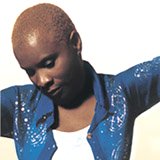 After
the demise of Island Records, she signed with Columbia. The second part of her trilogy
would explore the relationship between Benin and Bahia in Brazil.
Black Ivory Soul was released in early 2002 in the midst of another
tour and opening for Dave Matthews, who appears on Soul on
a song called "Iwoya." She made many TV appearances
in 2002, including Politically Incorrect as a panelist
who definitely stood her ground with "Let me make my point
here!" They were more than willing to - until she
was interrupted by a commercial break more than once.
In July 2002, she was appointed UNICEF's Special Representative
on behalf of children's education and the education to stop
the spread of HIV/AIDS. "For
me education is so crucial because everything goes with it,
like healthy politics and development. Young people are the
hope of my continent. When I watch the children of Africa, all
dreams seem possible. One day, education and good health will
allow my continent to rise. I'm sure of this." She
has just released Oyaya, which focuses on Caribbean and Cuban
rhythms.
After
the demise of Island Records, she signed with Columbia. The second part of her trilogy
would explore the relationship between Benin and Bahia in Brazil.
Black Ivory Soul was released in early 2002 in the midst of another
tour and opening for Dave Matthews, who appears on Soul on
a song called "Iwoya." She made many TV appearances
in 2002, including Politically Incorrect as a panelist
who definitely stood her ground with "Let me make my point
here!" They were more than willing to - until she
was interrupted by a commercial break more than once.
In July 2002, she was appointed UNICEF's Special Representative
on behalf of children's education and the education to stop
the spread of HIV/AIDS. "For
me education is so crucial because everything goes with it,
like healthy politics and development. Young people are the
hope of my continent. When I watch the children of Africa, all
dreams seem possible. One day, education and good health will
allow my continent to rise. I'm sure of this." She
has just released Oyaya, which focuses on Caribbean and Cuban
rhythms.