|
|

The movie Julius Caesar takes after Shakespeare's play of the same name. It takes place within the final days (or months) of Caesar's life. All the lines are Shakespeare's, along with the scenes. However, the movie does add some new aspects to the world of Caesar, namely the use of statues. In the picture above is Caesar next to a statue of himself. In the clip below another statue can be seen. The statues are not simply used as decorations, but to show Caesar's excesses. He is not embarrassed by the image of himself. In fact, by the way he spends much of the scene standing beside it, he likes the image.
The large statue of Caesar seen in the clip below is used for a different purpose. It is used to 'almost' represent Caesar and gives Cassius something to scoff at.
"He doth bestride the narrow world like a colossus..." Cassius is entailing that Caesar has become too powerful. He also makes a point to mention that Caesar, although powerful is still a man.
|
|
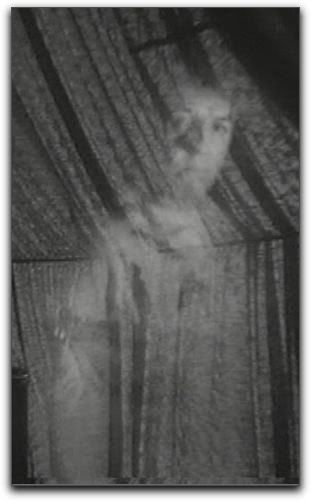
Calpurnia tries to stop Caesar from going to the Senate on March 15th, because she had a dream him bleeding from many wounds while Romans drank his blood. Throughout the scene above Caesar tries to calm Calpurnia down and tell her that he is leaving. Not only is he 'more dangerous than danger,' but he 'does not fear death.' So he does not believe himself to be eternal, but since he is more dangerous than danger, he also does not believe anyone will kill him. Somehow he believes in his own mortality and immortality at the same time. He may only be trying to comfort Calpurnia, but he also might actually believe that he is 'more dangerous than danger.' He may be just conceited.
Caesar finally decides to stay home to please her. However, a senator, Decius, arrives and reinterprets Calpurnia's dream, so Caesar leaves.
|
|
Cassius's anger at Caesar's conceit finally erupts with a plot to kill him. He gets many senators in on the plot, including the one seen above. The reason they want Caesar's death is because he has grown too powerful, he was going to be named 'king.' He had also grown too full of himself. He is a 'wolf,' because he thinks the Romans are 'sheep.' He thinks of himself as the top of the Roman food chain and at the top of Roman political power.
The plot goes through and Caesar is killed in the Forum on March 15th. This veers slightly from the historical death of Caesar (see Historical Caesar) for dramatic effect. By killing him in the Senate they only just stop him from claiming the title of 'king.'


Caesar is stabbed.

|


After Caesar's death two speeches are given. One by Brutus (on the left) explaining why Caesar had been killed. The reason, he states, was that although Caesar had many good qualities, he was too ambitious. His ambition, a bad quality, outweighted all the good qualities he had. Antony (on the right) counters Brutus's speech by going through Caesar's good qualities and all the things he did for the people and weighting them against the one said 'bad quality,' ambition.
|
So, Caesar in this movie was proclaimed both good and bad. According to Antony and the people, he spent most of his time helping and caring about them. According to Cassius, he was only after his own ambition. He wanted to become king, as the movie illustrates. By making statues of himself, he proved himself to be conceited, at least in Cassius's eyes.
|
|
