 |
| FICTION / LITERATURE | Our website has moved to a new host server. This is an old page which still works but is no longer being maintained. Please click here to visit our current site. |
 |
||||||||||||||||||
 |
||||||||||||||||||||
 |
THE SAVOY TRUFFLE Meet the aptly named Blytes in this delectable story full of Dickensian characterisation and black comedy. The Savoy Truffle is a witty, dramatic novel about life in Britain's richest, wildest Surrey suburb in the early 1960s, and comes to us from an acclaimed author best known for his philosophical works, including The Philosophers' Secret Fire: A History of the Imagination and Mercurius: The Marriage of Heaven and Earth. Instead of the blissed-out revisionist nostalgia you get in most re-enactments of the 60s Harpur dares to portray the generational clashes and awkward transitioning from Britain’s post-war era. Passages of rip-roaring rompery are deftly infused with stark realisations pertaining to the gender and class issues of that time. The Savoy Truffle is a literary treat, chock full of historical anecdotes and cultural associations – a veritable truffle worth digging through the layers of our past for. |
|
||||||||||||||||||
ISBN: 978-1-908011-65-7 |
£9.99
|
$15.99
|
||||||||||||||||||
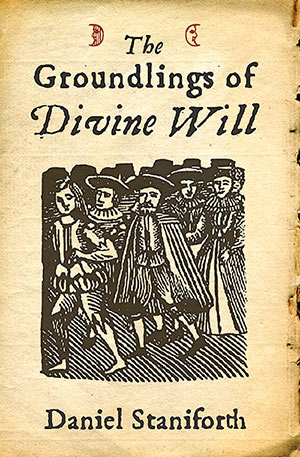 |
THE GROUNDLINGS OF DIVINE WILL From the author of Weaver in the Sluices and Diddle comes this controversial, self-reflexive, ironic and humorous response to the way that Shakespeare is so often taught in contemporary academia. The works of ‘Divine Will,’ as he is referred to throughout, have been confined to a vacuum, and almost biblically so in how the scripts have become wilfully detached from their moorings of time and place. In this hybridised long ‘Proem,’ Staniforth goes to absurd lengths of reattachment, gladly playing havoc with the swirling dictums and counter-dictums of his time, gleefully seeking to subvert the tautological authority of the neck-frilled academicians over the historical groundlings of the pit. Elements of satire, parody and burlesque are interposed as hagiographical substitutions made for the purposes of irony and deconstruction. The reader will be initiated into the amalgamated and timeless world of the Groundlings to see how their invective gospel simply illustrates how discourse, rhetoric and that grandiloquent power of oration serves as the strongest definition for our collective place in history. Staniforth is not afraid to dip into the cosmic trough and find magical pearls among the swine; the flashing twists and barbs of his heretic wit had me going up and down for hours. The tension between the divine will and human self-will is a subject that pervades the book; to that subject the profoundest insights into the hidden activity of providence and into human nature are brought. |
|||||||||||||||||||
ISBN: 978-1-908011-66-4 |
£8.99
|
$14.99
|
||||||||||||||||||
 |
SONG OF THE SEA GOD
Chris Hill Along with the strange flotsam of the sea, the aptly named John Love drifts in on the grey tide to an island off the English coast. The stranger, both bedazzling and unnerving, effects an immediate messianic glow upon the bladder-wracked community of odds and sods, making disciples of the most unlikely characters. Chris Hill’s visionary and delightfully bizarre novel reads like the gospel for a neophyte religion spawning in the sea foam among strange goings-on. It examines how destiny is the result of the collective will, especially among tribal folk who forever yearn to conform to ancient cants and creeds. Song of the Sea God comes from both the ancient incantations of history and mythology and the awkward cadences of the modern age. The plot is riddled with humour and pathos, which will delight fans of the contemporary British literary novel. With rich symbolism and delicious twists of irony, Hill takes the reader on a microcosmic wild ride in a story told by a mute that starts in a pub called The Vengeance. Along the way the reader is treated to a feast of psychotic musings that somehow manages to include miracles, Tip Rats, plastic ducks, the life of pebbles, and a Diary of Stools. |
|||||||||||||||||||
ISBN: 978-1-908011-55-8 |
£9.99
|
$15.99
|
||||||||||||||||||
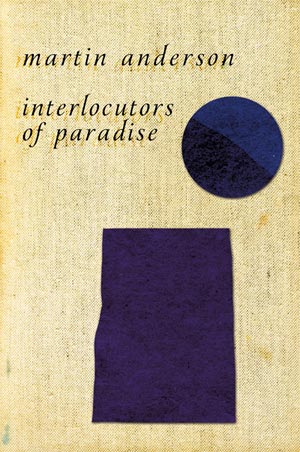 |
INTERLOCUTORS OF PARADISE Interlocutors of Paradise is a collection of five short meditations on colonialism and the Western mind by a British poet. Written as a series of provocative, symbolist-tinged prose-poems, each section situates the reader in beautifully crafted spaces, hollows to be filled either by spiritual purpose or wilful invasion. It begins by evoking the historical formation and expression of national identity - an identity predicated on past colonial and imperial activities. This is followed by three meditations that are largely situated within that region of the Thames estuary where Joseph Conrad lived, set and conceived Heart of Darkness. The Thames, that river in the book on which floated “The dreams of men, the seed of commonwealths, the germs of empire”, figures prominently also in the book’s opening meditation, where it is the setting of, amongst other things, Edmund Spenser’s poem Prothalamion and his friend Sir Walter Raleigh’s departure and voyage to Roanoke in the New World. In the final meditation its presence fades giving way, instead, to the aspirant spaces of a settled New World. But a world not ‘settled’ enough to have eradicated restlessness. Martin Anderson, author of various books of poetry, including The Ash Circle and Belonging, delivers another collection of poignant but elegantly powerful and sensitive poems. "Great purity and acuity, and a perfect ear. A wonderful poet." "Beautiful writing — treasure trove of emanations: orchards, hedgerows, meadows, coastlines, a land I used to know and still love in the nerves. A stilling for the nerves. The texture thick with an ancient country's history now learning to trace back, through all its exploitations, the sources of an elegy for lost empire. Has English poetry made the best out of that drawn-out loss?" |
|||||||||||||||||||
ISBN: 978-1-908011-56-5 |
£9.99
|
$15.99
|
||||||||||||||||||
 |
STONING THE DEVIL Stoning the Devil is a novel set in the United Arab Emirates, a country of paradoxes, of seediness and glamour, of desert grandeur and Disneyland vulgarity, where public executions and other barbaric customs are winked at by the western expats who run the economy. Colin, a professor of literature, is not the ‘typical’ expat, ignorant and interested only in pleasure and his stock portfolio, but a speaker of Arabic and an admirer of Arab culture – or is he? To his Arab wife, he is an Orientalist who exoticizes and patronises the locals, unaware of his latent racism. Powell presents a complex and contradictory set of Arab characters, who are a far cry from fundamentalist stereotypes. He also gives women in the Gulf a voice –as none are completely submissive. Garry Craig Powell delivers a powerful novel-in-stories and perhaps the first work of literary fiction set in the Persian Gulf by a westerner since Hilary Mantel’s Eight Months on Ghazzah Street. It echoes all the concerns of the great Arab writers, Mahfouz, Munif, and Kanafani regarding the post-colonial world. Written by an author that spent a good deal of time in that part of the world, the Gulf is presented as a crucible in which people of different races and religions are forging a new humanity, in spite of the abysses between them. "Stoning the Devil is a mesmerizing read. You will not find another book like this one. Garry Craig Powell has an astonishing ability to create characters with swift and haunting power. His intricately linked stories travel to the dark side of human behaviour without losing essential tenderness or desire for meaning and connection. They are unpredictable and wild. Is this book upsetting? Will it make some people mad? Possibly. But you will not be able to put it down." – Naomi Shihab Nye "The astounding characters that recur in Garry Craig Powell's Stoning the Devil are no different than, say, Sherwood Anderson's characters in Winesburg, Ohio. These characters have needs and dreams. They have their share of existential moments. They're all doing the best they can. These linked stories are utterly mesmerizing and exotic. With a keen ear for dialogue, and a sensibility of the best Conrad, Kipling, Orwell and Achebe, Garry Craig Powell has pulled off a masterful feat." – George Singleton, Stray Decorum |
|||||||||||||||||||
ISBN: 978-1-908011-54-1 |
£9.99
|
$15.99
|
||||||||||||||||||
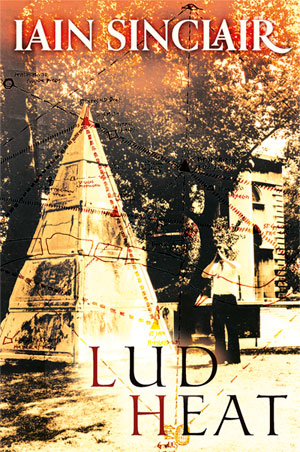 |
LUD HEAT Iain Sinclair’s classic early text, Lud Heat, explores mysterious cartographic connections between the six Hawksmoor churches in London. In a unique fusion of prose and poetry, Sinclair invokes the mythic realm of King Lud, who according to legend was one of the founders of London, as well as the notion of psychic ‘heat’ as an enigmatic energy contained in many of its places. The book’s many different voices, including the incantatory whispers of Blake and Pound, combine in an amalgamated shamanic sense that somehow works to transcend time. The transmogrifying intonations and rhythms slowly incorporate new signs, symbols and sigils into the poem that further work on the senses. This was the work that set the ‘psychogeographical’ tone for much of Sinclair’s mature work, as well as inspiring novels like Hawksmoor and Gloriana from his peers Peter Ackroyd and Michael Moorcock, and Alan Moore's From Hell. This new re-issue includes the illustrations and photographs from the original 1975 edition, which were absent from some later editions. "Lud Heat is ostensibly a narrative of a period of employment in the Parks Department of an East London borough; this temporal location, however, receives less stress than the spatial one with which it intersects: that of the pattern imposed on the townscape by Nicholas Hawksmoor's churches, potent presences in the poet's working environment, around which accretes a second temporal dimension, historical and mythological ... When Sinclair writes of the modern city that 'natural & ancient rhythms are perverted in Golgonooza's architecture' it is as part of a firmly patterned written structure that we have first of all to take his words. Only thus, sustained by powerful written ligatures, can the arrangement of the poet's information command any credence as argument." – Andrew Crozier |
|||||||||||||||||||
ISBN: 978-1-908011-60-2 |
£9.99
|
$15.99
|
||||||||||||||||||
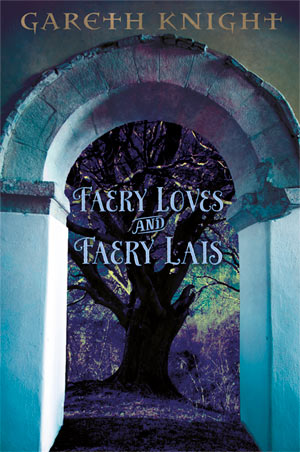 |
FAERY LOVES & FAERY LAIS The Breton lai is a narrative poem, usually accompanied by music, that appeared in France about the middle of the 12th century, carried by travelling musicians and storytellers called jongleurs. What is important about them is that they contain a great deal of faery and supernatural lore deriving from Celtic myth, legend and folktale. This collection of twelve tales focuses on faery lore in the lai tradition. Nine are taken from anonymous medieval jongleur sources; the other three are from the more courtly tales collected by Marie de France in the late 12th century. Gareth Knight, a scholar of medieval French as well as an established author on esoteric faery lore, provides a vivid and lively translation of each lai along with a commentary which takes a perspective both historic and esoteric. |
|||||||||||||||||||
ISBN: 978-1-908011-48-0 |
£10.99
|
$17.99
|
||||||||||||||||||
 |
THE SIGNATORY The Signatory is a wild and enthralling novella from Kirk Marshall, an emerging Australian writer and editor of the Red Leaves bi-lingual literary journal. This mind-bending tale of Scottish cryptozoology must be read to be believed as it blusters and dallies with the mad antics of the strange British dilettante, Sebastian Sackworth. It is at times reminiscent of the nonsense literature of Lewis Carroll et al – and yet displaying more contemporary (dare we say) "borgesian" stylistics. A delightfully absurd dramatis personae pits together a misanthropic anthropologist and a lusty Italian ornithologist on a madcap search for a rare Red Swan, soon to be joined by an Icelandic recluse, a chimpanzee, and a notorious pirate, to name a few. Along the way, Marshall manages somehow to mix in odd polemics on public transport sex, the science of moats, and the mysterious Scottish landscape. Labyrinthine and surreal fiction is little-explored territory but those that dabble in such refinery will be delighted by this offering. Marshall’s polyglot mind and gymnastic vocabulary make this a novel to be savoured in miniature bites. In such, perhaps the author provides the best summary in his own words: “The Signatory is a phantasmagoric comedy that offers readers a cautionary tale of Scotland, the Scotland of dislocated nightmare, of demented cryptozoology, and it signifies the closest result to an end product if César Aira and Charles Portis collaborated on the screenplay for Withnail & I.” "Kirk Marshall is a literary machine redlining audacity." "In an age of endless diaspora, The Signatory draws new spatial patterns of the sciences across the Scottish Lowlands. We're all looking for our own red swan round here. This is fierce work composed by the heart of a luchador versus everything else. Kirk Marshall is the real deal." "Kirk Marshall has plucked another beguiling and bristling tale from his beard of words. His writing is fiercely experimental with whimsical detours and stylistic roundabouts. Marshall works harder at the craft of writing than most people. He is a musketeer." |
|||||||||||||||||||
ISBN: 978-1-908011-41-1 |
£9.99
|
$15.99
|
||||||||||||||||||
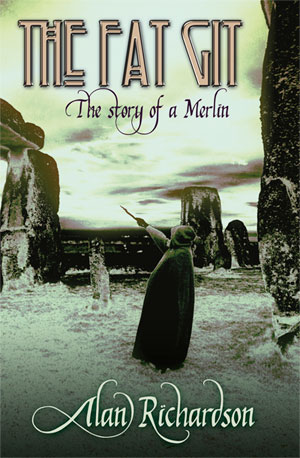 |
THE FAT GIT Inside every Fat Git there's an Enchanter wildly signalling to be let out. Alan Richardson is back with a ground-breaking esoteric satire, The Fat Git, with a rip-roaring cast of characters including Ambrose Hart, the Merlin of Strathnaddair; his reluctant nephew, Arthur; the mythical seductress, Vivienne, and the dastardly evil Vortig. Richardson takes no prisoners with his take on psychic pretentiousness, taking mythical simulacra and Arthurian archetypes to levels of absurdity, yet always displaying trenchant psychological insights and a sound background in the deeper aspects of occultism. This mix of mundane and fantastic, at wild odds with each other, is reminiscent of the work of Charles Williams, and perhaps one or two of his fellow Inklings. Richardson does not hold back from lambasting certain quarters with his iconoclastic wit but seems to be saying something that needs to be said. With great humour and panache, he provides a riveting burlesque of modern magic and the Arthurian Mysteries. "If Strathnaddair exists in another realm, and yet is also a real place that we have all visited, then so are The Arthur, The Merlin and all the rest real people, with addresses, postcodes, mortgages, debts, and all the troubles and triumphs of modern life. You can find them in any phone book, just look under your own name. For there are moments when, if only for the blink of an eye and on the canvas behind its lid, we become them…” |
|||||||||||||||||||
ISBN: 978-1-908011-31-2 |
£9.99
|
$15.99
|
||||||||||||||||||
 |
THE DREAM OF THE BLACK TOPAZE CHAMBER “The moonlight hums around them, bodies give way to ectoplasmic Three women experience a ‘coming out’ only to have to re-shut themselves in, cocooning within their middle aged paranoia, making silk purses while they plan face lifts and belly tucks. Their story is an experiential foray into a ménage-à-trois – three women opting out of the conventions of life and love to create their own sensual world on the fringes of the Brazilian jungle, a life which suspends desire, imagination and passion through a silky black dreamland of heightened reality. The Dream of the Black Topaze Chamber shows the late Hugh Fox at his most sublime. With so many eminently quotable aphorisms and moments of bard-like inspiration he is able to explore the subtle underpinnings of relationships, the minute unspoken thought-flashes between friends, and the mute electricity of shared moments. He moves from the intimate to the universal seamlessly, where inert trivialities can explode into a political treatise or a sublime poetic reflection within a single breath. The Black Topaze Chamber becomes the hub of isolated souls finding some last spiritual union through the open eroticism of their bodies. What results is a lyrical novel of ecstatic sexual and sensual metamorphosis rendered through a poetic alchemy of Brazilian gemstones. |
|||||||||||||||||||
ISBN: 978-1-908011-39-8 |
£8.99
|
$14.99
|
||||||||||||||||||
 |
FAVERSHAM'S DREAM In Faversham’s Dream, notable theologian Anthony Duncan spins spools of modern spirituality into an enticing historical yarn. Whether by chance or providence, John Faversham comes across a volume of poems by a little known but enchanting 19th Century poet. Well rooted in the logical empiricism of his day, John is astonished to learn that this poet was not only a previous tenant of the very house in which he lives but also the sharer of a very specific dream. Thus opens a psychic porthole through which protagonist and reader are transported alike, to an alluring parallel story in the 16th Century. The characters reach across time in the weaving of this magical parable, one that doesn't conform to easy dualisms or a prescribed sense of ethics. The scientific mind must meet with its own Reformation of sorts as histories are made to confront themselves in the mirror. John Selby described the late Father Duncan as "surprisingly open to the idea of inner spiritual directors" – an openness that was most readily explored through his fiction. |
|||||||||||||||||||
ISBN: 978-1-908011-11-4 |
£11.99
|
$18.99
|
||||||||||||||||||
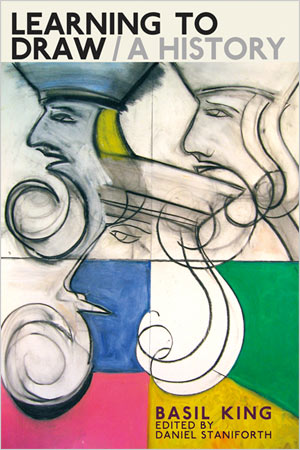 |
LEARNING TO DRAW / A HISTORY From London’s East End to Black Mountain College to the New York Art scene, Basil King can people a canvas like no other. Learning to Draw/ A History is an evolving and transformative narrative sketch, alternately prose and poetry, that that serves to document a personal and yet collective history with a roving Artist’s eye. Previously serialised in a number of small journals and zines, the work has met with some acclaim and Skylight Press is pleased to offer the first complete version in a new architectural alignment. Although from post-war Britain, King’s literary lineage harkens back to the projective verse style of Pound and Williams, sweetened through his working associations with the likes of Blackburn, Ginsberg and Baraka. The weaving of subjects in this work is not unlike the purposeful mixing of colours on an artist’s palette, which other notable poets have also been quick to praise: “Essential symmetry of experience which has gone against both the metronome and arrhythmia and beyond the ornamentation of inessentials in so much present writing. It helps to have had one’s hands covered with paint. Someone, after a long life, is standing at the door of some facet of wisdom.” "The book reminds me of the kind of brilliant and wacky conversations and arguments we used to have back in the day before the day at the not yet legendary Cedar Tavern. Did I call him bourgeois then … probably!" |
|||||||||||||||||||
ISBN: 978-1-908011-30-5 |
£13.99
|
$21.99
|
||||||||||||||||||
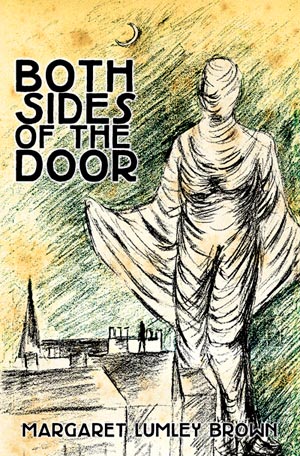 |
BOTH SIDES OF THE DOOR A re-issue of a remarkable little novella published in 1918, which Sir Arthur Conan Doyle praised as "a unique experience". It comprises a fictionalised account of a psychic upheaval the young Margaret went through in 1913 while living in a disturbed house in Bayswater, London, with her sister. A casual experiment with table-turning triggered an intense and terrifying haunting, beginning with odd patches of shadow and light and soon developing into a full blown poltergeist manifestation – household items vanishing and reappearing in odd places, writing appearing on window blinds, and malevolent presences who began to materialise in various disturbing forms. Margaret Lumley Brown went on to become a significant figure in the Western Mysteries revival, and her remarkable mediumship gift was sparked by the experiences described in Both Sides of the Door. Margaret Lumley Brown (1886-1975) is best known as resident trance medium at the Society of the Inner Light, where she took over the role of arch-pythoness after Dion Fortune's death in 1946. In her youth she published this novella and a book of poetry, both originally under the pen-name of Irene Hay. This re-issue includes an Introduction by Gareth Knight and an essay by Rebecca Wilby explaining the locations and historical background to the story. |
|||||||||||||||||||
ISBN: 978-1-908011-37-4 |
£10.95
|
$17.95
|
||||||||||||||||||
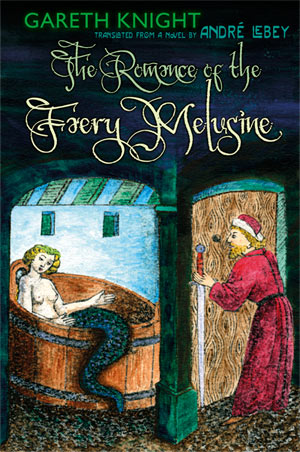 |
THE ROMANCE OF THE FAERY MELUSINE Springing from the heart of medieval France, The Romance of the Faery Melusinetells the story of Raymondin of Poitiers who accidentally kills his uncle while out hunting, and flees deep into the forest until he encounters a faery by a fountain. Struck by mutual soul-love, the faery Melusine agrees to help him, and to become his wife, on condition that he makes no attempt to see her between dusk and dawn each Saturday. On this basis the house of Lusignan magically thrives, until a treachery tempts Raymondin to violate his promise and shatter the magic which holds his faery wife to the human world. First rendered into written form in a text by Jean d'Arras in 1393, the legend of the Faery Melusine is well established in France, where she is credited with having founded the family, town and castle of Lusignan. However, it is very little known in the English-speaking world, despite the fact that Melusine originally hailed from Scotland. This new translation by Gareth Knight of André Lebey's 1920s novel Le Roman de la Mélusine captures the freshness of Lebey's retelling of the legend and brings the benefit of Knight's expertise both in French literature and in the esoteric faery tradition. Gareth Knight is the author of The Faery Gates of Avalon and Melusine of Lusignan and the Cult of the Faery Woman. |
|||||||||||||||||||
ISBN: 978-1-908011-32-9 |
£10.99
|
$17.99
|
||||||||||||||||||
 |
DIDDLE Diddle is a sequence of absurd, impossible, but faintly connected stories about immigrants living in the USA that serves to deconstruct the “American Dream” mythos. Each story exemplifies the experience of life for outsiders in the US, along with the impossibility of absolute acculturation. A dozen short stories are each generated out of a line from the old nursery rhyme, laced with double entendres, multiple meanings and overlaps. Written by a poet with a rich touch of language, these tales question the very notion of identity and belonging, presenting instead the amalgamated state that most people are forced to live in. "Diddle is packed with stories that fully articulate their premise and characters, coil like a spring, and then come to fruition when you least expect it. They have a genuine and original rhythm, one that will make you think differently about what fiction can do." — Brian Evenson (Author of Fugue State, Last Days, and The Open Curtain) “With the poise and spark of a master storyteller, Daniel Staniforth presents an alchemical phantasmagoria of loosely connecting figures moving like ghosts on the liminality of their adopted culture. Tempered always with warmth and wit, Diddle achieves a lightness of narrative touch which shimmers over the profundity of human experience for the detached and displaced.” |
|||||||||||||||||||
ISBN: 978-1-908011-18-3 |
£8.25
|
$13.25
|
||||||||||||||||||
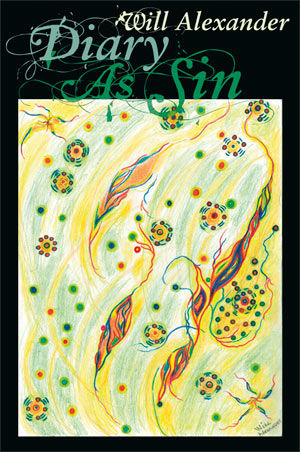 |
DIARY AS SIN “Celestial fire modulates through neon fields and aches throughout the lathe of space, animated into dynamic magnetism and psychedelic constellations. Vision explodes through planetary energy as dimensions shift invisibly. Will Alexander is a phenomenal and singular poet, a poet who allows me to leave the abyss of pedestrian sensation and enter a state of mind that thrills me with his animated breath…” Diary as Sin is the powerful and evocative story of a sand-blind girl, Rosanna Galvez. Confined to a private Catholic home in New Mexico, she unveils her beginnings as an incest baby – and moves through the odyssey beyond – with powerful incantatory language. Through poetic and often painful recall, Rosanna weaves a diary that will spellbind the reader with its imagistic and visionary prowess. Alexander cites Beckett, Bernhard and Goytisolo as an “ancestral trilology” for the work, living up to his forebears with some aplomb. Will Alexander is known to the literary world as the avant garde poet that continually defies easy classification. Though a Los Angeles native, his work more resembles Breton, Paz, Cesaire, or Gascoyne more than anything in contemporary US poetics. Even such comparisons are glib as Alexander is that rare voice that must be experienced in its own right. For Andrew Joron he is “the fiery trickster leaping between frozen and fragmented realia, the universal translator of the multitude of tongues (both human and inhuman) emitted by the Signal of signals.” For Harryette Mullen he is “a poet whose lexicon, a ‘glossary of vertigo,’ might be culled from the complete holdings of a reconstituted Alexandrian library endowed for the next millennium.” For Nathaniel Mackey his “thicketed prose advances lexical ignitions of astounding angle and amplitude.” |
|||||||||||||||||||
ISBN: 978-1-908011-13-8 |
£11.99
|
$17.99
|
||||||||||||||||||
 |
AT THE GATES OF DAWN: In early Irish society there existed an honoured group of people called the “Filid.” They preserved the native stories and they were learned in the magical arts. It is within this ancient tradition that Ella Young (1867-1956) lived her unique and creative life. In the late 1800s Ella began to gather the old tales that had been handed down from family to family for centuries. She lived among the rural folk in the West of Ireland and in the hills south of Dublin. As part of her devotion to Irish culture she learned Gaelic and, as a major contributor to the Celtic Revival, she taught classes in the language and the myths. Ella’s spirituality reached deep into the land and into the heart of ancient Ireland. Others have called her a seeress, a druidess, or a witch – the magical name she gave herself was “Airmid” – the goddess of healing who drew her powers from the fertile green earth. She knew first-hand about the faery folk of Ireland – she heard their music and listened to their stories. “There is a spell upon her prose, a real enchantment, that echoes through the mind like remembered music…to read the prose books of Ella Young…is to move in a world of epic proportion, heroic deed and heroic character, set against a background of warm earth, where even the gods delight in the small intimacy of blossom and flower…These tales are told with great conviction, as if they were rooted in the experience of the storyteller.” — Frances Clarke Sayers |
|||||||||||||||||||
ISBN: 978-1-908011-16-9 |
£11.99
|
$17.99
|
||||||||||||||||||
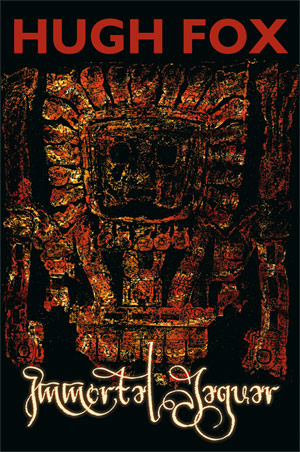 |
IMMORTAL JAGUAR Immortal Jaguar is Hugh Fox's account of his experiences with the inner worlds and ancient powers unleashed by his use of traditional South American spiritual hallucinogenics. After consuming psychoactive plants in Peru he is gripped by visionary experiences and finds a dazzling magical world of Immortals opening up, a whirl of ancient knowledge pouring through his consciousness. On his return to academic life in the US he finds that having a shamanic gift which he is unable to switch off is something of a dangerous liability. Part memoir, part archaeology, this fusion of visions and ideas into fictional narrative is among the most excitingly readable presentations of the spiritual underworld of the Andes and its expression through sacred hallucinogens. The vision extends outward across the ancient world through language and legend, all leading to a voyage to the house of the Sun-King – Tiawanaku in Bolivia. Fox, a major authority on the Pre-Columbian Americas, and a true visionary to boot, makes a compelling case for the connection of myths and cultures around the world in deepest antiquity. "Hugh Fox has long been a legend in the annals of contemporary American poetry, a poet who is unafraid to explore the deeper fodder of the human psyche .... there are no barriers here for Fox is a shaman who walks through walls, ignoring all social rules and regulations." |
|||||||||||||||||||
ISBN: 978-1-908011-09-1 |
£10.95
|
$17.95
|
||||||||||||||||||
 |
DEPTHS AND DRAGONS Visionary poet and archaeologist Hugh Fox excavates the fragile human psyche and its need for spiritual belonging in his new novel, Depths and Dragons. The reader will be swept along on a cosmopolitan excursion that skirts variant cultural scapes and languages as it lurches toward some unknown existential destination. The story is told evocatively through a clever synthesis of the tragi-comic and the author’s kaleidoscopic stream of consciousness style. Fox is a consummate master of collagist inner monologues that teeter somewhere between the conscious and subconscious without ever fully yielding to either. The aptly named Miriam must undergo a journey of violent displacement between the worlds of Jew and gentile, rabbi and priest, orthodoxy and heresy. Along the way she is made to pay the ultimate price of familial sacrifice, degenerative diaspora, and the loss of her spiritual moorings. The novel battles states of inner and outer terrorism, from physical death to an exalted denial of the flesh, but all the while retaining precious wit and jocularity. The twists and turns of this self-pilgrimage lead to a surprising outcome, and one that will be well worth sharing. "The latest from Hugh Fox, DEPTHS and DRAGONS, is a novel of obsessions: religion and sex; the quest for spiritual significance amidst the demands to satisfy lust; "why are we here?" interspersed with the drive to orgasm. Fans will smile at familiar Fox themes in this romp from Tel Aviv to Paris to Provence, through a Jewish woman's conversion to Catholicism, flirtation with Albigensians, and spiritual re-emergence. |
|||||||||||||||||||
ISBN: 978-1-908011-07-7 |
£7.99
|
$12.99
|
||||||||||||||||||
 |
IN DIFFERENT SKIES A novel by the author of This Wretched Splendour. In the trenches of Loos and the Somme, two disaffected young subalterns, Munro and Tate, struggle to find humour and purpose in a rapidly disintegrating world; brothers unto death – with a firmer bond than anything in their real families. A world away, in another time and place, Katherine is startled when she starts to recover memories – someone else's memories – of the first world war trenches. These involuntary glimpses into the life of a lost soldier open up a visionary world and a search across the fields of northern Europe for the historical truth behind the vision. A powerful story, fused with many realities.
|
|||||||||||||||||||
ISBN: 978-1-908011-02-2 |
£9.99
|
$15.99
|
||||||||||||||||||
 |
ON WINSLEY HILL A magical novella from Dion Fortune's biographer "Alan Richardson needs no introduction, as the biographer of various major figures on the occult scene, who also has a reputation as a highly amusing, well informed and down to earth speaker. His specialist knowledge is brilliantly exploited in this vivid evocation of the west country world of 1908 in the moving story of a psychically gifted young girl exploited and abused by an academic researcher. This finely observed tale not only captivated me but taught me a great deal about psychic and psychological fact and human nature in general. Highly recommended, and I look forward to more of the same." – Gareth Knight On Winsley Hill is set in a very real location, a plateau near Bath. Within the chronicles of old light ever stirring on the hill is the story of Rosie Chant, a young farmworker who, aged 17 in 1908, falls in love with a visiting American folklorist and archaeologist called Edward Grahl, triggering a fierce soul love which entangles her through nine decades. Grahl recognises Rosie's unique otherworldly talents. She is a visionary and can pick up impressions from objects and places. As part of his research for a book he is writing, he uses her to tell him about the era of standing stones, long barrows, and sacred wells. She doesn't complain when he uses her in other ways, and through Grahl she gets to mix society life with the darker side of her gift, with devastating consequences. |
|||||||||||||||||||
ISBN: 978-1-908011-00-8 |
£8.99
|
$14.99
|
||||||||||||||||||
|
TO THE HEART OF THE RAINBOW An esoteric novel, with illustrations by Libby Travassos Valdez In what appears on the surface to be a children's story, Gareth Knight, using Tarot imagery, conducts a guided visualisation through the Tree of Life from the homely Cottage of Heart's Desire to the Heart of the Rainbow … and back again. Richard and Rebecca meet the Joker of their granny's pack of cards, and guided by his dog, embark on an adventure through the Inner Gareth Knight is one of the world's leading authorities on modern esoteric studies and the Western Mystery Tradition, with a career as an author, publisher and lecturer which spans more than 50 years.
|
|
||||||||||||||||||
ISBN: 978-1-4461-6607-9 |
£12.79
|
$16.99
|
||||||||||||||||||
|
||||||||||||||||||||
 |
 |
|||||||||||||||||||
| FORTHCOMING TITLES ... |
|
|||||||||||||||||||
 |
COMING SEPTEMBER 2013 “Windleroot was permanently a wasps’ nest of rumour and scandal. Gobbets of gossip continually dripped from the awnings of the establishments in Lowe Street. An innocent remark made at the top end became a slanderous accusation by the time it arrived at the horse trough at the bottom. Making the most trivial observation about anyone in the town was like playing hopscotch in a minefield.” Dick Symes leads a cast of Dickensian characters in this rollicking magic-tinged tale. After cavorting with strange beings from the 27th Dimension and inheriting an empowering object, the hero leads a campy caper to the town of Windleroot and its various peculiar environs such as the Nob, the Isle of Teflon, and the Crumpled Horn. Gordon Strong, a multifarious author, delivers a sumptuous modern phantasmagoria full of dithering magi, musty grimoires, chortling gods and dodgy magic – sprinkled evenly with wit, irony, allegory and pastiche. ISBN: 978-1-908011-70-1 |
|||||||||||||||||||
COMING AUTUMN 2013 The Arayana are an indigenous people descended from an ancient empire living contentedly in the remote mountain forests. With scant knowledge of the outside modernising world they cling to their ancestral traditions and seek to pass on the wisdom of their elders undisturbed. Before the Dawn is their story, a story of drama, intrigue, foreboding, and the painful invasion of a group consciousness, beautifully rendered by landscape painter Rupert Copping. Although told entirely from their point of view this is no patronising post-colonial ‘innocence to experience’ yarn nor is their world an idyllic Eden in some virginal state before the Fall. Copping explores the complexities of tribal life through four main characters; a chief, his wife, his mistress, and a disgraced elder. Much of what they seek to protect seems no less dark and cruel than the ways of the outside world – but it is their sphere. The forces that swirl around and seep into their isolated enclave are complicated and circuitous, pitting native, invader, revolutionary and reactionary against each other. Copping takes the reader from the dark cave of ancient ritual to the mindless carnage of the ‘Radiant War’ - mirroring the psychological journey that the Arayana must take. With stark guerrilla brushstrokes and fresh environmental impetus he tells the age-old story of conquest and loss. ISBN: 978-1-908011-29-9 |
||||||||||||||||||||
PORTRAIT OF SWEENEY The ever-enigmatic Hugh Fox explores the inner sanctum of an LA-based Irish priest revisiting his hometown of Athenry, Ireland. This homecoming manifests both psychologically and metaphysically, not only showing the conflicts in the psyche of a Roman Catholic priest but also taking on the wider issue of the social sea change that has been taking place in the last few decades with the secularisation of society. As with previous novels, Fox shows both depth and subtlety in the agonising of his eponymous hero, artfully portraying conflicts that have a resonance with contemporary society. He presents this in his accustomed and very vivid way through the conversations between characters and his acute and amusing observation of them. Portrait of Sweeney could be read as a doff of the cap to James Joyce’s Irish portrait in that it also shows some Modernist éclat. The deeper psychological and philosophical concerns of the priest fittingly called Joseph are transmuted to the reader through Notebook entries that intertextually weave with the larger narrative, which in the author’s own words present a “primitive existentialist entirely in love with The Now, caught between Catholic theology and the idiot materialism/superficiality of the contemporary world.” Although principally known as a poet, Hugh Fox has amassed an invigorating body of fiction and it’s no wonder that Bill Ryan likens him to the “Paul Bunyan of American Letters, part myth, part monster, and, myself-as-subject, a magnificent non-stop storyteller.” |
||||||||||||||||||||
|
|
|||||||||||||||||||