
History Of St.Kitts
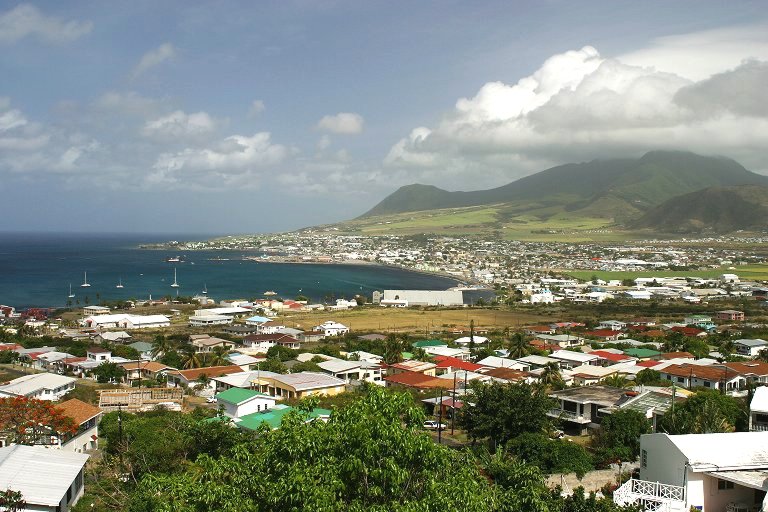
Like many islands in the Caribbean, St. Kitts is a volcanic island formed through the meeting of the Atlantic Oceanic Plate and the Caribbean Plate. It has resulted in the impressive Mount Liamuiga which rises to 3793 ft (1,156m). The mountain got its name from the second known human colonists of the islands -the warlike Carib Indians. These aggressive colonists succeeded in removing their predecessors, the Arawaks, by killing and/or eating them and generally frightening them away. However the Caribs' days were already numbered. Their only warning of this was the passing of Columbus' ship in 1493, who named the island after his patron Saint, St. Christopher. The first European colony was spearheaded by Englishman Sir Thomas Warner at Old Road, landing on 28th January, 1624. It was the English who abbreviated the name of the island to St. Kitts. The French arrived a year later in the form of Pierre Belain d'Esnambue and his crew courtesy of a unsuccessful encounter with a Spanish ship. The English and French were responsible for wiping out the Caribs at Bloody Point in 1626 near the village of Challengers on St. Kitts' West Coast. The English settled on the island of Nevis, a few miles to the South, two years later. As was the custom with any situation involving the French and the English, the aggressive posturing began and the two began sizing each other up. St. Kitts was the ideal strategic springboard from which to colonise the surrounding islands and both sides knew it

St. Kitts was a sugar colony, regardless of who had control. Intermittent warfare ensued over the next 100 years, the French exiling the English from St. Kitts in 1664 only to lose it to them in 1689. France captured the island in 1706 only to lose it again soon after in the Treaty of Utrecht in 1713. Brimstone Hill Fortress (shown left), nick named "The Gibraltar of The West Indies" due to its intimidating size and its position 800 feet atop a hillock, was besieged by the French in 1782. Hopelessly outnumbered an attacked repeatedly from every side, the English dug in and surrendered some nine months later. The French were so impressed that they allowed the English to march out in their colours. However the Treaty of Versailles (1783) dealt a decisive blow when St. Kitts was returned to the English permanently. This did not stop the odd attack as pirates and privateers realised there was money to be made from the merchant vessels passing through the area and they were a problem well into the 19th Century. Check out their site at www.brimstonehillfortress.org
During the 19th Century the British made various administrative changes throughout the Caribbean and in 1880 the British put St. Kitts and Nevis under one administrative umbrella. Britain also made groupings that often did not make sense to islands concerned. One such problematic aggregation was that of St. Kitts and Anguilla. Anguilla had been administered by St. Kitts from as far back as 1824, but had always had a problem with that. Despite numerous entreaties to the British government from as far back as 1872 for direct administration from Britain, Anguilla's calls went unheeded.Tensions mounted between Anguilla and St. Kitts in the late 1950's and throughout the 1960's, helped along by the highly destructive nature of the threats made by the eccentric Chief Minister of St. Kitts, Robert Bradshaw. Anguilla resorted to invading St. Kitts in 1967 to show they meant business. They disarmed and sent all the St. Kitts policemen stationed in Anguilla back home. The British government found Anguilla's request to return to colonial status highly odd and going completely against the grain, and paid them a visit in 1969 in the form of 400 soldiers from the Paratroop Regiment. Safe to say politics in this part of the Caribbean were intense, to say the least, with issues of autonomy and independence on everyone's mind (except Anguilla's).
On September 19, 1983 St. Kitts and Nevis gained independence from Britain. The twin island Federation remains a member of The Commonwealth and preserves many of the traditions of Britain - a passion for cricket, stable government and always driving on the left. It has also preserved much of the colonial architecture in the capital Basseterre making it one of the most beautiful capitals in the Caribbean.
