
Site hosted by Angelfire.com: Build your free website today!


To be able to view full pictures click photos thumbnails.

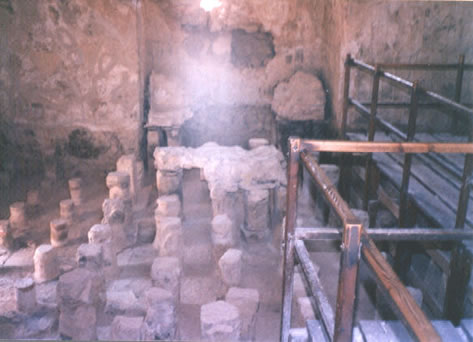
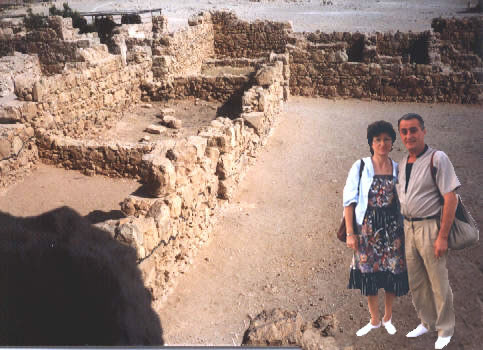
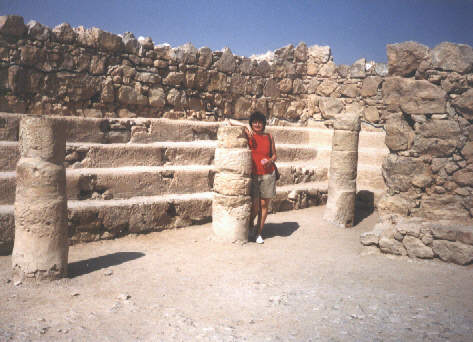
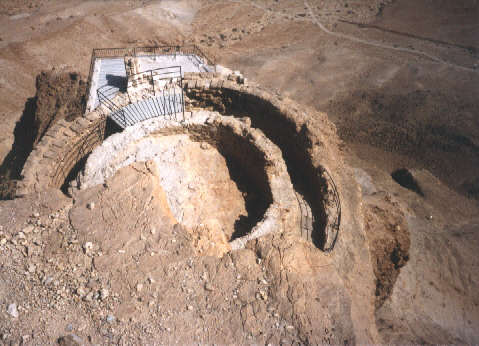
Some of the Archaeological finds on the mountaintop of Masada fortress.


Masada, old
synagogue.

Masada,
Northern Palace

Masada,
Bath-house.

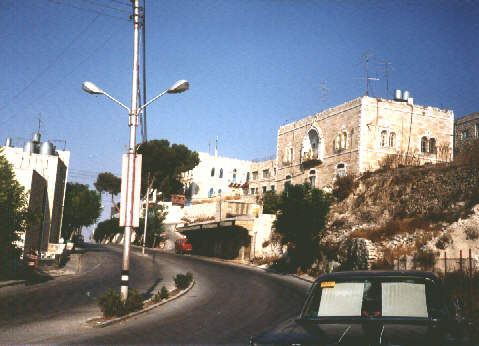
A Bethlehem
street.

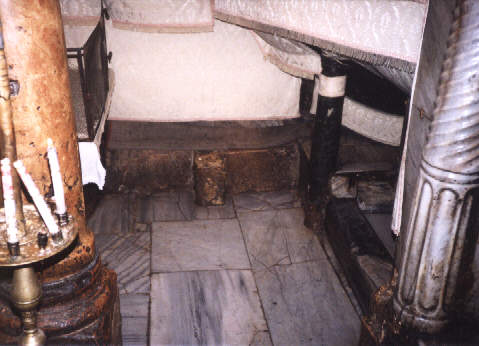
Baby Jesus
manger.

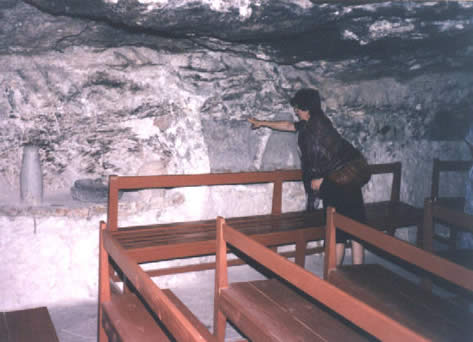
Shepherds
caves.

Down to
Manger.


Hebron
fortress.


Entrance;
Patriarchs
tombs.
Continuing Israel's exploration.

We left our hotel early in the morning to visit Masada before the noon heat. On the way, we marvelled at the Israeli farming industry. They utilized drip irrigation to transform the desert into a vast farm producing a wide array of different foods. I believe that they are having problems. Their cities and farm irrigation, located in the desert, is using too much of the Jordan's waters, causing the Dead Sea to lower the water level alarmingly.

Masada is an ancient mountaintop fortress in southeastern Israel. It is the site of the Jews' last stand against the Romans, after the fall of Jerusalem in AD 70.
Masada occupies the entire top of an isolated (flat-top) mesa near the southwest coast of the Dead Sea. The rhomboid-shaped mountain towers 1,424 feet (434 m) above the level of the Dead Sea. It has a summit area of about 18 acres (7 hectares).

A group of zealots fought and held the fortress of Masada bravely for three more years after the fall of Jerusalem against the besieging Roman troops; eventually they all committed suicide rather than surrender.
From the top of Masada looking down, one can still see, after two thousand years, the demarcation on the ground of the besieging Roman encampments.
To this day, Masada is a gigantic archaeological site and a very large tourist attraction. It is also the site where the Israeli recruits swear the legion to their country. We than proceeded to visit what I considered to be minor biblical sites.

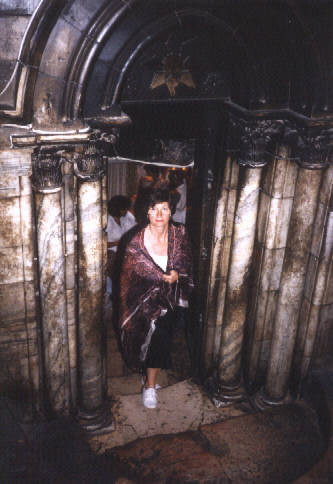
In the morning we departed for Bethlehem. We visited the nativity's church and the manger where supposedly Jesus was born.
The church's entrance door was very small and one had to go over a step to be able to enter. At one time the entrance was very large, as one can attest from the visible door arch. The congregation had to close the entrance and build a step so no Arab could enter on horseback and kill everyone inside.
We left Bethlehem and went to the countryside to see the caves that the sheepherders used as dwellings during Christ's time.

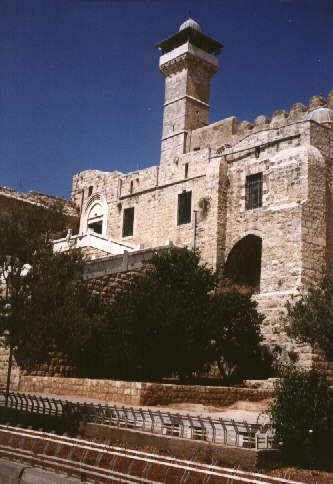
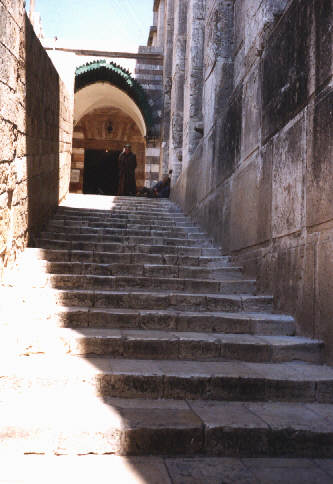
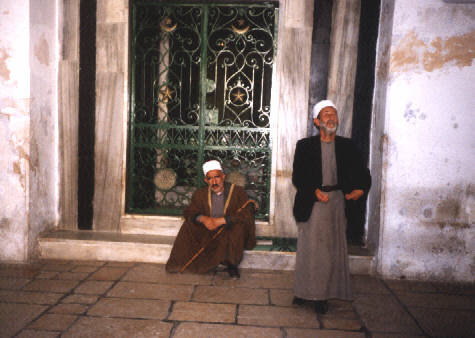
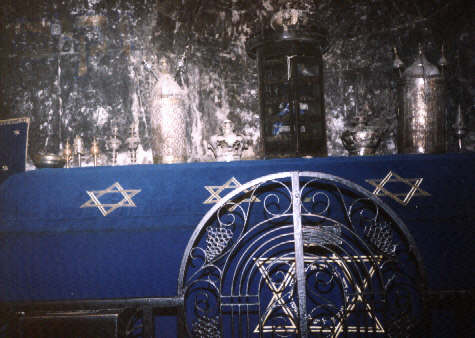
The day after we stopped to visit Hebron, a holy city of Judaism as well as a sacred city for Muslims. The tomb of the patriarch Abraham and his family is located at the site known as the Cave of the Patriarchs; both a mosque and a synagogue have been built on top of the cave. We visited the tombs of the patriarchs including Abraham's tomb.
Hebron has been the only city on our tour that we needed an armed escort.

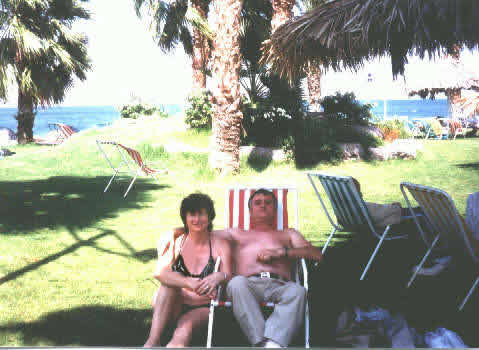
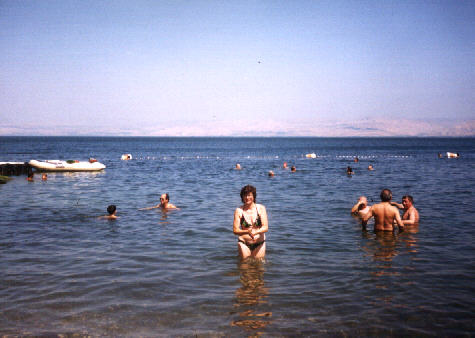
From there we had a lovely and rather long ride through the most magnificent hilly countryside. The view became even more marvellous, once we stopped at the Blue Beach resort on the Sea of Galilee. We had a very tasty snack; afterwards Elsa went for a swim, while I waited for her on the resort's lovely gardens, lounging in the shade with a tasty drink.


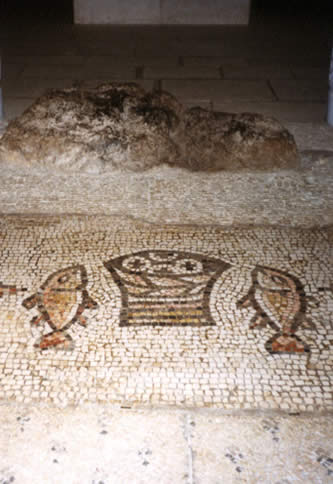
Loaves and
the fishes.


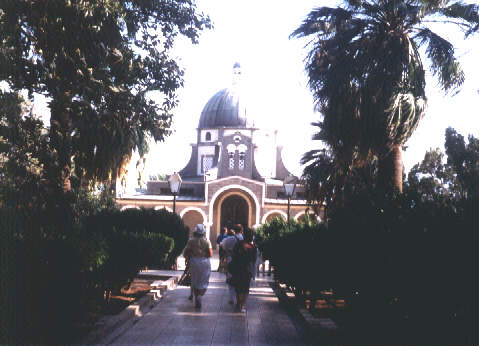
Sermon on
the mount.


Entrance
to
Capernaum.

Patriarchs
Mosque

Hebron's
Abraham Tomb.

Resort on the
Galilee sea.

Elsa bathing in
Galilean sea.

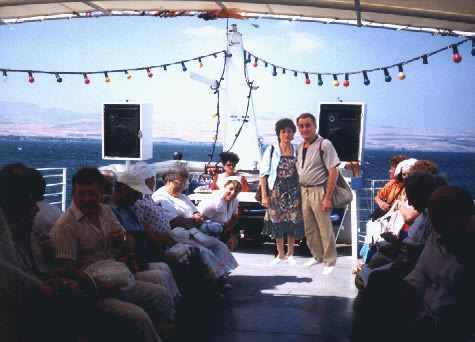
Galilee to
Capernaum.

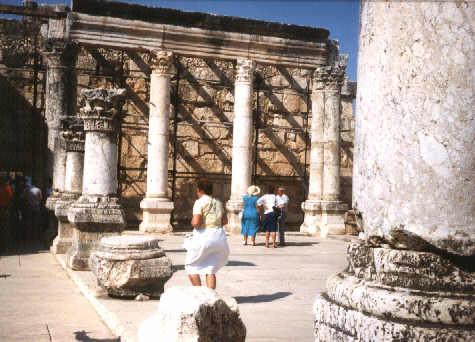
Ancient
synagogue.