Welcome to the Realm of the Goblin Shark !
|
The Goblin Shark : Mitsikurina owstoni |
||||||||||||
|
||||||||||||
| Common Names |
Danish : Naesehaj |
|||||||||||
| Size | Average 1.6 m [5 ft], maximum 3.8 m [12.6 ft] | |||||||||||
| Weight | ? | |||||||||||
| Geographical Distribution | Widely but patchily distributed; about half of known specimens from Sagami and Suruga Bays, Japan, most of the remainder from Kaikura, New Zealand, and southern Africa; a substantial population apparently occurs off Madeira. | |||||||||||
| Habitat | Demersal to mesopelagic inhabitant of outer continental shelves and slopes; known depth range is 130 to 3 940 ft (40 to 1 200 m); most individuals have been caught off Honshu, Japan, at depths of 200 to 920 ft (60 to 280 m); there is curious record of a 42-in (107-cm) specimen supposedly netted near the mouth of the Murray River, South Australia, but there is some doubt about its capture locality. | |||||||||||
| Reproduction | Almost certainly ovoviviparous, as in other lamnoids; no pregnant specimen has been collected, thus no data available on gestation period, number of pups, pupping season, or nursery grounds. | |||||||||||
| Menu | Records of stomach contents are rare; known prey includes small mesopelagic teleosts; myodocopid ostracods and a juvenile cranchiid squid (both of species known to be vertical migrators), and an unidentified crab. Apparently sluggish, feeding in mid-water and possibly on or near the bottom (teeth have been found embedded in submarine cables), probably using the electrosensitive rostrum to detect prey and capturing it from close range using a combination of protrusible jaws and pharyngeal suction. | |||||||||||
| Danger to Humans | Probably minimal. | |||||||||||
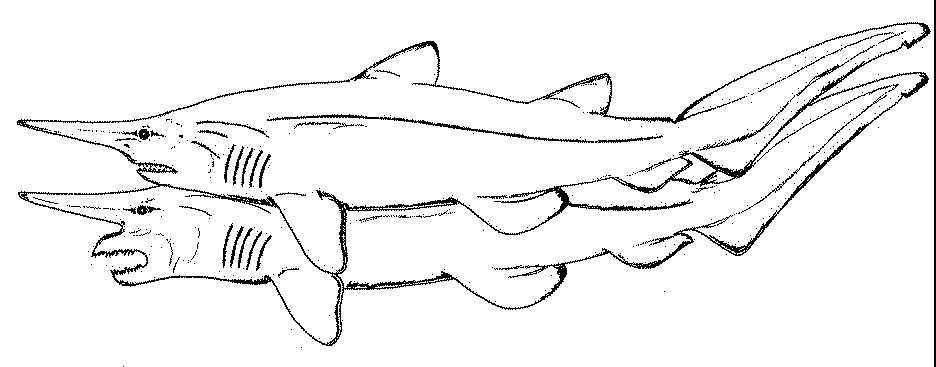
| Special Features | Very unusual shape of the snout. The snout is greatly elongated and flattened, forming a dagger-like blade. | |||||||||||
| Age | Unknown | |||||||||||

Made by Thomas Balis and Wim Goossens