|
Specializing in Taxidermy work and Saw Milling
May God Bless You and Keep You!
|
|
Click above for some native animal pictures
|
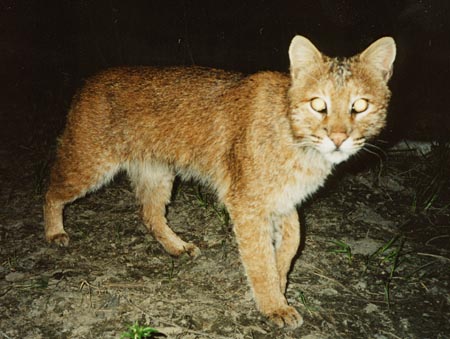
Bobcat The Bobcat, although it does not bare the
family name is a distinct species in the Lynx genus. However although the
canadian lynx and the bobcat share some of the same territory, the bobcat is
perhaps more closely related to the Eurasian and Spanish lynx, having spread
into North America from Asia earlier than its canadian In comparison with the canadian lynx the bobcat is generally smaller and although it shares many of the common lynx characteristics, it can be differentiated from the lynx in a number of ways. The bobcat has less pronounced ear tufts and cheek ruffs, a dark tip covering only the top of its 'stumpy' tail, much smaller feet, and a generally more patterned and varied coat coloration. Ground fur color ranges from light gray, through yellowish brown to reddish brown and markings vary from "tabby" stripes to heavy spotting. In general, bobcats found in the southern parts of their range are darker and smaller, whilst cats in the north are usually paler and larger. The bobcat has a great liking for hare and
rabbit, which form a major part of it's diet; however, unlike the Canadian lynx,
which almost exclusively hunts the snowshoe hare, the bobcat will commonly
switch prey species when its preferred source of food is unavailable. Males will
hunt larger prey such as deer in the winter months when other prey is scarce.
Bobcats also prey on other small mammals, such as squirrels and chipmunk,
rodents and birds. Generally they hunt both by night and day, although there is
evidence to suggest that most hunting takes place at dawn and In behavior, the bobcat is less secretive
than its canadian relative and is found
in a broad range of habitats from the
Canadian/USA border down through to Mexico. Bobcats are found in coniferous
and mixed forest to the north, swamp areas in
and Although the bobcat generally
breeds between February and June in some areas, they have been known
to breed all year round. The litter size is generally
large, usually consisting of 1-6 young and are
born after a gestation period of approximately
60 days. The kittens have a daily weight gain of approximately
25g per day and are weaned at about 12
weeks - the bobcat is independent of its mother at about 10-12 months of age.
There is a noticeable difference between
the life span of the wild and captive bobcat - in the wild the average age is
believed to be 12-13 years, however in captivity
bobcats can reach their mid twenties. Although
hunting is regulated in many US states the
bobcat is relentlessly hunted throughout much of
its range.
|

 Sprague's
Workshop
Sprague's
Workshop