|
Specializing in Taxidermy work and Saw Milling
May God Bless You and Keep You!
|
|
Click above for some native animal pictures
|
Pronghorn antelope The pronghorn antelope, sometimes referred to
as the prairie ghost, is found only on America's Great Plains. It is the
only member of its family, Antilocapridae. Smaller than the white tail deer, the
mature buck weighs from 100 to 130 pounds and the female from 75 to 100 pounds.
The male develops large pronged horns which average about 12 inches and are shed
each year. The female sometimes Fossils show the pronghorn roamed North America in its present day form as early as the Age of Mammals, over one million years ago. Historical records indicate the pronghorn population may have numbered nearly 40 million at one time, which would have made it as abundant as bison. During the early 20th century only about 13,000 remained, but thanks to competent management there are about one million pronghorns alive today. Antelope occur primarily in the western half of the state. A pronghorn depends on its vision to alert it to danger and its speed to outrun predators and to survive in the open landscape. Low precipitation, extremes of seasonal low and high temperatures, and windy, harsh winters characterize the Great Plains and Basins area. The pronghorn's highly developed social
nature results in it being found in small family groups to large wintering
herds. Being highly mobile, the pronghorn may cover a large area during the year
when the range is poor. The antelope's unique ability to erect patches of its
bristle like stiff body hair allows it to release body heat in the hot summer,
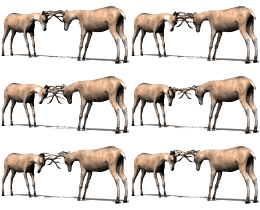
while the hollow air filled hair insulates it against the lower During late summer and early fall, the bucks begin to challenge imaginary rivals, or two or more bucks may engage in mock battles, but injuries seldom occur. As the height of courtship and mating approaches in September and October, females in the harem become more and more attentive to the bucks. Pronghorns have been known to breed as fawns but they usually breed for the first time when they are 16 to 17 months of age. The does usually produces twin fawns in early June after a gestation period of about 250 days. Fawns are usually born in swales and low lying areas with small ridges or hills surrounding them where the vegetation is short and sparse. At birth a fawn weighs between five and nine pounds. The greatest losses occur during the first
two months of life. Only about 40 percent of the fawns born in June live until
mid July. Most of the loss of fawns is due to coyote predation. Coyote
control can improve fawn survival, but it is not economically practical on a
large scale. In a some areas bobcats also feed on fawns.
|

 Sprague's
Workshop
Sprague's
Workshop