
After counting the number of images by scrolling down seventeen at a time (over 2000), and the "list was too long to be shown completely", some of the titles begged to be viewed. For example, this one with the long title has spikey images:
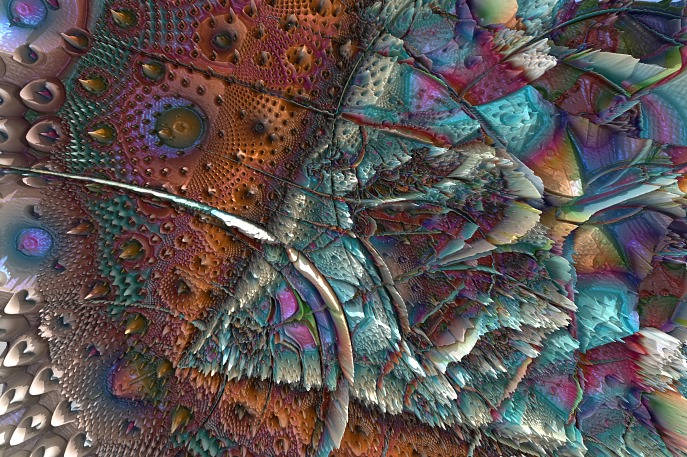
Spikey%20Twiloes%202%20improved.jpg (182.9 KB)
This is an unusual image (in the running for the
largest image for a while), more 3-dimensional than
most:
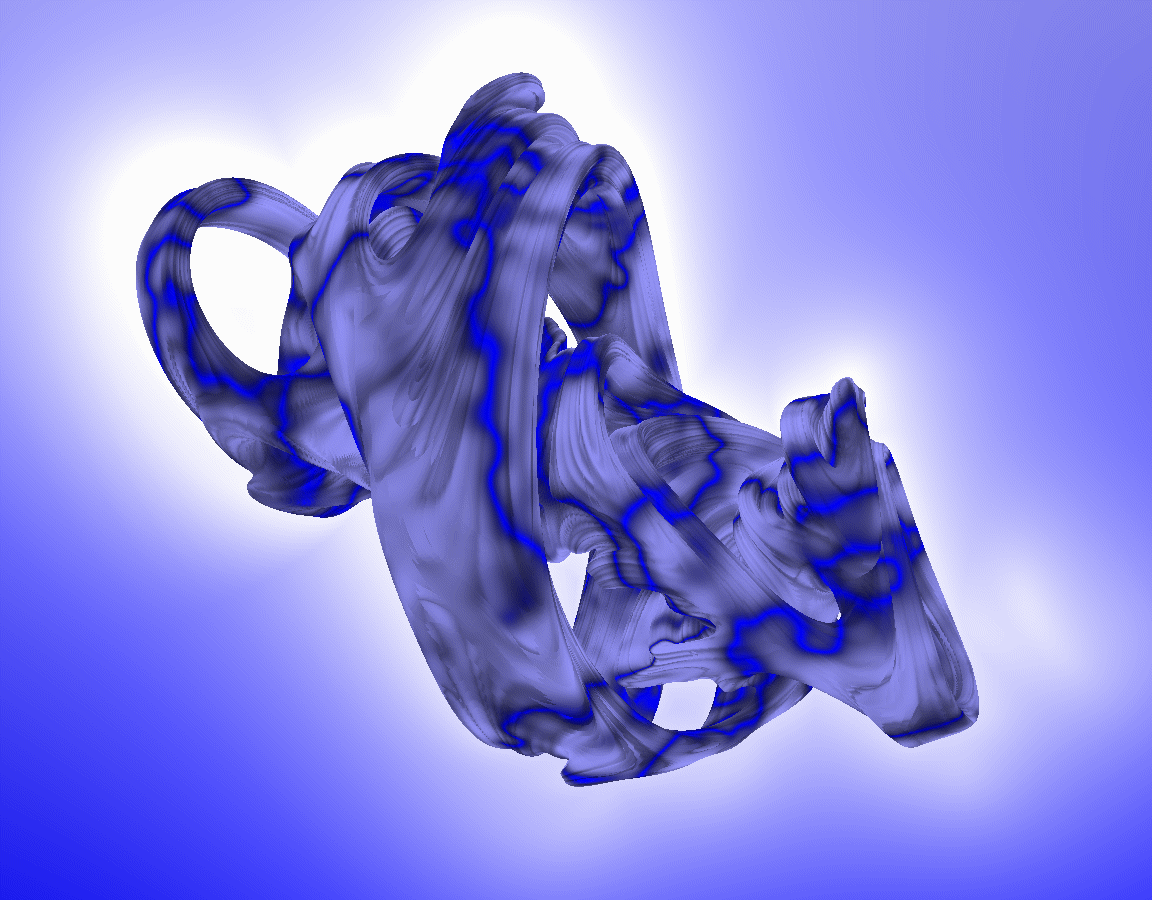
quat015.gif (428.4 KB)
Many of the fractals use spirals as the irregular surface. One of the most colorful I found is:
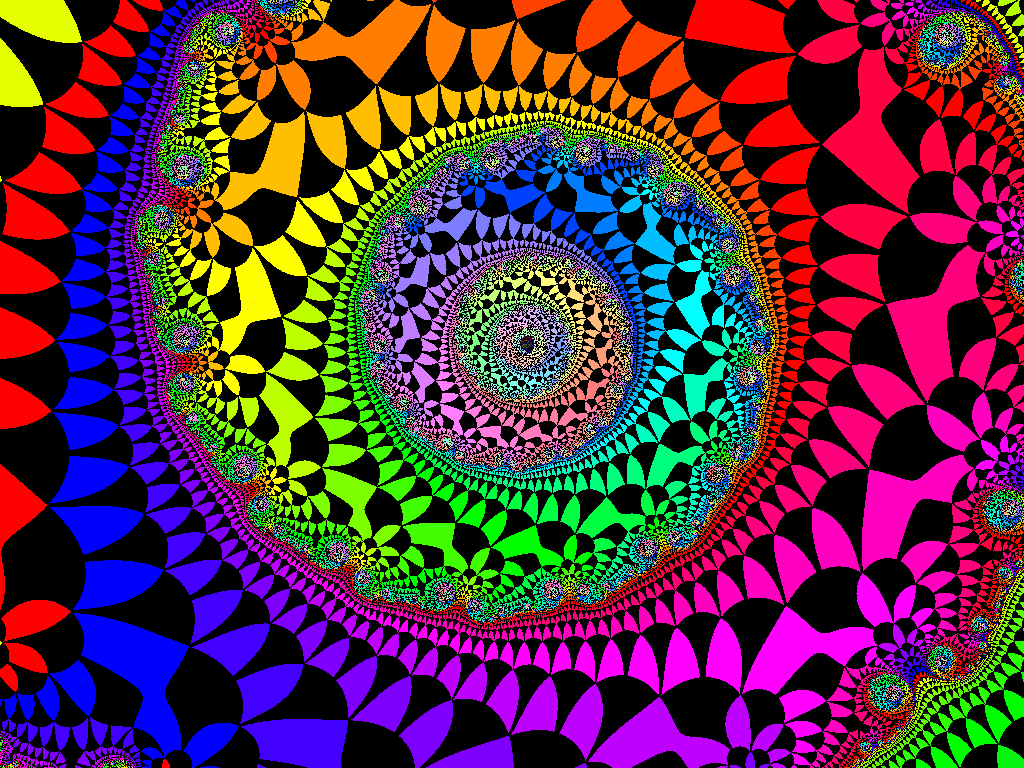
spiral7.gif (126.3 KB)
For complete chaos and irregularity, not many could beat this:
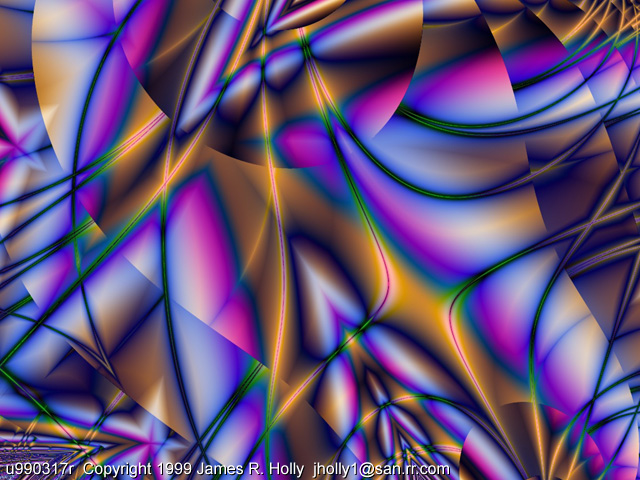
u990317r.JPG (149.3 KB)
The last was a candidate for the least number of bytes, until the 9 KB (above) showed up:
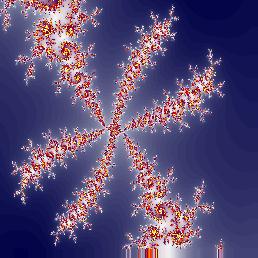
S_M2.JPG (20 KB)
In mathematical terms, a fractal is "everywhere discontinuous -- nowhere differentiable." Consider the coastline of a continent (or the border between East and West Germany). From a great distance it looks smooth and easily defined. But as you get closer and closer, you can see many indentations of river mouths and bays and sand bars and it gets more and more complex the closer you get. The total length of the coastline varies with the scale: the closer you are, the longer the coastline.
That is an example of a dimension between 1 and 2.
Another example is the side of a house or a mountain. From a distance it is smooth and the surface area is simply the width times the height, but as you get closer, the surface irregularities appear: cracks in the paint, grain of the wood, hills and valleys on the mountain, and the closer you get, the rougher the surface appears. The total surface area varies with the scale, much like that image we saw before with all the spikes.
That is an example of a dimension between 2 and 3.
Interesting things, fractals, and the graphical representations are beautiful, too. Thank you for letting me share my interest in them with you.
Return to the first page.
