

TSINGTAO, CHINA
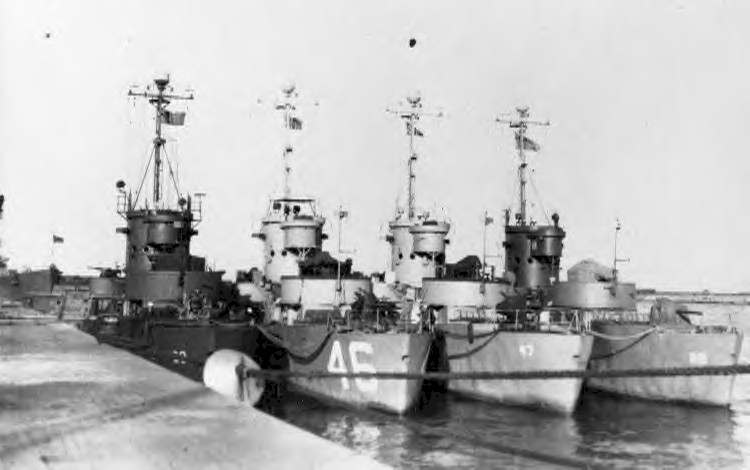
 During
the Japanese occupation of Tsingtao, the Army and the Navy would use the city
and it's facilities as a base of operations against the fueding Chinese
nationals and communists in the Shantung Penisula throughout the war. Tsingtao
remained a vital port and naval facility in the northeast China region, right up
to the end of the war. But even before the surrender cermonies took place on the
deck of the battleship Missouri in Tokyo Harbor, plans were drawn up for the
occupation of northern China by the U.S. Forces. Japanese forces left Tsingtao
in mid August and Chinese communists moved in to take control of the city.
During the early afternoon of 11 October, the
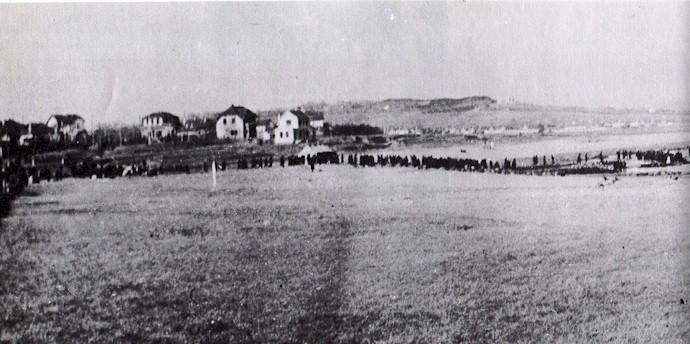
first of the 6th Marine division's transports docked at Tsingtao's wharfs. The
6th Reconnaissance Company, landing first, moved through the crowded streets,
lined with a cheering, flag-waving throng, to secure Tsangkou airfield, about 10
miles from the city. The observation planes of VMO-6 were launched from the
escort carrier BOUGAINVILLE the next day and landed safely at the field. The
remainder of the division landed amidst the bin of enthusiastic applause during
the next few days. By 16 October, all troops were ashore and established in
their assigned billets. The Chinese communists left the city and the Nationalist
forces loyal to Chiang Kai-shek, backed up by armed irregulars that
During
the Japanese occupation of Tsingtao, the Army and the Navy would use the city
and it's facilities as a base of operations against the fueding Chinese
nationals and communists in the Shantung Penisula throughout the war. Tsingtao
remained a vital port and naval facility in the northeast China region, right up
to the end of the war. But even before the surrender cermonies took place on the
deck of the battleship Missouri in Tokyo Harbor, plans were drawn up for the
occupation of northern China by the U.S. Forces. Japanese forces left Tsingtao
in mid August and Chinese communists moved in to take control of the city.
During the early afternoon of 11 October, the
first of the 6th Marine division's transports docked at Tsingtao's wharfs. The
6th Reconnaissance Company, landing first, moved through the crowded streets,
lined with a cheering, flag-waving throng, to secure Tsangkou airfield, about 10
miles from the city. The observation planes of VMO-6 were launched from the
escort carrier BOUGAINVILLE the next day and landed safely at the field. The
remainder of the division landed amidst the bin of enthusiastic applause during
the next few days. By 16 October, all troops were ashore and established in
their assigned billets. The Chinese communists left the city and the Nationalist
forces loyal to Chiang Kai-shek, backed up by armed irregulars that 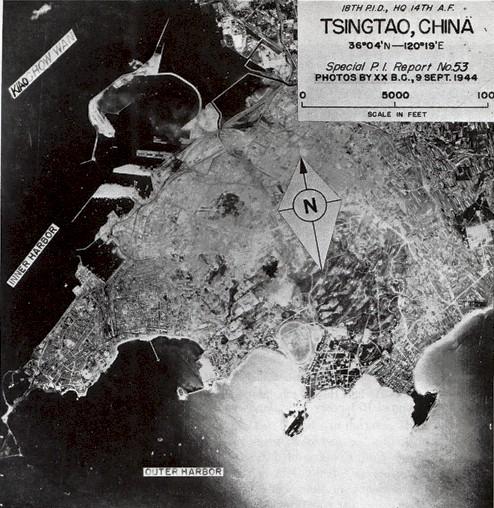 were
recognized by the Central Government, took control of Tsingtao. The United
States maintained a military presence in the Shantung Province and a Naval Base
at Tsingtao for four years until political upheaval and the Chinese civil war
forced the Americans to leave when the Communists came into power. On
June 1, 1949 the last Marines left Tsingtao and with it, the end of America's 90
year military involvement in China. Uncle
John left Tsingtao on July 10, 1948. He left China for duty at NAS Quonset Point
In Rhode Island. Aunt Bert met him he was stationed for Temporary Duty at the
Beavertail Training Center near Jamestown Rhode Island at the Combat Information
Center (CIC) training. Bert and John dated for a while and then wed in 1950.
Uncle John was at Quonset for two years.
were
recognized by the Central Government, took control of Tsingtao. The United
States maintained a military presence in the Shantung Province and a Naval Base
at Tsingtao for four years until political upheaval and the Chinese civil war
forced the Americans to leave when the Communists came into power. On
June 1, 1949 the last Marines left Tsingtao and with it, the end of America's 90
year military involvement in China. Uncle
John left Tsingtao on July 10, 1948. He left China for duty at NAS Quonset Point
In Rhode Island. Aunt Bert met him he was stationed for Temporary Duty at the
Beavertail Training Center near Jamestown Rhode Island at the Combat Information
Center (CIC) training. Bert and John dated for a while and then wed in 1950.
Uncle John was at Quonset for two years.
TOM GENTRY's PHOTO ALBUM
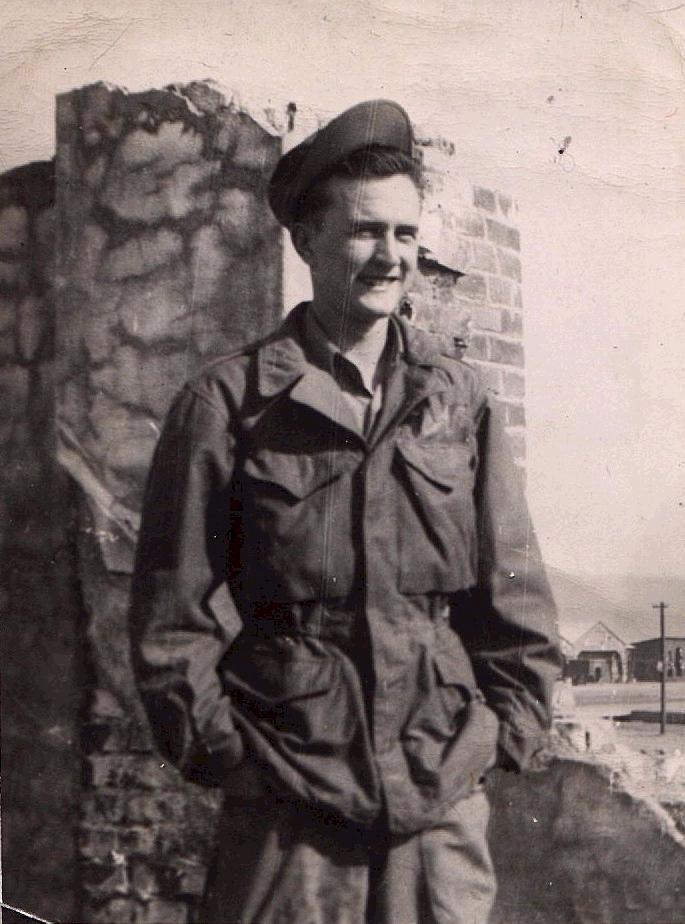 Uncle
John was transferred in June of 1946 from CASU-7 to his new job at the Naval
Base in Tsintao China. while I haven' been able to pinpoint exactly which
squadron or Command he was with there was only one air field in the area. Tom Gentry served with the Marine security force at the FMF COMNAVWESPAC at Tsingtao, China from 1948 to the very last day on June 1, 1949. While he was there he took many photographs of the base and the Tsingtao airfield. Tom had the distinction of being one of that last Marines to leave China as he put it
" When I left the base on the that last Deuce and a half,(2 1/2 ton truck) the Chinese were no more than 500 yards behind us." Tom has been gracious enough to let me use some of his photos to highlight
Uncle John Santos's webpage since they were there at the same time.
Uncle
John was transferred in June of 1946 from CASU-7 to his new job at the Naval
Base in Tsintao China. while I haven' been able to pinpoint exactly which
squadron or Command he was with there was only one air field in the area. Tom Gentry served with the Marine security force at the FMF COMNAVWESPAC at Tsingtao, China from 1948 to the very last day on June 1, 1949. While he was there he took many photographs of the base and the Tsingtao airfield. Tom had the distinction of being one of that last Marines to leave China as he put it
" When I left the base on the that last Deuce and a half,(2 1/2 ton truck) the Chinese were no more than 500 yards behind us." Tom has been gracious enough to let me use some of his photos to highlight
Uncle John Santos's webpage since they were there at the same time.
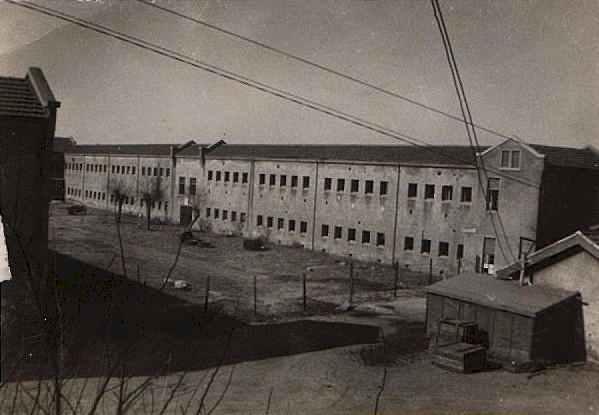

(Left) Japanese barracks left over from the war. They were on the Chinese side of the base and uninhabited. Sometimes the Red Chinese would sneak into them and take pot shots at the Marine Guards from the windows at night (Right) The base Mess hall at Tsingtao
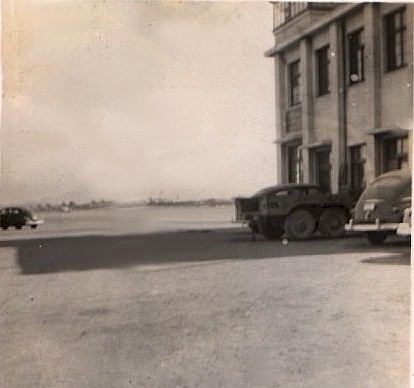

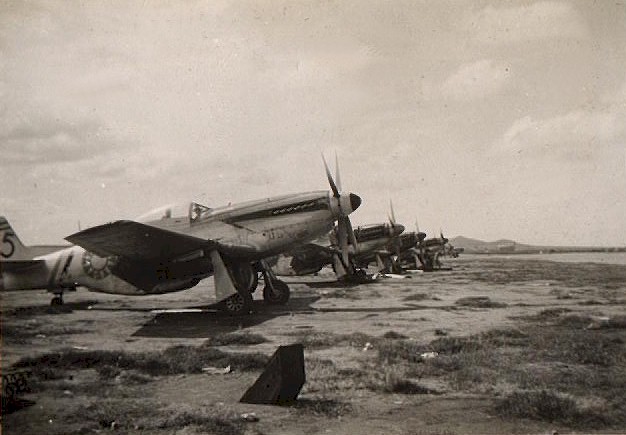
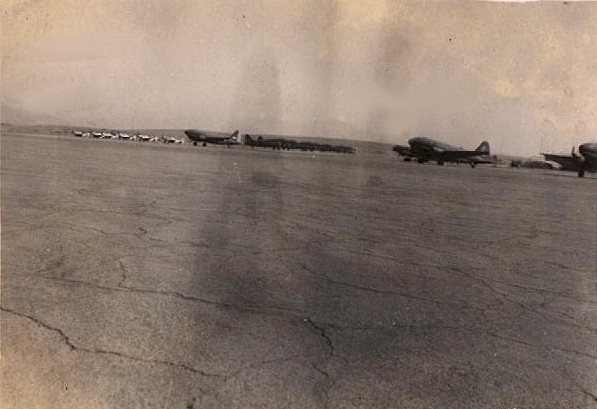
(Left) Nationalist Chinese Air Force the U.S. gave the Chinese government surplus WWII fighters to fight the Communists (Right) The Chinese Flight Line with P-51D's on the far left and U.S. Marines R5C's (C46's)from VMR 153 at the Tsingtao, China Airfield
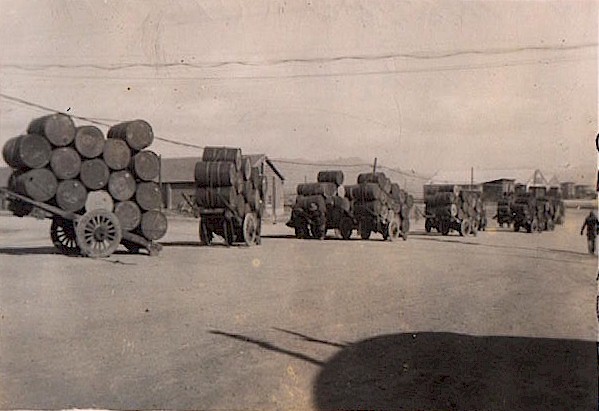
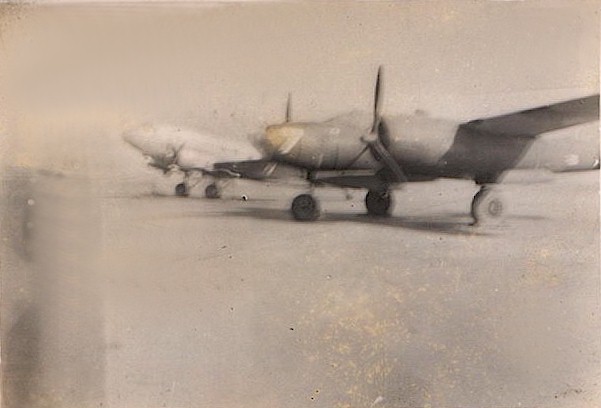
(Left) Fuel carts enroute to the airfield. Due to a lack of a fuel pipeline on the base, the fuel for aircraft had to be transported from the port facility to the airfield via carts and Chinese laborers (Right) A U.S. Marines R5C's (C46's)from VMR 153 and a F7F-3P "Tigercat" night fighter at Tsingtao airfield
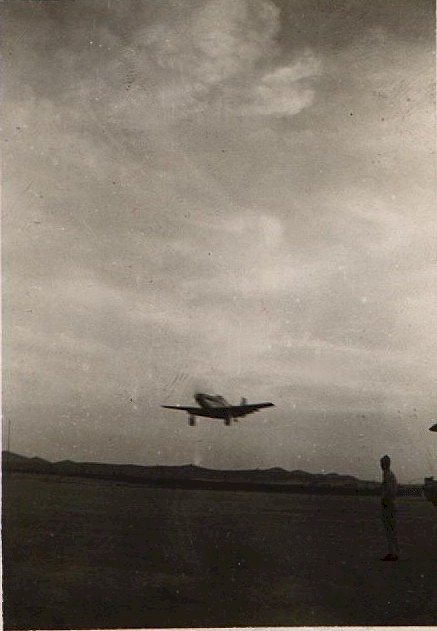

(Left)P-51 coming in for a routine landing (Right) OUCH! Not so routine! This Chinese AF P-51 came in too hard and the landing gear collapsed. Notice the missing cowling cover, it flew in this way. The Nationalist Chinese had a poor maintenance program and they did not take care of their aircraft (no wonder they lost to the Reds!)

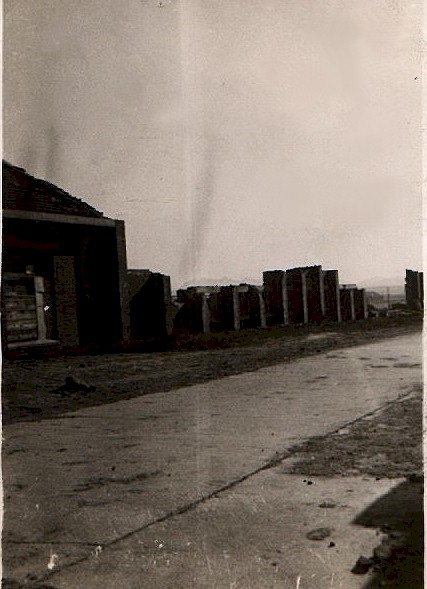
(Left)P-51's of the Nationalist Chinese Air Force (Right) Bombed out barracks building at Tsingtao
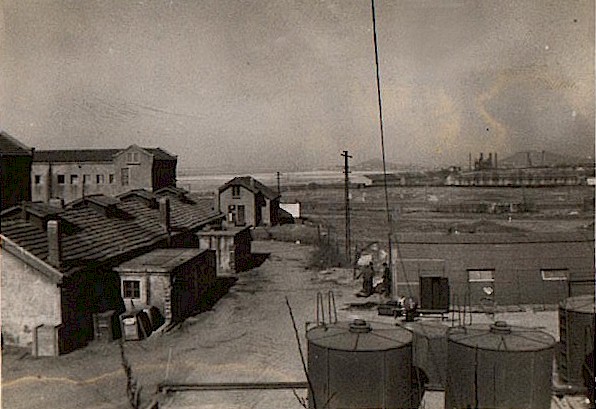

(Left) the "Water depot" this the area where the Marines had some trouble with the Red Chinese sneaking in an sabotaging the airfield (Right) The results of some of that sabotage a bombed out Quonset hut at Tsingtao
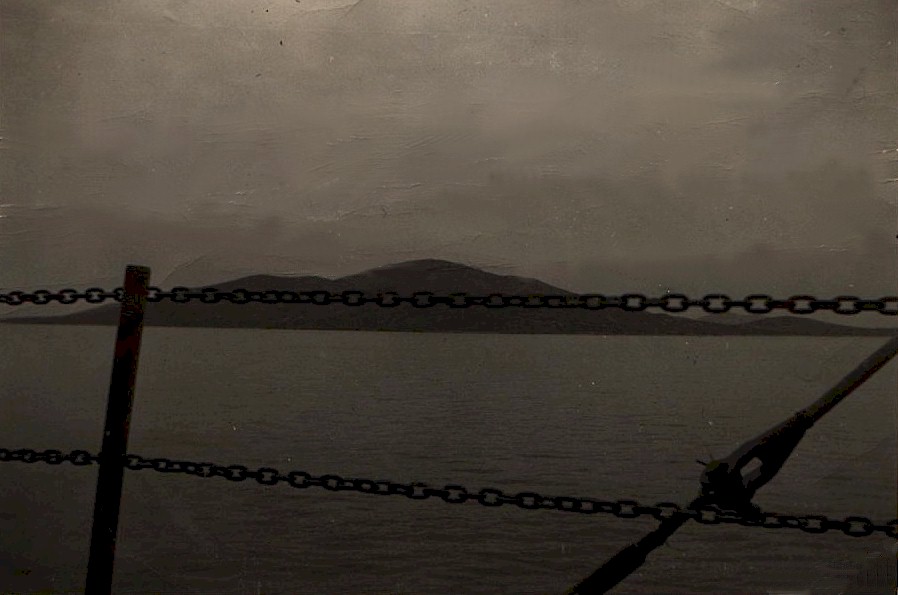
Tom Gentry snapped this photo as he was leaving China on June 1, 1949. This was the last island his ship passed as they left Tsingtao harbor. With the Navy and Marines departure from Tsingtao they closed the book on America's long and illustrious 85 year involvement in China. for more on Tsingtao click on these two websites here:
 1950-1964:
Aircraft Squadrons, and USS Constellation
1950-1964:
Aircraft Squadrons, and USS Constellation 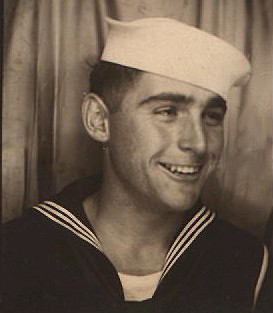 Joao
(John) Santos: Home Page
Joao
(John) Santos: Home Page They
Served with Honor : Home Page
They
Served with Honor : Home Page
