BASIC AND ADVANCED TRAINING
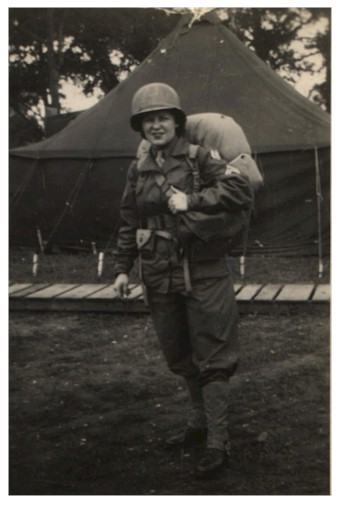
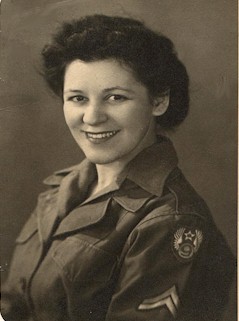 Frances joined the Women’s Army Auxiliary Corps (W.A.A.C.’s) in March of 1943. She went to Basic Training at Fort Ogelthorpe, Georgia until her graduation in April. She then transferred to Richmond, Kentucky where she attended The Army’s Administration School at Eastern State Teachers College.
Over 150,000 American women served in the Women's Army Corps (WAC) during World
War 11. Members of the WAC were the first women other than nurses to serve
within the ranks of the United States Army. Both the Army and the American
public initially had difficulty accepting the concept of women in uniform.
However, political and military leaders, faced with fighting a two-front war and
supplying men and materiel for that war while continuing to send lend-lease
material to the Allies, realized that women could supply the additional
resources so desperately needed in the military and industrial sectors. Given
the opportunity to make a major contribution to the national war effort, women
seized it. By the end of the war their contributions would be widely heralded. Frances Graduated from Eastern on May 19th 1943 and was assigned to the WAC DET of the Boston Fighter Wing in Boston, Massachusetts.
Frances joined the Women’s Army Auxiliary Corps (W.A.A.C.’s) in March of 1943. She went to Basic Training at Fort Ogelthorpe, Georgia until her graduation in April. She then transferred to Richmond, Kentucky where she attended The Army’s Administration School at Eastern State Teachers College.
Over 150,000 American women served in the Women's Army Corps (WAC) during World
War 11. Members of the WAC were the first women other than nurses to serve
within the ranks of the United States Army. Both the Army and the American
public initially had difficulty accepting the concept of women in uniform.
However, political and military leaders, faced with fighting a two-front war and
supplying men and materiel for that war while continuing to send lend-lease
material to the Allies, realized that women could supply the additional
resources so desperately needed in the military and industrial sectors. Given
the opportunity to make a major contribution to the national war effort, women
seized it. By the end of the war their contributions would be widely heralded. Frances Graduated from Eastern on May 19th 1943 and was assigned to the WAC DET of the Boston Fighter Wing in Boston, Massachusetts.
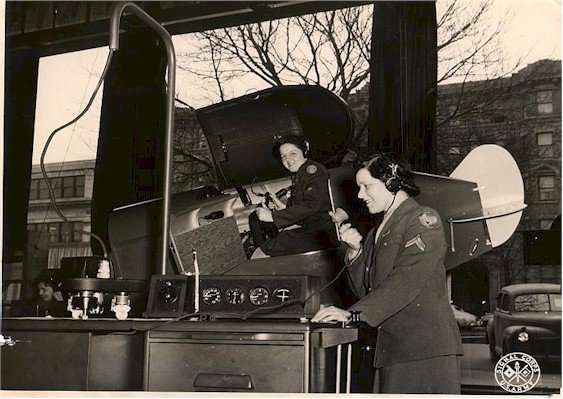 Frances was stationed here for twelve months prior to being shipped over seas. The wing was originally constituted as Boston Air Defense Wing on 6 Aug 1942 and activated on 11 Aug. It was redesignated Boston Fighter Wing in Jul 1943. Defended the New England area; also trained fighter organizations and personnel. Apparently was not manned from Jul 1944 until Feb 1945. Redesignated 323d Combat Crew Training Wing. Trained very heavy bombardment personnel from Mar until Aug 1945. Apparently had no personnel assigned after Aug. Inactivated on 8 Apr 1946. While at the Boston fighter wing Frances learned communications, and became a radio operator. While stationed in Boston she learned to fly at Grafton, Massachusetts and earned her pilot’s license, also she was promoted to the rank of Corporal.The
first auxiliary units and their officers to reach the field went to Aircraft
Warning Service (AWS) units. The U.S. Army Air
Frances was stationed here for twelve months prior to being shipped over seas. The wing was originally constituted as Boston Air Defense Wing on 6 Aug 1942 and activated on 11 Aug. It was redesignated Boston Fighter Wing in Jul 1943. Defended the New England area; also trained fighter organizations and personnel. Apparently was not manned from Jul 1944 until Feb 1945. Redesignated 323d Combat Crew Training Wing. Trained very heavy bombardment personnel from Mar until Aug 1945. Apparently had no personnel assigned after Aug. Inactivated on 8 Apr 1946. While at the Boston fighter wing Frances learned communications, and became a radio operator. While stationed in Boston she learned to fly at Grafton, Massachusetts and earned her pilot’s license, also she was promoted to the rank of Corporal.The
first auxiliary units and their officers to reach the field went to Aircraft
Warning Service (AWS) units. The U.S. Army Air

ATLANTIC CROSSING AND ENGLAND
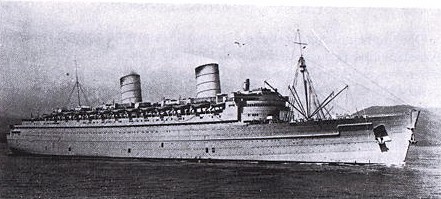
 these WACs accompanied SHAEF to France and eventually to Germany.
As stenographers, typists, translators, legal secretaries, cryptographers,
telegraph and teletype operators, radiographers, and general clerks, these women
assisted in the planning of D-day and all subsequent operations up to the defeat
of Germany. WACs handled highly classified material, worked long hours with few
days off, and were exposed to a significant amount of danger. Upon Arrival Aunt
Frances was assigned to Ascot England with the rest of her squadron and remained there until her
deployment to France.
these WACs accompanied SHAEF to France and eventually to Germany.
As stenographers, typists, translators, legal secretaries, cryptographers,
telegraph and teletype operators, radiographers, and general clerks, these women
assisted in the planning of D-day and all subsequent operations up to the defeat
of Germany. WACs handled highly classified material, worked long hours with few
days off, and were exposed to a significant amount of danger. Upon Arrival Aunt
Frances was assigned to Ascot England with the rest of her squadron and remained there until her
deployment to France.