



AMD’s Low-Cost Web Device Targets Developing World
La compagnie ADM, qui fabrique des puces électroniques, a mis au point le “Personal Information Communicato r” (PIC), un appareil qui permet l’accès a Internet et qui sera vendu dans les pays en voie de développement. Cet appareil a besoin de peu d’entretien et ses programmes “software” sont déjà installés à l’achat.
Il est destiné aux gens qui utilisent un ordinateur pour la première fois, et sera distribué en premier en Inde. Son coût sera d’environ 249$, incluant un moniteur, une souris et un clavier (l’appareil sans moniteur se vendra environ 185$). Il pourra être remplacé s’il est brisé. La compagnie AMD a pour but, grâce à son PIC, de connecter la moitié de la planète à Internet d’ici 2015 (le projet s’appelle 50x15).
L’Inde a été choisie comme premier pays parce que l’utilisation d’Internet y est très limitée (0,4%) et qu’il n’y a pas d’abonnement à Internet abordable. Le produit sera aussi offert au Mexique et dans les Caraïbes. La compagnie a toutefois décidé de ne pas offrir l’appareil aux États-Unis pour l’instant.
Quelques doutes se soulèvent cependant, puisqu’on se demande si les consommateurs vont vouloir obtenir l’appareil qui coûte environ 185$, alors que le salaire annuel moyen par habitant en Inde est de 480$. Le PIC et le projet 50x15 sont une bonne initiative pour tenter de régler le problème de la fracture numérique.
Les pays du tiers-monde et les pays en voie de développement ont effectivement un taux de connection à Internet très bas. Cet accès à Internet serait sans doute un grand pas pour aider à leur développement, qu’il soit technologique ou commercial.
Il est important que la nouvelle technologie ne soit pas trop compliquée pour les nouveaux usagers, et l’intégration des logiciels avec l’appareil aide beaucoup dans ce cas. Le fait que l’appareil n’ait pas besoin de beaucoup d’entretien et qu’il soit remplaçable si brisé est aussi un élément clé pour faciliter son l’utilisation.
Le projet 50x15 s’est attribué une grande tâche, mais le PIC réussira sans doute a atteindre une grande partie de son but. Les pays en voie de développement pourront évoluer plus facilement au niveau technologique grâce (entre autres) à ce projet.
The e-Voting Blues
Electronic voting machines were in widespread use during Tuesday’s federal election in the U.S., and several cou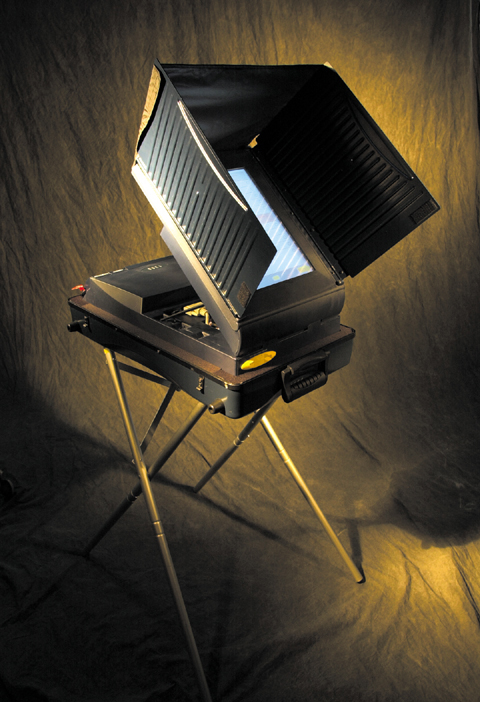 nties are only now reporting problems and possible inflation of vote totals for the incumbent president, George W. Bush.
In the deciding state, Ohio, election officials are now reporting that Bush received 4,258 votes to Democrat John Kerry’s total of 260. The problem is, the records show that only 638 votes were cast in that county, making Bush’s total an impossible one. The error in computing resulted in Bush receiving an extra 3,893 votes. The unofficial results in Ohio had Bush winning by a margin of 136,000 votes with 155,000 provisional votes remaining to be counted. Kerry conceded the election, deeming the margin an impossible one to in surmount. It is merely speculation, but one must wonder if the fact that the computing errors just happened to occur in the deciding state was purely coincidental.
Elsewhere in the country, countless errors were reported on Tuesday. In North Carolina, nearly 4,500 votes were lost due to a lack of memory in the voting machine. Election officials had no idea of the limitations of the equipment, and were therefore not properly equipped. The loss of 4,500 votes is certainly no laughing matter. One could even make the argument that those citizens’ inalienable, constitutional rights were violated due to the ignorance of both the election officials and the voting machine manufacturers.
This phenomenon is of course nothing new. However, it was safe to assume that after the debacle of an election in 2000, that the U.S. would have somehow come up with something better. It appears as though their voting technology is still tremendously flawed, and two Democrats have lost the presidency because of it. Another four years of George W. and that stupid grin. La ayuda del dios nosotros todo.
For more information, please visit : http://www.blackboxvoting.com/modules.php?name=News&new_topic=4
Progress in an ancient tongue
In Ethiopia, a group of professors and research students from Addis Ababa University have done some researches to developp a SMS messaging system in Ethiopic characters.
“ Today the letters are shared by a range of languages spoken by millions of people across the Horn of Africa and hundreds of thousands of emigrants settled in the United States, Canada and parts of Europe” says the author.
Called the “Ethiopic Keyboard Mapping and Predictive Text Inputting Algorithm in a Wireless Environment”, it tries to overcome some technical difficulties to the alphabet's transition to the modern mobile age. Its creators aimed to convince mobile companies that the market for mobile texting in Ethiopic has a lot of potential. “There are so many people in Ethiopia who cannot write English. A localized version of SMS would open up the technology to the whole population.” said Solomon Atnafu, one of the expert on the project.
The main problem is that Ethiopic texting has to use several characters and mobile phones has only nine keys. “Texters would have to find a way of using the nine character keys on a mobile phone to type out the 345 letters and letter variations available to an Amharic writer” explains the author.
In fact, he claims that there are two ways of mapping a limited set of 210 characters onto a mobile keypad by using a combination of keystrokes for each letter. The limitation of a mobile phone’s memory made its cretors to cut down the number of letters. “most Ethiopic font files commonly used in desktop applications alone have sizes in the ranges of 175-250 KB.” says the report.
Moreover, they had included on their mobile phone market and weather reports for the hard-working farmers in the country. “With Ethiopic texting, you could access market information. A farmer in the north of the country could find out the price of coffee in Addis.”said Solomon. He also hopes that Nokia will be interested by their product.
This invention is well thought. On one hand, it’s a way to preserve and expand the Ethiopic languages by using a very creative technology and on another hand, it will make the communication between people easier despite their speaking languages and their positions on the map. With market and weather reports on their phone, they will get all the informations they need without using a TV, a radio or the Internet. This technology could even help to boost the economy of the country.
For more information, please visit: http://www.wired.com/news/culture/0,1284,65596,00.html?tw=wn_7culthead
Zero Energy Homes
In our society, it costs an arm and a leg to do just about anything. Major funds are needed to send our children to school, to buy our homes, to do our groceries, etc. Now, Zero-energy homes have been created to reduce the costs of living, and become more ecologically friendly. These Zero-energy homes produces approximately the same amount of electricity as it consumes. By using photovoltaic solar panels and efficient new technology, zero-energy homes reduces 70% of the energy demand.
As of yet, 26,172 homes have been built in Western USA. The solar-panels used in these homes create between 2-3 kilowatts of electricity. The new technology used to reduce the cost of living is also great for the environment. For example, zero-energy homes use tankless water heaters, which heats the water as it is being used. This saves a great deal of energy since there is no tank wasting energy to heat unused water. Spectrally selective windows block out useless ultraviolet light, and electrochromic windows darken windows to block out heat when needed.
These innovative homes will help keep more money in our bank accounts. Hopefully, zero-energy homes will make their way to Canada. However, because of the lack of sunlight and warmth during Canadian winters, it may be difficult to introduce these homes into our society. The solar panels need a lot of sun light to work. Nevertheless, it is important for Canadians to use such technologies in order to better our own environment.
Simple steps can be used to save electricity and heat our homes, like properly insulating our attics. This article speaks of several new technologies used in the zero-energy homes, yet not very many are mentioned. The electrochromic windows would be great in Canada, since we have such varied temperatures. In the summer, it would be great to have them to reduce the heat coming through our windows, and in the winter they can be used to attract the heat from the sun. It can be programmed and altered, according to the temperature outside. Even if the zero-energy homes cannot be used in most of Canada, these superb windows could make the world of difference.
For more information, please visit: http://wired.com/news/technology/0,1282,65615,00.html
