



Chez Mastercard, la carte à pusse passe à la radio
La société américaine Mastercard va tester sa nouvelle carte de crédit "avec ou sans contact". La puce, de type RFID,  permet de payer un achat en glissant ou non la carte dans un lecteur.
La société Mastercard veut créer une carte de crédit "sans contact" en s’inspirant du procédé de l'identification par radiofréquences (technologie RFID). Appelée « OneSMART PayPass », la société veut que cette carte soit testée dans des lieux clés comme les banques et magasins. Pour sa conception, Mastercard a du s’associer avec Gemplus, créateur de la technologie Paypass, basée sur une puce RFID. L’auteur explique : « La traditionnelle puce de la carte est dotée d’une balise RFID permettant de faire des transactions sans passer la carte dans un lecteur ni, dans certains cas, composer son code. Il suffit de lui faire effleurer un scanner ».
Les comptoirs des magasins seront munis d’un capteur radio qui va enregistrer les coordonnées de la carte. Par la suite, le client devra approuver l’opération. Par contre, il faudra taper son code ou signer un reçu pour régler les petites sommes.
Mastercard souhaite que ces nouvelles cartes puissent facilement s’intégrer dans les commerces à services rapides comme par exemple les fast-foods, guichets des stations service, etc
Les cartes de crédit à puce RFID, peu connues en Europe, sont déjà distribuées au Japon et aux États-Unis. Selon l’auteur, des stations service (Mobil) et restaurants rapides (McDonalds) américains utilisent des cartes de fidélité de ce type.
Afin de créer de nouveaux moyens de paiement, Mastercard collabore avec Motorola afin de concevoir un téléphone qui pourra substituer les fonctions de la carte de crédit. En présentant son téléphone devant un lecteur, l’utilisateur sera en mesure d’effectuer un paiement. Nokia veut également prendre exemple sur cette technique en utilisant la technologie NFC (Near Field Communications) sur leurs téléphones cellulaires.
En conclusion, on pourrait dire que c’est une invention assez pratique qui permettra aux propriétaires de cartes de crédit de l’utiliser plus facilement. En fait, ils vont économiser du temps. Mais, la technologie la plus intéressante sera celle du téléphone cellulaire qui pourra faire des différents paiements. Cela montre encore une fois l’importance des accessoires (photos, vidéo, emails, jeux…) qui sont de plus en plus attribués aux téléphones cellulaires pour contenir les informations personnelles de l’utilisateur. On ne sera donc pas surpris de voir dans quelques années l’une des prochaines inventions dans ce domaine : un portable qui aurait les fonctions d’une carte d’identification ou d’un passeport.
Pour plus d’informations, visitez le lien suivant : http://www.zdnet.fr/actualites/technologie/0,39020809,39181672,00.htm
Nanotechnology as the new religion
Imagine having a cell phone so small it could be sewn into your clothing; this is a very real possibility now with in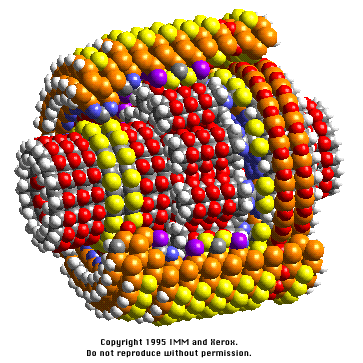 novations and breakthroughs made in nanotechnology. Goods and products manufactured today, and all matter for that matter (no pun intended) are made up of atoms. What nanotechnology does is manipulate those atoms at the molecular level, which basically means that given the right manipulation, you could transform virtually any matter into what you want it to be. Cole can become diamonds. Sand can become microchips. One could even combine dirt and water to create potatoes.
Not only is nanotechnology the wave of the future, some of its contributions can already be seen in today’s marketplace. Stain-resistant, wrinkle-free pants are made possible by the manipulation of the cotton atoms, and are a perfect example of the potential efficiency nanotechnology could bring. Products will become lighter, stronger, faster, cleaner, and above all, more precise. Conventional lithography (computer hardware manufacturing) has brought the technology to where it is today, which is quite impressive, considering the evolution of said technology has occurred only in the last fifty years. But that evolution is reaching its limits, and the progress lithography has made will soon come to an end. However, with nanotechnology, lithographers will be able to create semi-conductors so tiny, they won’t even be visible to the naked eye.
The possibilities are virtually endless. Nanotechnology could also possibly increase electrical transmission through pre-existing power lines, eliminating the need to build more as the population increases. Nanotechnology will allow the creation of medical devices capable of destroying pathogens and repairing tissues.
It’s safe to say that the physical manufacturing world we have come to know will soon come to an end, and it’s very exciting.
For more information, please visit: www.e-drexler.com
Mobiles double up as bus tickets
La compagnie Nokia, en collaboration avec Philips, est en train de mettre au point un téléphone qui pourra payer les billets d’autobus dans la ville de Hanau, en Allemagne. Des “cartes intelligentes” off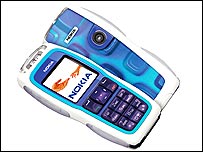 rent déjà ce service à Hanau: il suffit de passer sa carte devant un lecteur installé dans l’autobus. Le nouveau Nokia 3220 sera équipé d’un appareil qui fonctionne de la même façon, compatible avec les lecteurs dans les autobus.
Cette nouvelle technologie sera disponible en 2005 en Allemagne, mais le téléphone pourra sans doute être disponible dans d’autres pays, selon Gerhard Romen de Nokia. La compagnie voudrait également permettre aux consommateurs d’obtenir différentes informations avec le téléphone: ils pourraient, par exemple, savoir l’horaire de l’autobus.
De plus, le téléphone pourrait donner des renseignements lorsque le consommateur passe devant la publicité d’un produit ou d’un événement donné. Cette nouvelle technologie permettrait, comme il est indiqué dans le texte, de réduire les files d’attentes aux arrêts d’autobus.
L’article n’indique pas tout à fait comment le paiement est effectué, mais il s’agit sans doute d’un montant prépayé. Le téléphone serait surtout pratique dans les pays ou aucun service de ce genre n’est encore disponible (la ville de Hanau possède déjà le service des “cartes intelligentes”). Le téléphone est cependant innovateur avec la possibilité d’obtenir des renseignements variés sur certaines publicités. L’article n’indique pas le prix du téléphone.
Pour plus d’informations, visitez le lien suivant : http://news.bbc.co.uk/1/hi/technology/3975419.stm
State of The Art: Tiny Portable Projectors
When downloading images on our cellular phones, it is difficult to make out the details on the tiny screen. Researchers are working on pocket sized projectors in order to project films, images, games, etc. These projectors will be no bigger then a sugar cube, and no thicker then a credit card. Imagine the possibility of downloading a road map and projecting it onto your dashboard when traveling.
However, as of right now, the design of the projector needs to be modified. One problem is that the projectors are very dependent on electricity. It consumes quite a lot of power. In order to make them consumer friendly, researchers are trying to lower the amount of watt consummation. Some projectors will work with light-emitting diodes, others with lasers. Firstly, the projectors will attach solely to laptops. “There’s more room and power on a laptop”, says Dr Michael Bove, “eventually, though, they will find their way into hand-held products”.
The tiny portable projectors were a smart innovation because they appeal to everyone. Children will enjoy them because they’ll be able to project their video games into life size characters on the wall; their fathers will like them because they can project their sports games; and mothers will enjoy them because they’ll be able to project family photos. Business men, schools, and common people will all appreciate the purchase of the small projectors.
The small projectors simplify technology by making things bigger, brighter and easier to see. It would be much easier to install software, type essays or do anything on a computer with the projector. The better you can see, the quicker the progress. The cost of the projectors has not yet been determined. However, with low cost and attainability, projectors will be incredibly popular.
For more information, please visit: http://tech2.nytimes.com/mem/technology/techreview.html?oref=login&res=9C0DE0D7163CF937A35752C1A9629C8B63
