| ...However, as many critics have
pointed out, such focused attention on SARS has done more to alarm
people than inform them about the disease. Thus, although everyone has
heard of SARS and its rapid spread around the globe, few understand what
SARS is, how it is spread, and the magnitude of the threat it poses to
the world. In addition, this constant focus on disease and war has
created a sense of fear that is causing many people to wonder if the end
of the world had finally arrived.
The Straight Goods on
SARS
Lack of solid information about SARS
has added greatly to people’s fear of the disease. When the first
cases of SARS were reported back in mid-March, not only were scientists
unsure where SARS came from, they also knew very little about what
caused it, how it was spread or what differentiated those who are able
to resist the disease from those who succumbed to it. This sent many
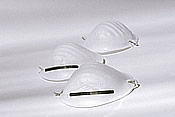
people into a panic, such that surgical masks - thought to help prevent
the spread of SARS - were quickly out of stock in Asia and other places
where SARS has been most prevalent.
But over the past month, scientists
from the World Health Organization (WHO), the Center for Disease Control
(CDC) and other health organizations have been quite successful at
filling in the blanks. Here is a brief summary of what has been
discovered so far.
|
.::Frequently
Asked Questions About SARS::.
|
Contents:
What is SARS?
Severe acute respiratory syndrome (SARS) is a viral respiratory illness
that was first reported in Asia in February 2003. In early March, the
World Health Organization (WHO) issued a global alert about SARS. Over
the next few months, the illness spread to more than two dozen countries
in North America, South America, Europe, and Asia. By late July,
however, no new cases were being reported and the illness was considered
contained. According to WHO, 8,098 people worldwide became sick with
SARS during this outbreak; of these, 774 died.
What are the
symptoms and signs of SARS?
The illness usually begins with a high fever (measured temperature
greater than 100.4°F [>38.0°C]). The fever is sometimes associated
with chills or other symptoms, including headache, general feeling of
discomfort, and body aches. Some people also experience mild respiratory
symptoms at the outset. Diarrhea is seen in approximately 10 percent to
20 percent of patients.
After 2 to 7 days, SARS patients may
develop a dry, nonproductive cough that might be accompanied by or
progress to a condition (hypoxia) in which insufficient oxygen is
getting to the blood. In 10 percent to 20 percent of cases, patients
require mechanical ventilation. Most patients develop pneumonia.
What is the
cause of SARS?
SARS is caused by a previously unrecognized coronavirus, called SARS-associated
coronavirus (SARS-CoV). It is possible that other infectious agents
might have a role in some cases of SARS.
How is SARS
spread?
The primary way that SARS appears to spread is by close person-to-person
contact. The virus that causes SARS is thought to be transmitted most
readily by respiratory droplets (droplet spread) produced when an
infected person coughs or sneezes. Droplet spread can happen when
droplets from the cough or sneeze of an infected person are propelled a
short distance (generally up to 3 feet) through the air and deposited on
the mucous membranes of the mouth, nose, or eyes of persons who are
nearby. The virus also can spread when a person touches a surface or
object contaminated with infectious droplets and then touches his or her
mouth, nose, or eye(s). In addition, it is possible that SARS-CoV might
be spread more broadly through the air (airborne spread) or by other
ways that are not now known.
What does
“close contact” mean in the context of the SARS outbreak?
Close contact is defined in the CDC SARS case definition as having cared
for or lived with a person known to have SARS or having a high
likelihood of direct contact with respiratory secretions and/or body
fluids of a patient known to have SARS. Examples include kissing or
embracing, sharing eating or drinking utensils, close conversation
(within 3 feet), physical examination, and any other direct physical
contact between people. Close contact does not include activities such
as walking by a person or sitting across a waiting room or office for a
brief time.
If I were
exposed to SARS, how long would it take for me to become sick?
The time between exposure to the SARS virus and onset of symptoms is
called the “incubation period.” The incubation period for SARS is
typically 2 to 7 days, although in some cases it may be as long as 10
days.
How long is a
person with SARS infectious to others?
Available information suggests that people with SARS are most likely to
be infectious only when they have symptoms, such as fever or cough.
However, as a precaution against spreading the disease, CDC recommends
that people with SARS limit their interactions outside the home (for
example, by not going to work or to school) until 10 days after their
symptoms have gone away. Patients are most infectious during the second
week of illness.
Do some people
who recover from SARS become sick again or relapse?
At this time we do not have a full understanding of the natural course
of illness in persons infected with SARS-CoV. It will be important to
learn what factors might influence illness progression and recovery.
Such factors could be related to the virus itself, how the body's immune
system reacts to the virus, how infection with the virus is treated, or
other possibilities. CDC and other scientists are trying to learn the
answers to these important questions.
What medical
treatment is recommended for patients with SARS?
CDC recommends that patients with SARS receive the same treatment that
would be used for any patient with serious community-acquired atypical
pneumonia. SARS-CoV is being tested against various antiviral drugs to
see if an effective treatment can be found.
What is the
status of the SARS outbreak?
SARS was first reported in Asia in February 2003, and over the next few
months the illness spread to more than two dozen countries in North
America, South America, Europe, and Asia. By late July, no new cases
were being reported and the global outbreak was declared over by WHO.
How many people
contracted SARS worldwide during the outbreak? How many people died of
SARS?
According to WHO, 8,098 people worldwide became sick with SARS during
the course of this outbreak; of these, 774 died.
How widespread
was the SARS outbreak in the United States?
Through July 2003, a total of 192 SARS cases had been reported in the
United States, including 159 suspect and 33 probable cases; of the 33
probable cases, only 8 had laboratory evidence of SARS-CoV infection. No
SARS-related deaths occurred in the United States. SARS cases reported
in the United States occurred primarily among people who traveled to
SARS-affected areas; a small number of other people became ill after
being in close contact with (that is, having cared for or lived with) a
SARS patient while in the United States. There was no evidence that SARS
spread more widely in the community in the United States. For
information about the number of cases reported in each state.
What is the
difference between a “probable” SARS case and a “suspect” SARS
case?
Suspect SARS cases have fever, respiratory illness, and recent travel to
an affected area with community transmission of SARS and/or contact with
a suspect SARS patient. Probable cases meet the criteria for a suspect
case and also have evidence (e.g., chest X-ray) of pneumonia or
respiratory distress syndrome.
What was done to
contain the SARS outbreak in the United States?
To minimize the risk for SARS among U.S. residents, the public health
system took careful and thorough precautions to prevent the spread of
SARS. People who were suspected of having SARS were isolated from others
and received care. People arriving from affected parts of the world (who
might have been exposed to SARS) received information about SARS and
instructions on what they should do if they became ill. SARS patients
and their contacts were monitored to help prevent spread of the
disease.
What did CDC do
to combat this health threat?
CDC worked closely with WHO and other partners in a global effort to
address the SARS outbreak. For its part, CDC took the following actions:
- Activated its Emergency Operations
Center to provide round-the-clock coordination and response.
- Committed more than 800 medical
experts and support staff to work on the SARS response.
- Deployed medical officers,
epidemiologists, and other specialists to assist with on-site
investigations around the world.
- Provided assistance to state and
local health departments in investigating possible cases of SARS in
the United States.
- Conducted extensive laboratory
testing of clinical specimens from SARS patients to identify the
cause of the disease.
- Initiated a system for distributing
health alert notices to travelers who may have been exposed to cases
of SARS.
In addition, CDC is continuing to work
with federal, state, and local health departments and other professional
organizations to plan for a rapid recognition and response should SARS
re-emerge.
If there is another outbreak of SARS,
how can I protect myself?
If SARS were to re-emerge, there are some common-sense precautions that
you can take that apply to many infectious diseases. The most important
is frequent hand washing with soap and water or use of alcohol-based
hand rubs. You also should avoid touching your eyes, nose, and mouth
with unclean hands and encourage people around you to cover their nose
and mouth with a tissue when coughing or sneezing.
What are
coronaviruses?
Coronaviruses are a group of viruses that have a halo or crown-like
(corona) appearance when viewed under a microscope. These viruses are a
common cause of mild to moderate upper-respiratory illness in humans and
are associated with respiratory, gastrointestinal, liver and neurologic
disease in animals.
If coronaviruses
usually cause mild illness in humans, how could this new coronavirus be
responsible for a potentially life-threatening disease such as SARS?
There is not enough information about the new virus to determine the
full range of illness that it might cause. Coronaviruses have
occasionally been linked to pneumonia in humans, especially people with
weakened immune systems. The viruses also can cause severe disease in
animals, including cats, dogs, pigs, mice, and birds.
How long can
SARS-CoV survive in the environment?
Preliminary studies in some research laboratories suggest that the virus
may survive in the environment for several days. The length of time that
the virus survives likely depends on a number of factors. These factors
could include the type of material or body fluid containing the virus
and various environmental conditions such as temperature or humidity.
Researchers at CDC and other institutions are designing standardized
experiments to measure how long SARS-CoV can survive in situations that
simulate natural environmental conditions.
Are there
disinfectants available that can inactivate (kill) SARS-CoV?
Right now, there are no disinfectant products registered by the U.S.
Environmental Protection Agency for use on environmental surfaces that
are specifically listed as having the ability to kill SARS-CoV. However,
related viruses that have similar physical and biochemical properties
can be killed with bleach, ammonia or alcohol, or cleaning agents
containing any of these disinfectants. Cleaning agents should be used
according to the manufacturer's instructions.
Is there a
laboratory test for SARS?
Yes, several laboratory tests can be used to detect SARS-CoV. A reverse
transcription polymerase chain reaction (RT-PCR) test can detect
SARS-CoV in clinical specimens, including blood, stool, and nasal
secretions. Serologic testing also can be performed to detect SARS-CoV
antibodies produced after infection. Finally, viral culture has been
used to detect SARS-CoV.
What is a PCR
test?
PCR (or polymerase chain reaction) is a laboratory method for detecting
the genetic material of an infectious disease agent in specimens from
patients. This type of testing has become an essential tool for
detecting infectious disease agents.
What does
serologic testing involve?
A serologic test is a laboratory method for detecting the presence
and/or level of antibodies to an infectious agent in serum from a
person. Antibodies are substances made by the body's immune system to
fight a specific infection.
What does viral
culture and isolation involve?
For a viral culture, a small sample of tissue or fluid that may be
infected is placed in a container along with cells in which the virus
can grow. If the virus grows in the culture, it will cause changes in
the cells that can be seen under a microscope. |