
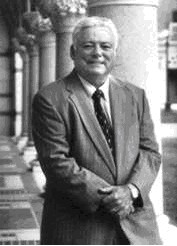
Matriculation Address
By Malcolm Gillis
Rice University President
Aug. 18, 2002
...........................................................................
Rice University Class of 2006 — welcome to your campus, to your colleges and to the community of scholars that will be your new intellectual home.
Rice is one of a handful of highly selective universities. After over four decades on university campuses, I have come to believe that most highly selective universities take in great students and make them good ones. We have rather higher aspirations: to take in great students and help them become truly outstanding. How do we try to do that?
At its opening in 1912, Rice’s first president, Edgar Odell Lovett, called for a university that kept “the standards up and the numbers down.” You are very much a part of that legacy. We are the smallest of the major research universities. And the standards are high. If you look at the students on your right and left this evening, you will find someone who is as accomplished as yourself, though likely in different ways.
You come from 43 states and 14 different countries. Anglos account for 55 percent, Hispanics 11 percent, African-Americans 7 percent and Asian-Americans 16 percent. Our commitment to diversity is one reason Hispanic Magazine recently named Rice the nation’s second best school for Hispanic students. You number 705 out of 7,080 applications for the Class of 2006. Seventy-two percent of you were in the top 5 percent of your high school class. Twenty-three percent were valedictorians. One hundred eighty-four of you are National Merit Scholars. Since 1990, Rice has led the nation’s universities in the percentage of National Merit Scholars in its freshman classes, averaging 32.5 percent. All this talent could lead to over-confidence or, in the extreme, hubris. Students as well as nations do well to remember the lessons of humility. Not six decades ago, a small, powerful island nation ruled a fourth of humanity. Today, after devolution for Scotland, the British reign is largely confined to England. Many of you may, later in life, have to learn how to handle fame. If so, be reminded that fame, like power, can be fleeting. A good example comes from the experience of the writer Larry McMurtry, a Rice alumnus and teacher in the Department of English, who has good Rice connections. How many of you have read his novels, such as “Lonesome Dove” and “Cadillac Jack”?
A few years ago Larry stayed at the Holiday Inn in Uvalde, Texas. On arriving at the hotel, he was extremely pleased to see his name in very large letters on the marquee. It said: “Welcome Larry McMurtry, author of ‘Terms of Endearment.’” The very next day, Larry learned that he had won the Pulitzer Prize for “Lonesome Dove.” He went out for the afternoon, then returned to the Holiday Inn, wondering with eager anticipation what the marquee would now read. It said: “Dinner Special: Catfish and Fries: $5.99.”
Still, just as Larry has done, most of you will make a mark on the world. If you follow the pattern of earlier classes, 70 percent of you will major in science, engineering or the social sciences. Nineteen percent will focus on the humanities, with a select 4 percent each studying music and architecture. Of course, you may find yourself moving in a direction you do not expect today. During the next few years, you will all stretch yourselves in ways you cannot imagine now. Many of you will become engrossed in totally new fields. Each year, we have philosophy majors who study quantum physics and engineers who develop a love for poetry. That is not uncommon — indeed we are gratified when student’s explorations lead them to new intellectual interests.
To assist in this exploration, you will discover here faculty who will likely exceed your expectations. President Lovett told the audience at Rice’s opening that “the best available instructors and investigators are being sought wherever they may be found.” Today, we can say with some confidence that we continue to find them — and we continue to look. Rice’s professors are some of the most distinguished teachers and researchers in the country:
• Science and engineering students will find on our campus more members of the national academies of science and engineering than any other private school south of Chicago and between the two coasts. We have two Nobel Prize-winning chemists on our faculty and three members of the National Academy of Medicine — even though we have no medical school. A recent survey shows that Rice ranks in the top 1 percent of all institutions worldwide in the impact and influence of research in 12 science and engineering fields.
• Humanities students will interact with a distinguished faculty, two-thirds of whom have received prestigious grants or awards from the National Endowment for the Humanities, Guggenheim Foundation, Fulbright Foundation or the Humboldt Foundation. You may study in one of the nation’s leading history departments or read Shakespeare with a recent president of the Shakespeare Association of America.
• Rice’s School of Architecture is, pound for pound, the best in the nation. It was named by the Almanac of Architecture and Design as the best in the South and one of the four best in the country.
• Students in our Shepherd School of Music will find themselves in one of the nation’s most prominent university-based music schools.
• We have invested heavily in our social sciences in the past decade, developing new strengths in economics, sociology and several other fields.
• Many of you will come to interact with professors in the Jesse H. Jones Graduate School of Management, one of the fastest rising business schools in the nation.
Unlike your peers at many universities, you will actually get to know your professors from day one. For decades we have had one of the country’s lowest student-to-faculty ratios. Rice’s original faculty of 10 taught 77 freshmen. The ratio is now even better — less than 6-to-1 — for 35 times as many undergraduates. Professors, not teaching assistants, teach over 93 percent of our classes, far higher than at Harvard, Yale or Stanford. Many of you will, as undergraduates, be actually involved in the research of the faculty. Interdisciplinary studies are a strength at Rice, a strength recognized worldwide. We do interdisciplinary studies very well, partly because we have remained small and partly because we have worked hard to develop the good mechanisms for facilitating teaching and research across disciplines. Our new Center for Sustainability, created last month with nearly $7 million in new money from our fund-raising campaign, well illustrates several of Rice’s finest traits.
The center focuses on environmental and natural resource issues nationally and worldwide. It is truly interdisciplinary, involving faculty and students from science, social science, engineering, the Jones School of Management and the School of Humanities. And — this could only happen at Rice: The budget for the Center for Sustainability includes, over the next 12 years, funding for undergraduate as well as graduate research.
Outside the classroom, you will be wrapped up in one of Rice’s most distinctive traditions — residential colleges. President Lovett stated at Rice’s opening that a residential college system was “prominent in the plans of the new institution.” It took another 45 years for the first college to open, but today the college system is at the heart of student life on campus.
It is also better than ever. Last April, we dedicated our ninth college, Martel College. This was the first additional college to be built on campus since 1971. It is joined by an all new Wiess College, which provides first-class residences for 228 of you. Additions to Jones and Brown will bring these colleges up to the size of Wiess and other colleges. New serveries endanger another tradition of college students everywhere — complaining about the food. These new facilities — together with brand new commons for four of the colleges — will allow us to house 80 percent of you on campus, up from 67 percent before.
Your new campus life will give you a measure of independence many of you have not had before. There are no curfews, no assigned visiting hours and no resident monitors. Instead, another legacy — our Honor System, first instituted in 1916 — governs your academic behavior. We take this tradition very seriously, because it is overseen and implemented by our students.
You will be the first entering class to participate in what may become another tradition at Rice: On Sept. 11 we will hold a special observance in honor of those who died almost a year ago in New York, Washington and Pennsylvania. Rice has always placed special responsibility on its students to conduct themselves appropriately. We trust you to act maturely inside and outside the classroom and to treat everyone — fellow students, faculty, staff and visitors — with respect. Rice values civility in its students and faculty as highly as it does academic freedom. We expect disagreements, even spirited ones. Intellectual freedom, however, demands a mutual respect among all participants. After all, our mission is not to make ideas safe for you, but to help make you safe for ideas — to hear, consider and debate.
We also hope you will take time to develop nonacademic pursuits. Every year I urge, with little effect, first-year students to pause from time to time to smell the flowers. Some relax by enjoying the whimsical traditions we have to offer. The Marching Owl Band — which never marches but does have a dancing violin section — is open to musicians and nonmusicians alike. We crown the most unusual homecoming queens and kings you are likely to find anywhere. Lucky winners over the last 20 years include a refrigerator, a ferret, an iguana and a cutout figure of former governor Ann Richards.
The sports-minded among you will also find much of interest here, both in intramurals and at the intercollegiate level. By the time our original class graduated, Rice had a football team, a baseball team, a track team and a basketball team, which won the 1918 Southwest Conference title. Our teams have gone on to win 17 conference titles in the last 10 years alone, including seven consecutive ones by the baseball squad. The intramural sports program offers nearly a dozen programs you might join, and 16 specialty sports clubs are available for activities from Frisbee to fencing.
We urge you to plan now for study abroad while at Rice. Rice was built on an international vision; first President Edgar Odell Lovett visited the world’s leading universities in Europe and Japan for nine months before Rice opened to gather ideas and faculty for the new institution. We have drawn on that heritage by emphasizing international studies on campus for several years. We have expanded considerably our faculty in Latin American and Middle Eastern studies and offer a broad range of programs in Asian and European studies. Rice is also one of a handful of universities that provide financial aid for overseas study. As a result, more of our students are studying abroad than ever before. The number of Rice students who spent a full year outside the United States has risen 35 percent in the last two years. We have seen a 160 percent increase in the number of students going to Asia and a 400 percent increase in those going to Africa. Rice students have gone to every continent, including Antarctica. While you are here, you will enjoy one of Rice’s oldest and most important traditions — tuition that is very heavily subsidized by the generosity of our alumni and other donors. A Rice education costs about $42,000 per year, per student. Thus, every Rice student, not just those on financial aid, is heavily subsidized by gifts from donors, past and present. In fact, net tuition covers only one-tenth of the university’s costs. Not only is tuition at other highly selective schools about 60 percent higher than Rice’s, but also our financial aid program is among the most generous available anywhere. It allows our students to finish with much less than half the debt of Ivy League graduates. We ranked sixth on last year’s list of national universities for students with the least debt; four of those ahead of us are public institutions. You will not only graduate with far less debt than Harvard or Yale students, but also with less than UT–Austin or Texas A&M students. In fact, 62 percent of our seniors graduate with no debt at all.
We take some measure of pride in the traditions that have made Rice the university it is today. Traditions are supremely important in a university setting, but you will, I hope, quickly recognize that a great university is about much more than tradition — it is also about change — constant change as the frontiers of knowledge expand from one month to the next. The Rice you graduate from will most assuredly not be identical to the Rice you enter today. And so, Class of 2006, much is expected of you. Please now enter the Sallyport, bringing with you your sense of humor, your intelligence and your sense of wonder.
