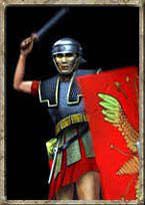
From Marcus Caescius Drusus
To His Wife Sallia
My dear wife, I trust that all is well with you and the children. I hope that this letter finds the crops in, and that they yield a bountiful harvest. How is young Marcus? Has his fever you mentioned in the last letter subsided? After Gaius Livius Scaurus's son died last month I haven't been able to stop worrying of our little one. But I must not trouble you with such things.
As I write this we are at the walls of some Gallic city whose name I daresay I cannot pronounce. Uxorodonum or something I believe - sounds like "by the wife, a gift" to me, but alas, what do I know. I am not Mighty Caesar, or Antonius, I am but a lowly ranker, my back broken in labor in idleness and war alike.
The fighting was fierce today. Caesar ordered us to erect and man a seige tower, though why I don't know. The town can't be taken. Her walls are too high, her approach too cruel. But they said that about Alesia. I have learned not to question Caesar's motives, he knows what he is doing and he takes good care of us.
Alas, I digress. The Gauls gave us no respite, firing arrows of fire and pitch at us, setting even the iron shielding of the siege tower ablaze. As some men worked to put it out, they barbarians tried to make a push and break Caesar's line. They fight with valor, the Gauls, but with no thought. They are too drunk and too driven by glory and honor. They have no notion of a team, of unified effort. They were slaughtered before us, though their terrible longswords did manage to pull a few of our men to the shades of Orcus with them.
I've fought in many battles, my dear, but none has taken as much out of me as today's. I am tired. After the skirmish we tended to the wounded, where I came upon a boy no more than fourteen, his belly sliced open. He sat against our wall, holding his intestines and broken armor in his hands, looking at it as though trying to divine the will of the gods. A tribune told me to finish him, to take him out of his misery. But the boy's eyes, the horror they held. He understood even less than I what this war was about. The glory of Rome? Perhaps. But was that worth this young boy's life?
I knelt beside him and asked him his name. Marius. A good name. He asked me in a weak voice if he was going to die. I could not lie, I told him that he would, and painfully. He winced and mumbled something about meeting his brother below, then he asked me to finish him. I put my hand, already covered in blood and gore, on his shoulder and nodded. I stood and ran the sword across his throat, his blood spurted, hitting my legs and the ruined ground. His eyes thanked me.
My dear Sallia, I long for the sweet grapes of our farm, I miss dear Marcus's laughter, the warm Apulian sun, and most of all you. The gods know that your embrace is far gentler and kinder then that of a camp bedroll. I must go now, the damned Gauls are up to something, they say. Until I hear from you again, my dearest.
M. Caescius Drusus