Site hosted by Angelfire.com: Build your free website today!
Class A -Geothermal-

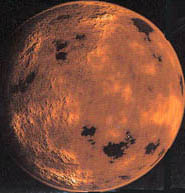
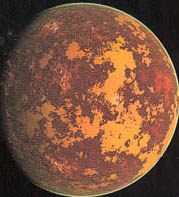
Class A worlds tend to be small and often (not always) lack strong metal deposits (and thus, have little magnetic field). Geothermal worlds are often believed to be worlds in the process of forming. However, many Class A worlds reside too close their star and thus, never progress into a Class B stage. Geothermal worlds are characterized by their almost entirely molten surfaces.
  • Typical Age: 0-2 billion years, although some are believed to be much older.
  • Diameters: 1,000- 10,000 km
  • Orbital Positioning: Hot Zone
  • Typical Gravity: .05 to .5g
  • Surface: Partially, Mostly or Fully molten
  • Atmosphere: Hydrogen, Sulfur and Ammonia compounds, if any.
  • Life Forms: No known species (highly unlikely)
  • Example: Mercury
  • Notes: If allowed to cool, Geothermal worlds cool to become Class B Geomorteus.
  • Class B -Geomorteus-

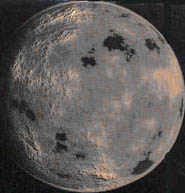
    Class B Geomorteus worlds closely resemble Geothermal worlds in that they possess molten surfaces and a harsh atnosphere. However, Class B worlds are usually found deeper in the solar system and almost always cool to become Geoinactive. Class B worlds often lack strong deposists of metals and thus, have weak magnetic fields.
  • Typical Age: 0-2 billion years.
  • Diameters: 1,000- 10,000 km
  • Orbital Positioning: Ecosphere/Cold Zone
  • Typical Gravity: .05 to .5g
  • Surface: Partially molten
  • Atmosphere: Tenuous; Hydrogen compounds, some chemically active gases.
  • Life Forms: No known species (highly unlikely)
  • Example: Gothos
  • Notes: If allowed to cool, Geomorteus worlds cool to become Class C Geoinactive.
  • Class C -Geoinactive-

    Class C worlds are the ones that didn't quite make it. Because of a fairly quick cooling period or simply because of a lack of geological activity, they didn't form the necessary metals, magnetic field or mass to make it as a life-sustaining world. Essentially, Class C worlds are dead and lifeless worlds that may or may not have a small molten core.
  • Typical Age: 2-10 billion years.
  • Diameters: 1,000- 10,000 km
  • Orbital Positioning: Ecosphere/Cold Zone
  • Typical Gravity: .05 to .5g
  • Surface: Extremely low surface temperature.
  • Atmosphere: Frozen
  • Life Forms: No known species (highly unlikely)
  • Example: Pluto
  • Class D -Asteroid/Planetoid-

    Class D worlds differ from Class C worlds in that they tend to be much smaller and often have no core. Most Class D worlds are made of ejecta, usually from planetary collision, or were stellar matter that never quite coalesced into a viable planet. Some asteroid belts are the remains of ancient, now destroyed, planets.
  • Typical Age: 2-10 billion years.
  • Diameters: 100- 1,000 km
  • Orbital Positioning: Hot Zone/Ecosphere/Cold Zone
  • Typical Gravity: .001 to .05g
  • Surface: Barren and cratered
  • Atmosphere: Very tenuous.
  • Life Forms: No known species (highly unlikely)
  • Example: Luna
  • Class E -Geoplastic-

    Class E worlds are new worlds that have to potential to form into viable, life-supporting bodies.
  • Typical Age: 0-2 billion years.
  • Diameters: 10,000- 15,000 km
  • Orbital Positioning: Ecosphere
  • Typical Gravity: .5 to 1.2g
  • Surface: Partially, Mostly or Fully molten; crystallizing. High temperature
  • Atmosphere: Hydrogen compounds, reactive gases.
  • Life Forms: Excalibians
  • Example: Excalibia
  • Notes: If allowed to cool, Geoplastic worlds cool to become Class F.
  • Class F -Geometallic-

    Class F worlds are evolving towards a stabilized tectonic crust and a more uniform, solid core.
  • Typical Age: 1-3 billion years, although some are believed to be much older.
  • Diameters: 10,000- 20,000 km
  • Orbital Positioning: Ecosphere
  • Typical Gravity: .5 to .1.5g
  • Surface: Volcanic and seismic activity; large molten core
  • Atmosphere: Hydrogen compounds
  • Life Forms: Horta
  • Example: Janus IV
  • Notes: Class F worlds are in the process of cooling, creating metals and crystals. They tend to have very large, molten cores. They continue to become Class G
  • Class G -Geocrystalline-

    Class G worlds are in transition from lifeless ball of volcanic rock to a more suitable and possibly fruitious globe that can support life.
  • Typical Age: 3-4 billion years
  • Diameters: 10,000- 20,000 km
  • Orbital Positioning: Ecosphere
  • Typical Gravity: .5 to .1.5g
  • Surface: Crystallizing.
  • Atmosphere: Carbon Dioxide, toxic gases
  • Life Forms: Primitive single-celled organisms
  • Example: Delta Vega
  • Notes: Class G worlds are in the process of cystallizing. They continue to become Class H, K, L, M, N, O, P or Q
  • Class H -Desert-

    Class H worlds are very arid worlds with thin atmospheres. They tend to have extremes of temperature, little seasonal variations and are either hot and arid or cold and tundra-like. Many possess highly concentrations of metallic vapor
  • Typical Age: 4-10 billion years, although some are believed to be much older.
  • Diameters: 8,000- 15,000 km
  • Orbital Positioning: Ecosphere/Cold Zone/Hot Zone
  • Typical Gravity: .4 to .1.2g
  • Surface: little or no surface water; arid and usually very cold or hot.
  • Atmosphere: Oxygen/Nitrogen, may have heavy concentrations of CO2, or metal vapors and heavy gases.
  • Life Forms: Hardy, drought and radiation resistant plant and animal life
  • Example: Tau Cygna V
  • Notes: Class H worlds often have hardy, radiation and drought resistant life, but very little water.
  • Class I -Superjovian-

    Superjovian worlds, while gigantic, are being discovered at an alarmingly common rate. The can exhibit the same Subclasses as Class J Jovian worlds.
  • Typical Age: 3-10 billion years, although some are believed to be much older.
  • Diameters: 140,000- 10 million km
  • Orbital Positioning: Ecosphere/Cold Zone/Hot Zone
  • Typical Gravity: 5 to 15g
  • Surface: Tenuous; compromised of gaseous hydrogen compounds.
  • Atmosphere: Zones vary in temperature, composition and pressure.
  • Life Forms: Unlikely
  • Example: Q'Tahl
  • Notes: Radiates heat.
  • Class J -Jovian-

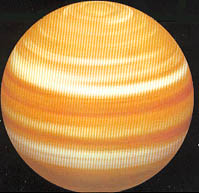
    Jovian worlds are made up of various types of gas. They are not nearly as dense as rocky worlds. They exhibit several subclasses.
  • Typical Age: 3-10 billion years, although some are believed to be much older.
  • Diameters: 50,000- 140,000 km
  • Orbital Positioning: Ecosphere/Cold Zone/Hot Zone
  • Typical Gravity: 2 to 5g
  • Surface: Tenuous; compromised of gaseous hydrogen compounds.
  • Atmosphere: Zones vary in temperature, composition and pressure.
  • Life Forms: Unlikely
  • Example: Jupiter
  • Notes: Radiates some heat.
  • -Jovian Subclasses-

  • Subclass One: Textbook Example. A pretty plain Jovian world that matches the criteria of a textbook exmaple.
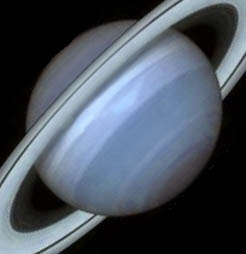
  • Subclass Two: Ringed. The Jovian possesses a series of rings, usually from a broken and dispersed satellite. Over time, rings degrade and disappear.
  • Subclass Three: Liquid. The Jovian is unusually dense or is distant enough that most of its gases are condensed into liquids. May or may not have a tenuous, frozen gas core.
  • Subclass Four: Supersatellite. The Jovian possesses a stable and unusually abundant mini-system of satellites. It is not unheard of to find Class M moons in such environs.
  • Subclass Five: Unusual Composition. The Jovian's atmosphere is dominated by a gas other than hydrogen-based compounds. If any oxygen exists, it may be theoretically possible to have liquid water and water vapor somewhere within the planet.
  • Class K -Adaptable-

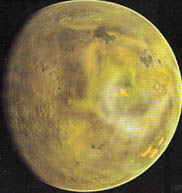
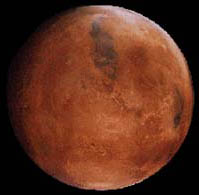
    Class K worlds tend to be too small to hold onto a viable atmosphere and thus, have very low atmospheric pressure and only heavy gases.
  • Typical Age: 4-10 billion years, although some are believed to be much older.
  • Diameters: 5,000- 10,000 km
  • Orbital Positioning: Ecosphere/Cold Zone
  • Typical Gravity: .3 to .1.0g
  • Surface: Rocky and Barren. Little or no surface water.
  • Atmosphere: Thin, most carbon dioxide
  • Life Forms: Primitive single-celled; can be adapted for colonization.
  • Example: Mars
  • Notes: Adapatble for Human settlement using pressure domes.
  • Class L -Marginal-

    Class L Worlds have limited surface water and tend to have nonporous, rocky surfaces in which only hardy vegetation lives. They are capable of supporting Human life, but the atmosphere can feel very stuffy from the CO2.
  • Typical Age: 4-10 billion years, although some are believed to be much older.
  • Diameters: 10,000- 15,000 km
  • Orbital Positioning: Ecosphere
  • Typical Gravity: .5 to .1.0g
  • Surface: Rocky and Barren, some surface water.
  • Atmosphere: Oxygen/Argon, with high concentrations of Carbon Dioxide.
  • Life Forms: Limited to plant life. Suitable for colonization.
  • Example: Indri VIII
  • Notes: Adapatble for Human settlement.
  • Class M -Minshara-

    Minshara-Class worlds (term derived from Vulcan) are the worlds most likely to hold a vast array of lifeforms, even sentient life. The appearance of Minshar-class worlds can vary greatly.
  • Typical Age: 4-10 billion years.
  • Diameters: 10,000- 20,000 km
  • Orbital Positioning: Ecosphere
  • Typical Gravity: .5 to 1.5g
  • Surface: Varies; surface water tends to be abundant- at least 50%-80%.
  • Atmosphere: Nitrogen/Oxygen, trace elements.
  • Life Forms: Pervasive vegetation, animal life and sentient life.
  • Example: Earth
  • Notes: Can be colonized with no problem.
  • Class N -Reducing-

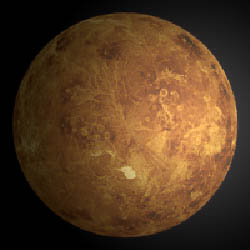
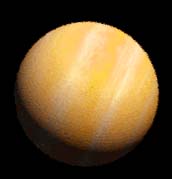
    Rocky, highly volcanic worlds with extremely high surface temperatures and a soup of abrasive volcanic gases trapped in a greenhouse gas.
  • Typical Age: 4-10 billion years.
  • Diameters: 10,000- 20,000 km
  • Orbital Positioning: Hotzone
  • Typical Gravity: .5 to 1.5g
  • Surface: High surface temperature due to greenhouse effect. Often volcanically superactive.
  • Atmosphere: Extremely Dense; Carbon Dioxide, Ammonia, Sulfides.
  • Life Forms: Unknown
  • Example: Venus
  • Notes: Cannot currently be colonized or terraformed.
  • Class O -Pelagic-

    Earth-like worlds that have more than 80% liquid water covering their surfaces are considered to be Class O.
  • Typical Age: 4-10 billion years, although some are believed to be much older.
  • Diameters: 10,000- 20,000 km
  • Orbital Positioning: Ecosphere
  • Typical Gravity: .5 to 1.5g
  • Surface: 80%+ liquid surface water.
  • Atmosphere: Oxygen/Nitrogen, trace elements.
  • Life Forms: Pervasive aquatic plant and animal life. Sometimes humanoids.
  • Example: Argo, Pacifica
  • Notes: Suitable for colonization.
  • Class P -Glaciated-

    Class P worlds are very similar to Minshara-Class planets, except that 80% or more of the planet is covered in ice water.
  • Typical Age: 4-10 billion years.
  • Diameters: 10,000- 20,000 km
  • Orbital Positioning: Ecosphere
  • Typical Gravity: .5 to 1.5g
  • Surface: 80% of planet covered in ice water..
  • Atmosphere: Nitrogen/Oxygen, trace elements.
  • Life Forms: Hardy vegetation, animal life. Possibly sentient life.
  • Example: Rigel XII
  • Notes: Can be colonized with little difficulty.
  • Class Q -Variable-

    Class Q worlds tend to have regions of extreme hot and cold, with little or no temperate zone.
  • Typical Age: 4-10 billion years.
  • Diameters: 10,000- 20,000 km
  • Orbital Positioning: Coldzone/Ecosphere/Hotzone
  • Typical Gravity: .5 to 1.5g
  • Surface: Varies; Due to eccentric orbit, variable star output or lack of planetary rotation, water may be free-flowing, ice or vaporous..
  • Atmosphere: Nitrogen/Oxygen, trace elements.
  • Life Forms: May have some vegetation and animal life if temperate zones exist.
  • Example: Remus
  • Notes: Can be colonized with little difficulty.
  • Class R -Rogue-

    Rogue worlds do not belong to a star system. Usually, they have escaped their home system and have, over a period of millenia, drifted into deep space.
  • Typical Age: 4-10 billion years.
  • Diameters: 10,000- 20,000 km
  • Orbital Positioning: None; Deep Space
  • Typical Gravity: .5 to 1.5g
  • Surface: Varies; May have temperate zones due to geothermal outgassing, or perhaps placement with nebulae.
  • AtmosphereAtmosphere: Nitrogen/Oxygen, trace elements.
  • Life Forms: May have nonphotosynthetic plantlife, some animals.
  • Example: Dakala
  • Notes: Can be colonized with little difficulty if temperate.


  • The planetary classification system as well as a few of the planetary pictures, belong to Star Trek/Paramount. This website isn't intended for commercial use.