  |
|
|
Between two
imposing restaurants just to the East of Shenyang's major shopping district
lies the Imperial Palace complex, the most extensively preserved cultural
relic of the region. It is bizarrely juxtaposed with the conventional metropolitain
architecture of the surrounding streets: the alleyway leading to the palace
gates is like a Chinatown in China, with bright red lamposts and lanterns.
A lot of care has been taken to ensure the area is clean and protected,
and thus the distinction between this street and others is marked.
We took the
family minivan (and a good deal of the extended family) with us as we took
the approach to the complex via the Great West Rd entrance. Great West
Rd is part of the new face of Shenyang, with stunning new office suites
and science-fiction architecture.
It was another
hot day, and the entire palace interior grounds were bright in amber-red
light. The complex is a small suburb of Manchu structures built as a miniature
replica of Beijing's forbidden city, and begun in around 1626. It was used
as a residence for the Emperor (and the numerous women employed to have
sex with him) as well as offices for ministerial strategising and for formal
ceremonies.
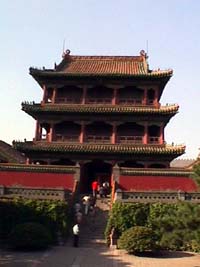
The Imperial Complex Walking around the palace was a pleasant experience. I took the opportunity to sit in the shade at a small stone table within a little pagoda. There were plants and a small stream built to run along the wall beside where I was sitting. Compared with the peasantry of China it must have been a small paradise - indeed, compared with modern-day Shenyang it is still an enviable mansion. In few other parts of Shenyang is so much free space available for relaxation. The most impressive
structure was the Phoenix Tower, which rose in three stories of arced terraces.
This was a ceremonial hall and the entryway to the Qing Ning Lo, a courtyard
surrounded by bedrooms for the Emperor's concubines. Also of note was the
shorter Da Zheng Dian throne room, where Emperor Shunchih was crowned before
taking over the rest of China. This stands before a large foreground where
delegates from the various tribes of the nation would gather for important
ceremonies and matters of state.
|
||||||||||||||||