

An example might be a situation where the Stellar Physics department is conducting an experiment using the lateral sensor array to study a nearby binary star. Simultaneously, part of the same array is being time-shared with a long-range cometary population survey. A request from the bridge for a priority scan of a planetary systems night jeopardize both studies unless Ops authorizes a minor change in ship's attitude, permitting the Stellar Physics observations to use the upper sensor array. Alternately, Ops may weigh the option of placing one of the on-going studies on a lower priority to provide the bridge with immediate use of the lateral array.
PRIORITY AND RESOURCE ALLOCATION
Most routine scheduling and resource allocation is done automatically by the Ops program. This frees the Operations Manager from routine activity, leaving him/her able to concentrate on decisions beyond the scope of the artificial intelligence software. The level of these decision filter programs can be set by the Operations Manager, and also varies with the current Alert status of the ship. In cases where priorities are ambiguous or where specific Ops approval is required, the panel will display a menu of the most probable options for action. In virtually all cases, the Operations Manager also has the ability to input choices beyond those presented by the action menus. This is important because it is impossible for mission planners to anticipate every possible situation. Action menus may be displayed for any current activity (even those which would normally be handled automatically) upon keyboard request from Ops.
During crisis situations and Reduced Power Mode operations, Ops is responsible for supervision of power in coordination with the Engineering department. Load shedding of nonessential power usage in such situations is based on spacecraft survival factors and mission priorities.
The Operations Manager is also responsible for providing general status information to the main computer, which is then made available to all departments and personnel. Ops routes specific information to specific departments to inform them of anticipated changes and requirements that may affect their Operations.
An example is a scenario where an Away team is to be sent on a mission to a planetary surface. Typical Ops responsibilities might include:
Such notifications are generally accomplished automatically without the need for active intervention by Ops. However, because preprogrammed functions cannot be expected to anticipate all possible situations, Ops is responsible for monitoring all such coordination activity and for taking additional action as necessary. Such flexibility is particularly important during alert and crisis scenarios during which unpredictable and unplanned conditions must frequently be dealt with.
In addition, Operations is in charge of crew support, including quarter assignments and other tasks, including seeing to the needs of VIP's on board or during diplomatic missions. Operations is also in charge of all Emergency Ops, including Fire Suppression and Rescue and Evac Operations on ship or abroad. These duties are conducted with cooperation of Security. On certain Away Missions, an Ops Officer is required to accompany the Away Team to personally coordinate the mission objectives of that particular Away Team.
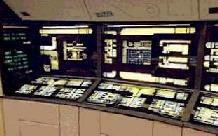
Mission Ops is responsible for assignment of resources and priorities according to guidelines specified by the Operations Manager and by operating protocols. For example, Ops may determine that a particular research project is to have usage of specific sensor elements, subject to priority usage of those same sensors by the bridge. Although the actual minute-to-minute assignment resources will be automatically handled by Ops panel software, Mission Ops will monitor the computer activity to ensure that such computer control does not unduly compromise any mission priorities. This is particularly important during unforeseen situations that may not fall within the parameters of preprogrammed decision-making software.
Mission Ops is responsible for resolving low-level conflicts, but will refer primary mission conflicts to the Operations Manager.
A Mission Ops tech generally serves as relief Operations Manager when the duty Ops Officer is away from station.
OTHER MISSION OPS DUTIES
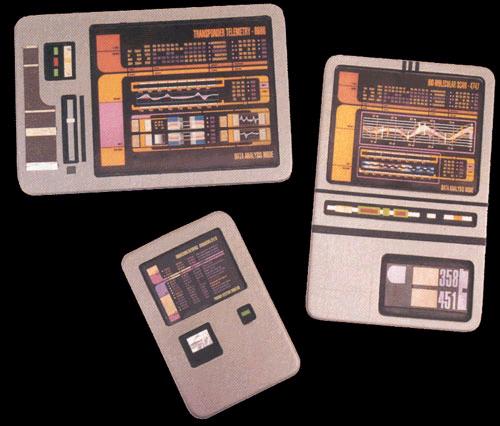
This station is responsible for monitoring telemetry from primary mission Away Teams. This includes tricorder data and any other mission-specific instrumentation.
Mission Ops is also responsible for monitoring the activities of secondary missions to anticipate requirements and possible conflicts. In cases where such conflicts impact on primary missions in progress, Mission Ops is required to notify the Operations Manager.
During Alert and crisis situations, Mission Ops also assists the Security Officer, providing information on Away Teams and secondary mission operations, with emphasis on possible impact on security concerns.
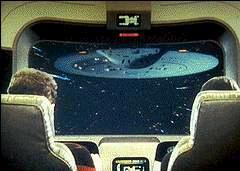
If the ship is at Normal Operations or Yellow Alert, the Battle Bridge OPS station is simply a back-up for overflowing OPS management from the main bridge and Mission OPS terminals. The on duty personnel at this station will handle routine jobs that cannot be handled by the main terminals. Such duties are listed above.
During Red Alerts and Saucer Separations, the Battle Bridge OPS station is much more vital. In the former situation, the station monitors any non-vital system not needed for battle to free the main bridge officer from trivial distractions. In the event of a catastrophe on the bridge, the battle bridge officer takes over the battle duties of OPS and the non-vital systems are transferred to the back-up station in the OPS manager's office.
In a saucer separation, the battle bridge station effectively becomes the Main Bridge OPS station for the star-drive (warp capable) section of the ship. See duties above.

Each shuttle bay has a specific fucntion beyond the launching of regular shuttles. These duties include sensor pallet maintenance, environmental differentials for cargo, and other EVAC duties on the hull of the ship.
All of the shuttle bays have an officer on duty, in charge of that bay. But each must report to the officer on duty in the main shuttle bay who must clear with the Main Bridge OPS Manager.
Excerpts and paraphrases are from Star Trek: The Next Generation Interactive Technical Manual CD-ROM. STAR TREK and © 1995 Paramount Pictures. All Rights reserved. STAR TREK and related properties are trademarks of Paramount Pictures. © 1995 Simon & Schuster Interactive, a division of Simon & Schuster, Inc. No infringement of these rights are intended, and is strictly for personal use, this should not be sold for profit or used on a For-profit website.
