NASHVILLE — Bob Moore, an
architect of the Nashville Sound of
the 1950s and ’60s who played
bass on thousands of popular re-
cordings, including Elvis Pres-
ley’s “Return to Sender” and
Patsy Cline’s “Crazy,” died on
Sept. 22 at a hospital here. He was
88.
His death was confirmed by his
wife, Kittra Bernstein Moore, who
did not cite a cause.
As a mainstay of the loose ag-
gregation of first-call Nashville
session professionals known as
the A-Team, Mr. Moore played on
many of the landmark country
hits of his day, among them
Tammy Wynette’s “Stand By Your
Man,” Loretta Lynn’s “Coal Min-
er’s Daughter” and George
Jones’s “He Stopped Loving Her
Today.”
All were No. 1 country singles,
and each typified the intuitive, un-
cluttered style of playing that
came to characterize the less-is-
more Nashville Sound.
Mr. Moore, who mainly played
the upright bass, also contributed
the swaggering opening figure to
Roger Miller’s “King of the Road”
as well as the indomitable bass
line on Jeannie C. Riley’s skewer-
ing of hypocrisy, “Harper Valley
P.T.A.” Both records were No. 1
country singles and major cross-
over hits, with Ms. Riley’s reach-
ing the top of the pop chart in 1968.
Over 40 years Mr. Moore elevat-
ed the bass in country music from
a subordinate timekeeper to an in-
strument capable of considerable
tonal and emotional reach. By
turns restrained and robust, his
imaginative phrasing revealed a
gift for seizing the dramatic mo-
ment within a recording or ar-
rangement.
“No matter how good a musi-
cian you are technically, what re-
ally matters boils down to your
taste in playing,” he once said. “A
lot of guys can play a hundred
notes a second; some can play one
note, and it makes a lot better
record.”
Mr. Moore’s forceful, empathet-
ic playing extended well beyond
He played bass on
Elvis Presley's 'Return
to Sender' and Patsy
Cline's 'Crazy.'
the precincts of country music to
encompass the likes of Simon &
Garfunkel’s “The Boxer” and
Brook Benton’s “Rainy Night in
Georgia,” among other pop and
soul hits, as well as several nota-
ble rockabilly records.
As session leader at Monument
Records, where he worked in the
late 1950s, Mr. Moore created ar-
rangements for recordings by Roy
Orbison and others, including
“Only the Lonely,” a Top 10 pop
single for Mr. Orbison in 1960. The
record stalled at No. 2 and might
have gone on to occupy the top
spot on the chart were it not for
Brenda Lee’s “I’m Sorry.” Mr.
Moore played bass on that one,
too.
He had a Top 10 pop record of
his own: the Mariachi-flavored in-
strumental “Mexico” (1961), cred-
ited to Bob Moore and His Orches-
tra. (The song was composed by
Boudleaux Bryant, who, with his
wife, Felice, also wrote hits for Mr.
Orbison and the Everly Brothers.)
In 1960 Mr. Moore and some of
his fellow A-Teamers received an
invitation to appear at the New-
port Jazz Festival in Rhode Island.
After a series of violent incidents
in Newport, some set off by an an-
gry crowd of concertgoers who
had been shut out of sold-out
shows, the festival ended prema-
turely and Mr. Moore was unable
to perform, so he and a group
billed as the Nashville All-Stars,
which included the vibraphonist
Gary Burton, recorded an album
of instrumentals called “After the
Riot at Newport.”
“Anyone who has heard me play
bass knows my soul,” Mr. Moore
said, looking back on his career in
a 2002 interview with the website
Art of Slap Bass. “I am studied,
solid, thorough, steadfast, bold
and dependable.”
In 2007, Mr. Moore and his fel-
low A-Team members were in-
ducted into the Musicians Hall of
Fame in Nashville.
His son R. Stevie Moore is also a
musician, having played a pio-
neering role in the lo-fi, or do-it-
yourself, movement popularized
by indie-rock artists like Pave-
ment and Beck.
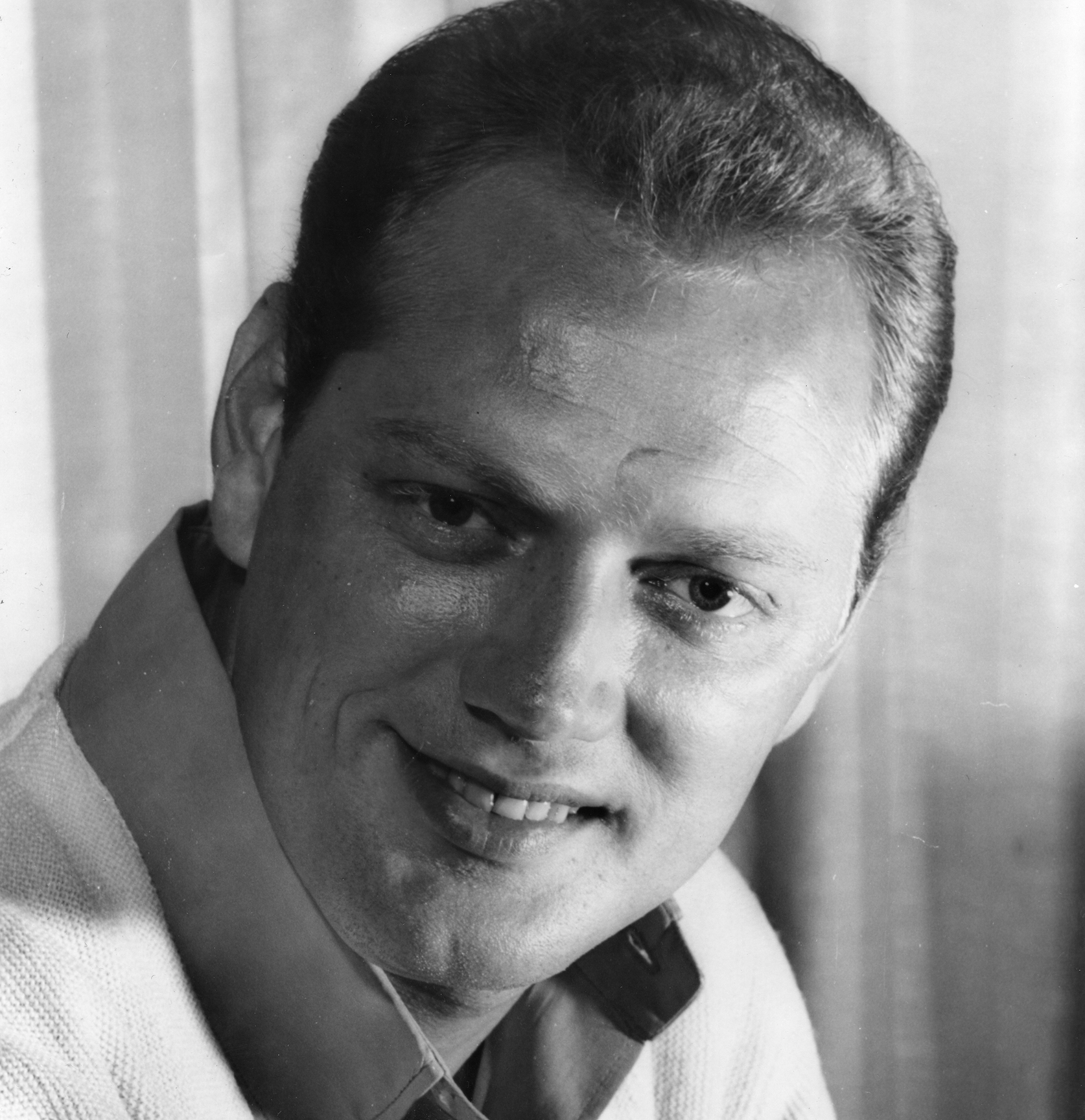
Credit...Bill Forshee
Bobby Loyce Moore was born
on Nov. 30, 1932, in Nashville and
raised by his maternal grand-
mother, Minnie Anderson John-
son, a widow.
When he was 9, Bobby set up a
shoeshine station outside the Ry-
man Auditorium, then home to the
Grand Ole Opry. One of his regular
customers was Jack Drake, the
bass player for Ernest Tubb and
his Texas Troubadours; Mr. Drake
became an early mentor.
Bobby appeared in local bands
before going on tour at age 15 as a
guitarist and stand-up bassist for
the minstrels Jamup and Honey.
Along with the future A-Team gui-
tarists Hank Garland and Grady
Martin, he spent time in the bands
of the Opry stars Paul Howard and
Little Jimmy Dickens before
working with the singers Red Fo-
ley and Marty Robbins.
Mr. Moore’s big break came in
the early 1950s, when the Nash-
ville bandleader Owen Bradley of-
fered him steady employment
with his dance orchestra. Even
more auspicious, Mr. Bradley
promised Mr. Moore, then weary
of touring, steady work on the re-
cording sessions he would soon be
supervising as the newly estab-
lished head of the local office of
Decca Records.
Over the next three decades Mr.
Moore would appear on hits by
Decca luminaries like Kitty Wells
and Conway Twitty as well as oth-
ers, like Jim Reeves and Earl
Scruggs, who recorded for other
labels. He appeared on virtually
all of Patsy Cline’s 1960s record-
ings for Decca, including her hit
“Crazy” in 1961, and much of Pres-
ley’s RCA output of the early to
mid-’60s, including “Return to
Sender,” released in 1962.
(Correction: Ray Siegel is on bass,
a Hollywood soundtrack session.)
As a new generation of session
musicians began supplanting the
original A-Team in the early ’80s,
Mr. Moore pursued other projects,
including a stint with Jerry Lee
Lewis’s band. A hand injury
forced his premature retirement
from performing later that decade.
In addition to his wife and his
son Stevie, Mr. Moore is survived
by a daughter, Linda Faye Moore,
who is also a performing musi-
cian; two other sons, Gary and
Harry; and two granddaughters.
In the early 1950s, when Mr.
Bradley offered him a career as a
studio musician, Mr. Moore dis-
covered a life-changing musical
fellowship as a member of the A-
Team.
“We were like brothers,” he said
in his Art of Slap Bass interview.
“We had great musical chemistry
and communication.” He con-
tinued: “We loved creating our mu-
sic together. We were able to as-
sert our personalities and express
our feelings through our music in
such an effective way that the
public came to recognize our indi-
vidual styles.”


