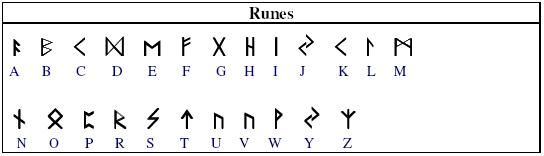
The ancient writing system of the Norse people is one of the earliest
alphabets known to man. It is devided into two sections, the Younger and
Elder Futhark (which is most commonly used today):
Modern
Barddas Runes: First appeared in the Welsh druidic text The
Barddas.
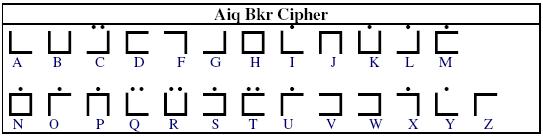
Aiq Bkr Cipher: Invented by Heinrich Cornelius Agrippa von
Nettesheim.
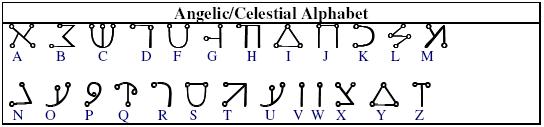
Angelic/Celestial: A script by Heinrich Cornelius Agrippa.
Bobileth: Also known as Boibel-Loth: an ancient Celtic alphabet.
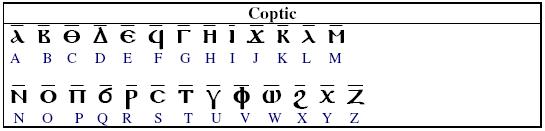
Coptic: A mixture of Greek and Egyptian.
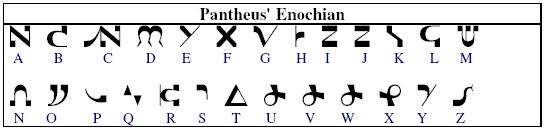
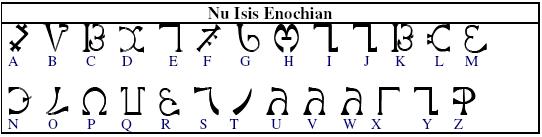
Enochian: This script first appeared in Pantheus' Voarchadumia
and claimed to be the alphabet of the angels. It was later recreated by
the magician John Dee and his assistant Edward Kelly under the title Nu
Isis Enochian.
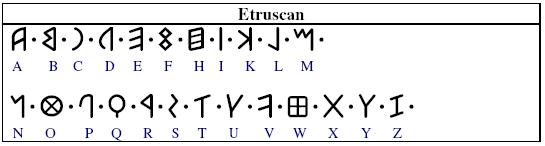
Etruscan: Ancient Etruscan alphabet referred to as the "language
of the witches."
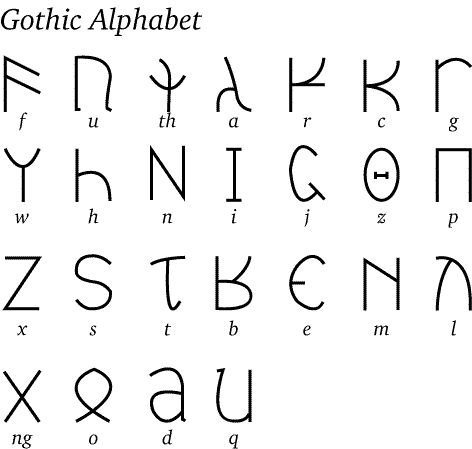
Gothic: Invented in the 4th century AD by Bishop Wulfila as a
mixture of Greek, Latin and Runic letters.
Illuminati Ciphers: Appeared in A History of Secret Societies
by: Akron Daraul
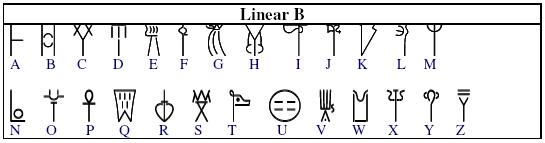
Linear B: Derived from the earlier Linear B Alphabet: the
earliest form of Greek.
Malachim: First appeared in Bartolozzi's Biblioteca Magna
Rabbinica.
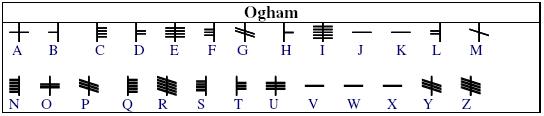
Ogham: Ancient Celtic alphabet associated with trees.
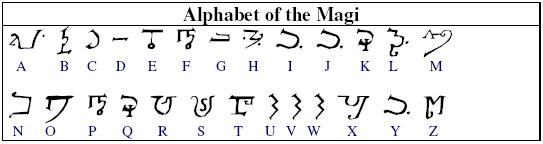
Magi Alphabet: A script by Heinrich Cornelius Agrippa von
Nettesheim.
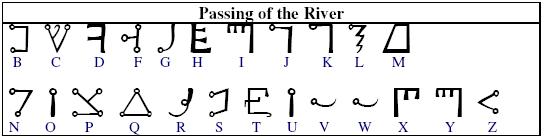
Passing of the River: A script that first appeared in Of
Occult Philosophy III by: Heinrich Cornelius Agrippa von Nettesheim.
Pictish Swirl: Ancient Pictish (Scottish) writing.
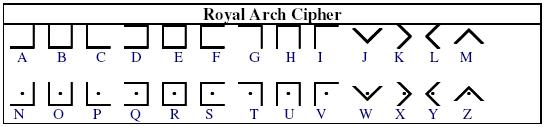
Royal Arch Cipher: The script appeared in the Freemasonry book
Duncan's Masonic Ritual & Monitor by: Malcolm C. Duncan.
Theban: Also called the Witches Alphabet. It first appeared in
the the Sworn Book of Honorios.
Pecti-Wita Runes: Created by a Pictish Wiccan group.








 GraceWatcher's
Earth Mysteries Studies
GraceWatcher's
Earth Mysteries Studies