
A division of the biological family prokaryotes (multicellular organisms without membrane-bound organelles) is the division archaebacteria. They tend to be found in extreme environments where there is usually no free oxygen available. Extreme environments would be like the top of a hot spring. There are three main types of archaebacteria.
The first type is the methane-producing archaebacteria. They live in areas that are free of oxygen. They are found in lake sediments, marshes, and in the digestive tracts of certain mammals.
Next are the salt-loving bacteria. They are only found in water with a high concentration of salt, such as the Great Salt Lake in Utah.
The last type of archaebacteria is known as heat-and acid-loving archaebacteria. They can be found in hot, acidic sulfur springs and around deep ocean vents where the water is usually above 100 C (212 F)

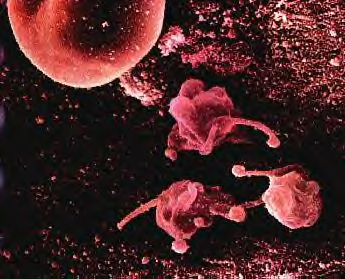
This is a mycoplasma.
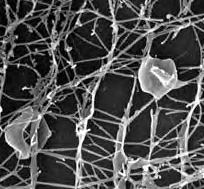
This is a crenarchaeota.

