Watch for a hit
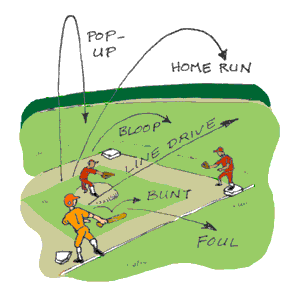
After hitting the ball in bounds, the batter will run to first base, while one of several things is happening:
Scenario One: The ball is caught before it hits the ground, in which case the batter is out and returns to the dugout.
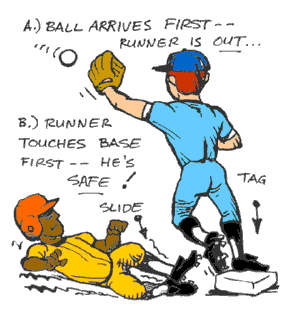
Scenario Two: The ball hits the ground before it's caught, in which case the batter runs to first base. If he is to remain in the game, he must step on first base before the ball is thrown to the first baseman of the fielding team. The first baseman stands with one foot contacting the base, thus "connecting" the ball to the base when it arrives to his glove from his own teammates's throw. (Basically, any time a batter is physically touched by a fielding team player with the ball, or with a glove that's holding the ball, the batter is also out. This is tagging the runner.)
Scenario Three: The ball is hit so high and far away from the fielding team (without being caught) that the batter has the opportunity of running to first base, and then onwards to second (or even third!) base.
Scenario Four: The ball is hit so high and far away that it leaves the confines of the playing field. This is called a home run, and enables the batter to complete the circuit of the bases. On returning to home plate, the batter scores a run for his team.