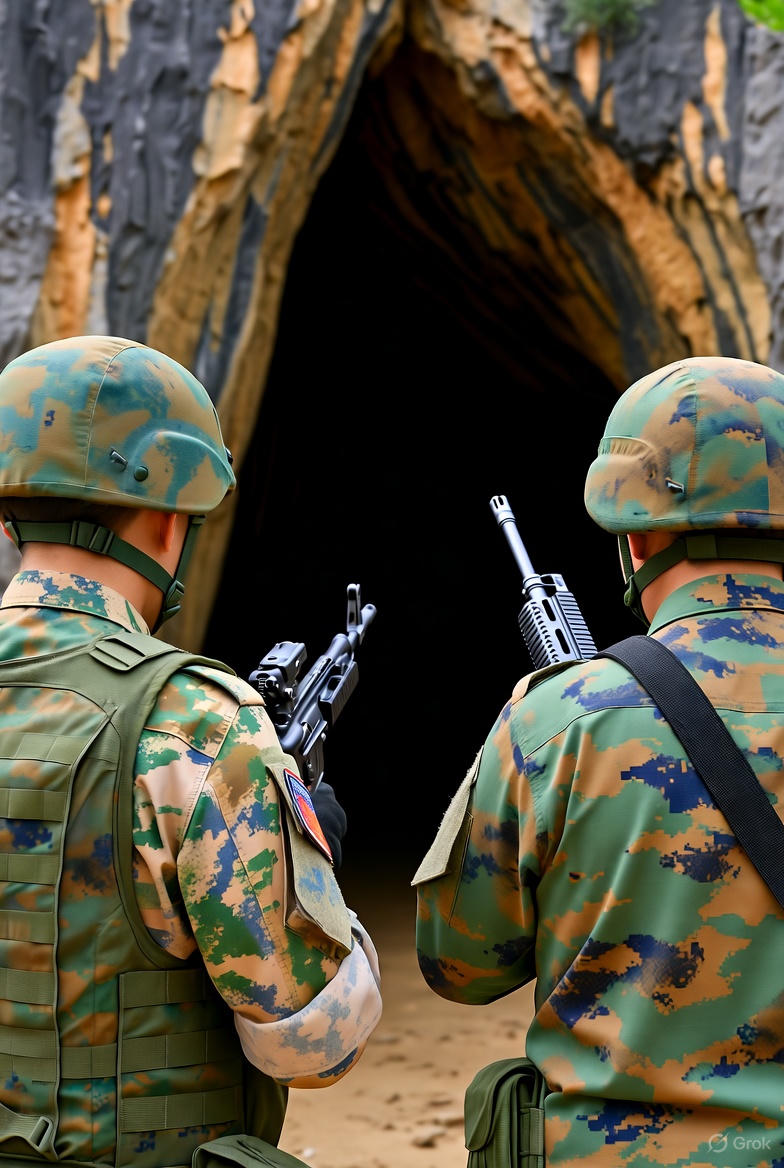
Prologue: Scars of Valor
The desert winds howled across the rugged terrain of Kabul, Afghanistan, in the dead of night on June 15, 2012. Jack Harlan, a thirty-two-year-old Navy SEAL with a reputation for unbreakable resolve, crouched behind the remnants of a mud-brick wall in a dilapidated safehouse. The air was thick with the metallic tang of blood and the acrid smoke from gunfire. His team had been tasked with extracting a high-value Taliban informant from a heavily guarded compound on the city's outskirts. Intelligence reports had painted it as a straightforward op, but reality had a way of twisting plans into nightmares.
"Contact, twelve o'clock!" shouted Petty Officer Ramirez, his voice barely audible over the crackle of AK-47 fire. Jack's MK18 carbine barked in response, sending rounds downrange with precision honed from years of training. The enemy was closing in, their shadows dancing in the muzzle flashes like ghosts in the moonlight. An RPG streaked through the air, slamming into the wall beside them with a deafening explosion. Shrapnel flew, embedding itself in Jack's thigh like hot needles. Pain exploded through his leg, but he gritted his teeth, refusing to let it slow him.
Ramirez wasn't so lucky. A jagged piece of metal tore into his chest, and he slumped against Jack, gasping. "Harlan... get out..." he wheezed, blood bubbling from his lips.
"No man left behind," Jack growled, slinging his rifle and hoisting Ramirez over his shoulder. The weight was crushing, but adrenaline surged through him like fire. He fired one-handed as he retreated, calling in evac over the radio. "Eagle Nest, this is Viper Two. We need immediate extraction! Multiple KIA, heavy fire!"
The team leader, Lieutenant Hayes, covered their flank, but another blast silenced him forever. Jack's world narrowed to a tunnel of survival: dodge, shoot, move. The chopper's rotors thumped in the distance, a lifeline amid the chaos. He reached the landing zone, dropping Ramirez gently as medics swarmed. But it was too late for his friend — the light faded from Ramirez's eyes as the bird lifted off.
Back at base, surgeons removed the shrapnel, but the damage left Jack with a permanent limp. "You're lucky to walk at all," the doc said. The Navy offered honorable discharge, but it felt like failure. Civilian life awaited: a small apartment in San Diego, odd jobs as a security consultant, and a marriage to Sarah that crumbled under the weight of his PTSD. Nights were the worst — sweats, screams, reliving the explosion. Sarah tried, but after he missed their anniversary for a solo dive trip to chase the adrenaline high, she left. "You're still in that war, Jack," her note read. "Come find me when you're home."
The void grew, filled only by extreme pursuits: rock climbing sheer cliffs, diving into abyssal ocean trenches. Anything to feel alive, to outrun the ghosts.
Meanwhile, in the blistering heat of the Syrian desert near Aleppo on September 22, 2012, Mike Torres faced his own crucible. At thirty, a Green Beret expert in unconventional warfare -- and the son of a Hispanic father and a Caucasian mother who gave him his Caucasian looks -- Mike's unit was embedded with local militias fighting ISIS. The patrol was supposed to be routine reconnaissance, but the road harbored death. The Humvee hit an IED, the world flipping in a roar of metal and sand. Mike was buried alive under the wreckage, darkness pressing in, his ribs cracking under the pressure.
Panic clawed at him, but training kicked in. "Breathe shallow," he told himself, the tinnitus starting as a low whine that built to a scream in his ears. He clawed at the sand, fingers bleeding, until light pierced through. Emerging, he pulled Sergeant Wilkins free, then the driver, both dazed but alive. Gunfire erupted — ISIS militants ambushing the survivors. Mike grabbed a rifle from the debris, returning fire with deadly accuracy. "Flank left! Cover the rear!" he commanded, coordinating the counterattack like a conductor in hell.
They held the line until F-16s screamed overhead, bombs turning the enemy positions to craters. Mike's team survived, but the tinnitus became a constant companion, a high-pitched reminder of mortality. Discharge followed, and back in Texas, his family — parents from a small Mexican village, siblings relying on him — welcomed the hero. But the crash that killed his parents when he was twenty had already taught him loss. The Army had been his anchor; now, unmoored, he sought thrills: skydiving from 15,000 feet, off-road racing through canyons.
Paths crossed at a veterans' support group in Austin. Jack shared his Kabul horror over coffee; Mike recounted Syria. "We survived for a reason," Mike said. Friendships formed, adventures shared. A cave dive in Florida's springs bonded them — dark, tight spaces mirroring their traumas but on their terms.
Then came the email from Carlos Mendoza, Mike's old college buddy turned geologist. "Heard you're into extremes," it read. "There's a cave in Mexico's Sierra Madre — La Cueva del Diablo. Locals say it's haunted by ancient monsters. Seven miles uncharted. Up for it?"
Jack's eyes lit. "Our kind of hell."
Mike agreed. "Let's go chase some devils."
Jack Harlan eased the vehicle to a stop, his forty-five-year-old frame shifting with the subtle limp that had become as much a part of him as his hazel eyes or the gray streaks in his short-cropped hair. He was built like a fortress — broad shoulders, thick arms from years of pull-ups and combat drills — but the years had added lines around his eyes, etchings of loss and determination. "This the place?" he asked, scanning the square for threats out of habit.
Mike Torres, forty-two and lean as a whip, hopped out, his dark eyes taking in the scene with a nostalgic smile. Born in El Paso to Mexican immigrants, Mike's fluency in Spanish and cultural ties made him the perfect navigator for this trip. "Yeah, looks like my abuela's old village in Chihuahua. Smell that? Real Mexico, not the tourist crap."
Locals paused their daily rhythms — children kicking a ragged soccer ball, elders sitting in the shade of acacia trees — to eye the two gringos. Whispers spread like wildfire: "Americanos... locos, probably."
They headed to the cantina, a low-slung building with faded murals of Aztec warriors and a sign reading "La Luna Roja." Inside, the air was cool and dim, scented with lime and tequila. Carlos Mendoza sat at a corner table, maps splayed out like battle plans. In his fifties, portly with a beard streaked white, Carlos rose to embrace them. "Amigos! You made the drive. Sit, have a cerveza."
Jack unrolled one map, his finger tracing the contour lines of the Sierra Madre. "Fill us in on this cave."
Carlos sipped his drink, eyes serious. "La Cueva del Diablo — The Devil's Cave. Entrance is two miles up that trail," he pointed out the window to a winding path snaking into the mountains. "It's a karst system, limestone riddled with tunnels. I've mapped the first mile — standard stuff: stalactites, underground rivers. But deeper... things get weird. Magnetic interference jams GPS and compasses after mile three. And the glyphs on the walls — not indigenous. Serpents with human torsos, bull-headed men, squat dwarfs wielding hammers. Looks like something from ancient Greece or Crete, not Mexico. I got chills and turned back."
Mike leaned forward. "And the hauntings? The monsters?"
Carlos glanced around, lowering his voice though the bar was empty. "The Tarahumara people, who've lived here forever, call it a gateway to Xibalba, the Mayan underworld. But the stories mix in other myths — serpent men that seduce and kill, bull-headed guardians that crush intruders, evil dwarfs that forge weapons in volcanic fires. They say the cave is a rift, where old gods were banished. People disappear. Last month, two sisters from the village: Maria Vargas, twenty-eight, a schoolteacher with a fire in her eyes; and Sofia, twenty-six, a nurse who's saved more lives than I can count. Kidnapped in the night by 'shadows from the mountain.' Villagers heard screams, found tracks leading to the cave. A pair of hikers last year went in; one came out raving about 'beasts with red eyes.' Died a week later — official cause heart failure, but whispers say poison or curse."
Jack's jaw set. Kidnappings reminded him of missions where civilians were collateral, lives he couldn't save. "We're equipped for seven miles. What else?"
Carlos shook his head. "Take it serious. The air gets thick, sulfurous. Echoes play tricks. And the locals... they're scared for a reason."
They stocked supplies: water skins from the village well, fresh tortillas and beans from a street vendor who crossed herself as she handed them over. "No vayan a la cueva," she warned. Don't go to the cave.
Back at their rented hut — mud walls, thatched roof, a single bulb swinging from the ceiling — they unpacked gear. Jack laid out his M4 carbine, suppressor attached, cleaning the barrel with meticulous care. "Reminds me of pre-op briefings in Kandahar. Gear check, every time."
Mike inspected grenades and flares. "Yeah, but no CO micromanaging. Just us against whatever's down there."
A flashback hit Jack: his ex-wife Sarah, her blonde hair in a ponytail, packing her bags. "You're not present, Jack. You're always in some hole, chasing death." The divorce had been amicable but final. Now, the cave was a new hole, a chosen one.
Mike had his own ghosts: parents killed in a drunk-driving accident when he was twenty, leaving him to raise younger siblings. The Army had been escape and purpose; now, adventures like this filled the gap. "You think the monsters are real?" he asked, half-joking.
Jack shrugged. "We've seen worse in humans. If they're there, we handle it."
At dusk, Don Emilio knocked. The village elder, seventies with skin like weathered leather and eyes that seemed to hold the mountains' secrets, spoke in halting Spanish. Mike translated. "The cave is not for outsiders. My great-grandfather, a Tarahumara runner, entered to rescue his betrothed from the chaneques — the dwarfs. He saw the horrors: nahuales, shape-shifters that take serpent form; aluxes twisted into bull-men. They guard a rift, where gods from across the seas were banished long ago — perhaps by conquistadors or earlier migrants. They demand blood to keep the seal. Maria and Sofia are for the ritual. If you go, you may close the gate — or open it wider."
Jack met his gaze. "We'll bring them back."
Emilio handed a carved stone serpent, glyphs etched into its scales. "This is from my ancestor. It may protect. Or mark you as foes."
As night fell, stars blanketing the sky, Jack and Mike shared a bottle of tequila on the porch. "Primary: explore the seven miles. Secondary: rescue the women if alive," Jack outlined.
Mike clinked glasses. "And if monsters? Bonus points for heads."
Laughter cut the tension, but sleep was restless, dreams of dark tunnels and red eyes haunting them.
The next morning, villagers watched as they set off, packs laden. A child waved; an elder prayed. The trail climbed, vines tangling, the cave mouth awaiting like a predator's jaw.
"Home sweet home," Mike quipped, adjusting his headlamp.
Jack flicked his on, the beam piercing the darkness. "Stay sharp. Unknown territory."
They stepped in, the light from outside fading quickly to nothing. The first hundred yards were straightforward — a wide passage of limestone, walls slick with moisture, floor uneven with loose gravel. Stalactites hung like icicles, dripping water in a rhythmic plink-plink that echoed like a heartbeat. Mike pulled out his waterproof notepad, sketching the route. "Bearing 210 degrees, slight decline. No branches yet."
At half a mile, they hit the first squeeze — a narrow fissure barely two feet wide. Jack went first, exhaling to compress his chest, pack scraping rock. "Tight as hell," he grunted, elbows raw by the time he emerged. Mike followed, cursing in Spanish as his harness caught.
The chamber beyond was breathtaking — a vast cavern like a natural cathedral, crystals embedded in the walls sparkling under their lights like diamonds in a crown. Formations rose from the floor, stalagmites reaching up in silent worship. "Nature's art gallery," Mike said, awe in his voice.
But beauty masked danger. As they crossed, a swarm of bats erupted from the ceiling, wings battering their faces in a chaotic storm. Jack shielded his eyes, swatting blindly. "Keep moving!" The swarm passed, leaving them breathless but unharmed. "First test," Jack said, checking for bites.
A flashback hit: Afghanistan, a cave hideout during a storm, booby-trapped by Taliban. The explosion that killed Hayes replayed in his mind. He shook it off. "Onward."
Mile two brought a shift — the air warmed, hints of geothermal activity. Vents in the walls hissed steam, the scent of sulfur stronger. Claw marks appeared on the limestone — four parallel grooves, deep and fresh. "What the hell made those?" Jack wondered, tracing one with his gloved finger. "Bear?"
"No bears in these parts," Mike replied. "Something else."
The tunnel sloped downward, leading to more glyphs. Carved with precision, they depicted serpents coiling around humanoid figures, their mouths open in screams; bull-headed men wielding massive clubs; squat dwarfs hammering at anvils with glowing forges. "This isn't pre-Columbian," Mike said, photographing them with his camera. "The style — horns on the bulls, the serpents' scales — it's like Minoan art from Crete. How did that get here?"
Jack pondered. "Ancient migration? Or coincidence. Carlos said the locals mix myths."
They rappelled a fifty-foot drop, ropes secured to natural anchors. Below, the cave widened, an underground stream flowing with a gentle murmur. The water glowed faintly blue — bioluminescent algae illuminating their path. They waded through, knee-deep, the current tugging at their boots. Blind fish darted around their legs, pale and eyeless adaptations to eternal dark.
At mile three, a side chamber branched off. Curiosity drew them in — artifacts scattered: pottery shards painted with similar glyphs, small gold idols of minotaur-like figures, obsidian tools. "A lost civilization," Jack whispered, pocketing a shard for Carlos. "This could be big."
But the air felt heavier, watched. They continued, the tunnel twisting like a serpent. Mike's compass spun erratically. "Magnetic interference kicking in. Switching to dead reckoning."
By mile four, fatigue crept in. They found a dry alcove amid the bones — human skeletons, scattered and gnawed. "Look at this femur," Mike said, holding one up. "Teeth marks — large canines, but spaced like a human's. And recent flesh remnants on that skull."
Jack's hand rested on his M4. "Predators down here. Big ones."
They set camp, chemical light sticks glowing green. Rations shared, they talked to stay alert. "You ever think about settling down?" Mike asked.
Jack stared into the dark. "Tried with Sarah. Didn't stick. You?"
Mike shrugged. "Family's all I have. Siblings are grown now. Maybe after this, find a girl who gets the rush."
Sleep came fitful, dreams of shadows moving just beyond the light.
Mile five dawned with the river — wider, current swift. They inflated the compact raft, paddling across. Waves slammed them, a submerged rock nearly capsizing the craft. Water soaked their gear; they hauled out on the far bank, shivering. "Too close," Jack gasped, checking weapons for moisture.
Flashback for Mike: the IED in Syria, buried alive. "Hate tight spaces," he admitted.
Jack clapped his shoulder. "We're through the worst. Two miles to the heart."
But the scurrying sounds began — faint at first, growing louder.
“Something’s close,” Jack whispered, his voice low but steady. His forty-five-year-old frame tensed, muscles honed from years of combat coiling for action. The scar on his thigh ached, a reminder of Kabul, but he pushed it aside.
Mike nodded, his lean form taut, dark eyes narrowing. “Not rats. Too heavy. Too… coordinated.”
They slowed, boots silent on the damp floor. The tunnel narrowed, forcing them to hunch, their packs scraping stalactites that dripped with a metallic tang. Jack’s beam caught movement — a flicker of red eyes, low to the ground, dozens glinting like embers in the gloom. “Contact,” he hissed, raising his rifle.
The creatures emerged from cracks in the walls like roaches spilling from a nest. Dwarfs, but not human — squat, no taller than four feet, their pale skin stretched tight over bulging muscles, veins visible like twisted cords. Their faces were grotesque: snarling mouths filled with jagged teeth, beards matted with filth and crusted blood, eyes burning with a malevolent red glow that seemed to pulse with their chittering language — a guttural mix of grinding stones and insect-like hisses. They wielded crude obsidian axes, edges gleaming wickedly, and moved with unnerving coordination, fanning out to flank.
“Duergar,” Mike muttered, recalling Norse myths from a college folklore elective. “Or something close.”
Jack’s mind flashed to the glyphs — dwarfs hammering in forges. “Whatever they are, they’re hostile.”
The horde charged, at least thirty strong, axes raised in a silent war cry. Jack and Mike reacted on instinct, their suppressed M4s barking in the confined space. Rounds tore into pale flesh, spraying dark ichor that smelled of rot. Several dwarfs fell, skulls shattered, but others absorbed hits, wounds closing with unnatural speed. “They’re healing!” Jack shouted, switching to single shots, aiming for eyes.
One dwarf leaped at Jack, axe swinging for his throat. He sidestepped, slamming his rifle butt into its skull with a crack that echoed off the walls. The creature crumpled, but another took its place, slashing his leg. Pain flared, blood soaking his cargo pants, reopening the old shrapnel scar. Jack roared, driving his combat knife into the dwarf’s throat, twisting until it gurgled and fell.
Mike covered the flank, firing controlled bursts. “Headshots or nothing!” he yelled, dropping two with precise rounds. A dwarf tackled him, its strength disproportionate to its size. Mike grappled, locking its arm and snapping its neck with a Green Beret technique honed in close-quarters combat. The body slumped, but more came, their axes chipping at his gear.
“Grenades!” Jack called, pulling a frag from his pack. He rolled it toward a cluster; the explosion rocked the tunnel, collapsing a side passage in a shower of rock and dust, burying several dwarfs. Mike lobbed another, the blast deafening, stalactites crashing down. The survivors chittered in panic, retreating into cracks too narrow for pursuit.
The tunnel fell silent, save for their ragged breathing. Bodies littered the floor — grotesque, twisted forms leaking ichor. Jack bandaged his leg, the gash deep but not arterial. “Fuckers are tough,” he gasped, adrenaline fading to ache.
Mike reloaded, checking a bite mark on his arm — shallow, no venom. “Myths come alive. Those glyphs… they’re not just art. They’re history.”
Jack nodded, wiping blood from his knife. “Dwarfs as forgers, slaves to some god. Norse, Greek, or something older. This cave’s a prison — or a gateway.”
Mike pocketed an obsidian axe, its edge unnaturally sharp. “The Tarahumara called it Xibalba. Maybe it’s that, mixed with something foreign. Ancient Greeks crossing oceans? Or a rift to another realm?”
They moved on, wary, every shadow a potential ambush. The tunnel widened, walls etched with more glyphs: dwarfs kneeling to serpent figures, bulls trampling humans. Jack’s flashlight caught a pile of bones — human, fresh, teeth marks matching the dwarfs’. “They’re eating people,” he said, voice grim.
Mike’s face hardened. “Maria and Sofia… we need to move faster.”
A flashback hit Jack: Afghanistan, a village raid where civilians were taken hostage. He’d failed to save them, their screams haunting him. “We’re not losing these women,” he vowed.
The air grew warmer, the hum louder. Mile seven loomed — the heart of the cave.
Jack’s headlamp swept the chamber, his limp more pronounced now, the gash in his leg throbbing. “This is it,” he whispered. “The heart.”
Mike nodded, M4 ready, his arm still stinging from the dwarf’s bite. “Feels like a temple. Or a tomb.”
Then, screams — human, female, raw with terror — echoed from a side passage. Jack’s heart raced; Mike’s grip tightened. They moved as one, silent and swift, following the sound through a narrow tunnel that sloped downward. The walls here were smoother, almost polished, etched with scenes of sacrifice: humans bound, serpents feeding, bulls standing sentinel.
The passage opened into a smaller cavern, lit by a sickly green glow from phosphorescent fungi clinging to the walls. In the center, chained to stalagmites with crude iron manacles, were two women. Maria Vargas, twenty-eight, had long black hair matted with dirt, her dark eyes blazing with defiance despite the bruises on her face. Sofia, twenty-six, her curls disheveled, stood with a posture that screamed resilience, her hands clenched into fists. Both were beautiful, their Hispanic features sharp even in distress, but it was their strength that struck Jack — survivors, not victims.

One lamia, larger than the others, its scales glinting gold, hissed, “Intrudersss… fresh blood for the altar…”
Jack didn’t hesitate. “Engage!” he barked, opening fire. The M4’s suppressed rounds tore into the lead lamia’s chest, but the wounds began to close, scales knitting together. “Eyes!” Jack shouted, adjusting aim. A bullet punched through the creature’s left eye, dropping it in a writhing heap.
Mike targeted a minotaur, firing at its knees to bring it down. The beast roared, charging with horns lowered, hooves shaking the ground. Mike rolled aside, barely dodging a club swing that shattered a stalagmite. “Big fucker!” he yelled, unloading a magazine into its face.
The women shouted in Spanish, their voices cutting through the chaos. “¡Mátalos! Kill them!” Maria yelled, straining against her chains.
The cavern erupted into a battlefield. Dwarfs poured in from side tunnels, their axes flashing. Jack and Mike fought back-to-back, years of training syncing their movements. Jack wrestled a lamia, its tail wrapping around his chest, squeezing like a python. His ribs creaked; he jammed his knife into its throat, hot venom spraying his arm, burning like acid. He gritted his teeth, twisting the blade until the creature went limp.
Mike took a venomous bite to his shoulder, cursing as the pain seared. He fired point-blank into a dwarf’s skull, then lobbed a flare. The red glare blinded the light-sensitive monsters, their hisses turning to shrieks. Jack followed with a grenade, the explosion collapsing a tunnel and burying a cluster of dwarfs.
Maria and Sofia, freed by Jack’s knife cutting their chains, grabbed weapons from fallen foes — Maria a lamia’s curved dagger, Sofia a dwarf’s axe. They fought like warriors, Maria slashing a dwarf’s throat, Sofia cracking a minotaur’s knee with a heavy swing. “For our village!” Sofia screamed, her voice raw.
The tide turned with the leaders. The minotaur king, a beast adorned with human skulls on its horns, charged Jack. He emptied his magazine into its chest, then tackled it, driving his knife into its eye. The creature bellowed, collapsing. Maria faced the lamia queen, her golden scales shimmering. The queen lunged; Maria dodged, plunging her dagger into its heart. The cavern shook with their deaths, the remaining monsters fleeing into the dark.
Panting, Jack checked the women. “You okay?”
Maria’s eyes locked with his, fierce but softening. “Gracias. We thought we were dead.”
Sofia hugged Mike, tears streaming. “You came for us.”
Mike winced, clutching his shoulder. “Couldn’t let the monsters have all the fun.”
They scavenged supplies — water, bandages — and prepared to move. The cavern’s glow dimmed, as if the fungi mourned their masters.
Maria, her teacher’s poise returning, tore strips from her shirt to bind Jack’s leg. “You’re stubborn, americano,” she said, a faint smile breaking through.
Jack grunted, pain mixing with gratitude. “Takes one to know one.”
They moved as a unit, the women between them, Jack and Mike covering front and rear. The tunnel back was treacherous, the floor slick with ichor and water. Maria and Sofia shared their story, their voices steady despite the trauma. “They came at night,” Maria said, her Spanish rapid, Mike translating softly for Jack. “Shadows from the cave — lamiae, silent as snakes. They took us from our home, dragged us here for a ritual. They spoke of ‘feeding the rift,’ keeping their gods asleep with blood.”
Sofia added, “The altar… it’s a seal. The glyphs tell of gods from across the sea — Greek, maybe, banished here long ago. The dwarfs forge offerings, the minotaurs guard, the lamiae sacrifice. We were next.”
Jack’s mind raced, connecting dots. “The glyphs — Greek myths in Mexico. Maybe ancient explorers, or something supernatural. A rift to another realm.”
Mike nodded, clutching the stone serpent talisman from Don Emilio. “This cave’s a prison for something big. We just kicked the hornet’s nest.”
A flashback hit Jack: Kabul, failing to save a family from insurgents. Maria’s hand on his arm grounded him. “You’re here now,” she said, sensing his pain. They talked as they moved, Jack sharing his losses — Ramirez, Sarah, the weight of war. Maria spoke of teaching children in San Isidro, her dream to educate the next generation despite poverty. Her parents died in a flood when she was twenty; she’d raised Sofia since.
Mike and Sofia bonded differently, his humor easing her fear. “You ever jump out of a plane?” he asked, grinning through pain.
Sofia laughed, a rare sound. “No, but I’ve stitched up worse than you in the clinic.”
A dwarf ambush hit at mile five — ten of them, axes gleaming. Jack and Mike fired, dropping half; Maria and Sofia fought with scavenged weapons, their ferocity surprising. The survivors fled. “They’re getting desperate,” Mike said.
At mile four, a lamia struck from a ceiling crevice, its tail lashing Sofia. Mike shot it down, but not before its claws raked his chest. Sofia bandaged him, their eyes meeting — trust forming in the crucible.
They camped in a dry alcove, sharing rations. Jack and Maria sat close, her warmth a contrast to the cave’s chill. “Why do this?” she asked. “Risk your life for strangers?”
Jack hesitated. “Because I couldn’t save others before. This… this I can do.”
Mike and Sofia, nearby, traded stories. Sofia’s parents’ death mirrored Mike’s loss; their laughter over village quirks — gossiping elders, stubborn goats — lightened the dark.
“We move now,” Jack said, voice hoarse but commanding. “This place isn’t done with us.”
Mike nodded, checking his M4’s magazine — half-empty. “Seven miles back. Gonna be a bitch with these wounds.”
Sofia, the nurse, handed Mike a water skin. “Drink. The antivenom’s working, but you need fluids.” Her tone was clinical, but her touch lingered, a spark of connection in the gloom.
Maria met Jack’s gaze, her defiance softening to gratitude. “You didn’t have to come for us.”
Jack managed a grim smile. “Yeah, we did.”
They formed up — Jack leading, Maria and Sofia in the middle, Mike covering the rear. The tunnel back was a maze of twists, the air heavy with sulfur and the metallic tang of blood. Their headlamps cast jittery beams, revealing walls etched with more glyphs: serpents devouring hearts, bulls trampling skulls. The hum of quartz veins persisted, a low throb that set their nerves on edge.
At mile six, the ground shook — a low rumble, like the mountain itself growled. Rocks fell, dust choking the air. “Cave-in!” Jack shouted, shoving Maria forward as a boulder crashed behind them, sealing the passage. The group stumbled into a wider chamber, coughing, their lights cutting through the haze.
“Trapped,” Mike muttered, scanning the blocked path. “We dig or find another way.”
Jack examined the rubble — jagged limestone, some pieces as big as a man. “Digging’s faster. We’ve got tools.” He pulled a collapsible shovel from his pack, handing another to Mike. Maria and Sofia grabbed smaller rocks, working in tandem, their hands quickly raw and bleeding.
Hours passed, muscles screaming, lungs burning with dust. Jack’s leg wound reopened, blood dripping down his boot. Maria noticed, tearing another strip from her shirt to re-bandage it. “You’re a mess, americano,” she said, her voice a mix of worry and admiration.
“Part of the charm,” Jack replied, wincing as she tightened the knot.
A gap appeared in the rubble, just wide enough to crawl through. Jack went first, his broad shoulders scraping, pain flaring with every movement. “Clear!” he called, helping Maria through, then Sofia. Mike followed, his shoulder wound slowing him. The tunnel beyond was intact, but the air felt heavier, as if the cave resented their escape.
Mile five brought a new threat. The scurrying returned — dwarfs, their red eyes glinting from side passages. “Ambush!” Mike yelled as ten of the squat horrors charged, axes raised. Jack fired, dropping two with headshots, but their regeneration made each kill hard-won. Maria slashed with her dagger, severing a dwarf’s arm; Sofia swung her axe, cracking a skull. Mike lobbed a grenade, the blast scattering the horde, but one dwarf lunged, its axe grazing his thigh.
Jack tackled it, knife sinking into its eye. The survivors fled, their chittering fading. “They’re desperate,” Mike panted, bandaging his new wound. “They know we’re leaving.”
Sofia checked his thigh. “No venom, but you’re losing blood. Stay with me.”
Mike grinned through the pain. “Not going anywhere, doc.”
At mile four, the air grew thin, a faint hiss suggesting gas pockets. Shadows moved in their peripheral vision — hallucinations or something worse. Jack saw Sarah’s face, her blue eyes accusing: Why didn’t you save me? He shook it off, but the visions persisted. Mike heard the IED’s whine from Syria, his tinnitus flaring. “You seeing shit too?” he asked Jack.
“Yeah,” Jack admitted. “Keep talking. Keeps us grounded.”
Maria and Sofia took the lead, their voices cutting through the haze. “The village has a festival every spring,” Maria said, her tone steady. “Kids dance, elders sing. You’ll see it when we get out.”
Sofia added, “And the food — tamales, mole. Better than your army rations.”
Jack chuckled. “Deal. You cook, we eat.”
Mile three brought a lamia attack — three serpent men, their scales glinting in the headlamp beams. They struck from a ceiling crevice, tails lashing. One coiled around Sofia, squeezing; Jack shot its eyes, freeing her, but venom sprayed, burning her arm. She screamed but stayed upright, clutching her axe. Mike fired, dropping another, but a claw raked his chest, tearing his vest. Maria drove her dagger into the last lamia’s heart, her face fierce.
Sofia bandaged her arm, teeth gritted. “I’ve stitched worse in the clinic,” she said, though her voice shook.
Jack checked Mike’s chest — shallow cuts, no venom. “You’re too stubborn to die,” he said.
“Says you,” Mike shot back, managing a weak grin.
The river at mile two was swollen, the bioluminescent glow dimmer now, as if the cave was dying. Their raft, damaged from the earlier crossing, leaked badly. They patched it with tape, but the current was fierce, waves slamming them against rocks. Jack rowed, muscles burning, while Maria bailed water with a canteen. Sofia clung to Mike, who was fading from blood loss. A wave nearly capsized them; Jack grabbed Maria’s arm, pulling her back as she slipped. “Not losing you,” he growled, their eyes locking for a moment.
They reached the far bank, drenched and shivering, the raft barely holding. “One mile left,” Mike rasped, his voice weak but determined.
The final stretch was a gauntlet. At mile one, a dwarf horde — twenty strong, frenzied — attacked from a side tunnel. Their chittering was a war cry, axes gleaming. Jack and Mike fired their last magazines, dropping half the pack. Grenades followed, the explosions shaking the tunnel, stalactites crashing. Maria and Sofia fought like furies, their weapons slick with ichor. The survivors fled, but the cave groaned, as if protesting their victory.
The entrance appeared at dusk, a sliver of golden light piercing the dark. They stumbled out, collapsing on the rocky trail. Villagers swarmed, their cheers a tidal wave of relief. Don Emilio, the elder, pushed through, tears streaming down his weathered face. “You closed the gate to hell,” he said, embracing Maria and Sofia. “You brought our daughters back.”
Jack leaned against a boulder, exhausted but alive. Maria sat beside him, her hand brushing his. Mike, supported by Sofia, managed a tired salute to the crowd. The Sierra Madre glowed crimson under the setting sun, a silent witness to their triumph.
Mike Torres, his shoulder and chest wounds cleaned and stitched, lounged nearby, a plate of food balanced on his knee. His lean frame was bruised, but his dark eyes sparkled with the humor that had kept them sane. Maria and Sofia, cleaned up and in fresh clothes, joined them, their beauty undimmed by the ordeal. Maria’s long hair was braided, her eyes bright with gratitude; Sofia’s curls bounced as she laughed at one of Mike’s jokes.
Don Emilio approached, his face a map of wrinkles softened by relief. “Señores, señoritas,” he said, Mike translating, “you have done what no one else could. The cave is silent now. Our people can live without fear.” He handed Jack a woven bracelet, a Tarahumara design of red and black threads. “For courage.”
Jack accepted it, tying it around his wrist. “We couldn’t have done it without Maria and Sofia.”
The women smiled, their strength evident. Maria spoke, her Spanish melodic. “You gave us hope when we had none. This village owes you everything.”
Sofia nudged Mike. “And you owe me a dance at the festival. You promised tamales.”
Mike grinned. “Only if you keep up, doc.”
The days that followed were a blur of healing and connection. Jack and Maria grew close, their walks through the hills becoming a ritual. The Sierra Madre, once ominous, now felt protective, its peaks framing their talks. Maria shared her dream of expanding the village school, teaching children to read and dream beyond the mountains. Jack opened up about his past — Sarah’s departure, the guilt of lost teammates. “I’ve been running from it,” he admitted one evening, the stars bright above. “But here, with you… feels like I can stop.”
Maria touched his hand, her warmth grounding. “You’re not running now. You’re building.”
Mike and Sofia’s bond was lighter, forged in laughter. They spent afternoons in the clinic, Sofia teaching Mike basic medical skills while he regaled her with stories of skydiving mishaps and bar fights in Manila. “You’re trouble,” she teased, stitching a practice bandage on his arm.
“Best kind,” he shot back, winking.
The village held a ceremony to seal the cave. Jack and Mike, with Don Emilio’s blessing, used their remaining dynamite to collapse the entrance, the explosion echoing like a final roar. Dust settled, and the villagers cheered, some weeping. “The devils are buried,” an elder woman said, crossing herself.
A subplot emerged: a young villager, Juan, revealed his grandfather had entered the cave decades ago, leaving a journal. Mike translated it, uncovering tales of a Greek explorer — a Mycenaean warrior, perhaps — shipwrecked in ancient Mexico, bringing myths that merged with local lore. The journal hinted at a rift, a tear in reality where gods like Hephaestus or Echidna were banished, their minions — dwarfs, lamiae, minotaurs — trapped to guard it. “Explains the glyphs,” Mike said, sharing it with Carlos Mendoza, who arrived to study the artifacts they’d salvaged.
Carlos was awestruck. “This could rewrite history. A transatlantic link, pre-Columbian. Or something… supernatural.”
Jack shrugged. “Let the academics fight over it. We know what we saw.”
Weeks turned to months. Jack and Maria’s romance deepened, their plans aligning. She proposed a school expansion; he offered to fund it, using savings from his security work. “A new mission,” he said, kissing her under an acacia tree.
Mike and Sofia, married in a simple village ceremony, opened a clinic extension, training locals in first aid. Mike’s humor made him a favorite; Sofia’s skill saved lives. “You’re stuck with me,” he told her, building a cot for their new home.
Years later, San Isidro thrived. Jack and Maria ran safe adventure tours, guiding tourists through the Sierra’s beauty, never near the sealed cave. Mike and Sofia’s clinic grew, their children — two girls — playing in the square where fear once reigned. The cave’s shadow faded, but the bracelet on Jack’s wrist, the talisman in Mike’s pocket, reminded them: they’d faced the abyss and won.
Happily ever after wasn’t perfect — scars remained, physical and not — but it was enough. The village sang, the mountains stood guard, and four souls, forged in darkness, found light together.
