

"Creating
the Probable Impossibility."
NRN
DESIGN - VFX

Painting on Film.
Creating the Lightsaber-
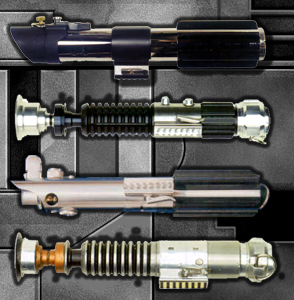
A lightsaber is essentially a metallic handle created with Graflex camera
flash components and other things pieced together
to represent the handle of the weapon, where there is eventually going
to be a blade of solid light. Many techniques were used to try and give
the
effect of a glowing blade on screen. One technique used Scotchlite
material, invented by NASA to add a high level of reflectivity to the steel
rods inserted
into the handles. However, over constant use the reflective tape was
tattered and torn. In the end it was decided to keep the rods, uncovered
inside
the lightsaber hilts and later, use rotoscoping by tracking the rods
on film to digitally composite the glowing effect.
 |
 |
|
|
|
Igniting the Impossible
- Using special work stations, gels of light were projected through backlit
film where the lightsaber blades were then filmed
as transparent. The "white" of the blade is actually the light of the
projector, filmed by an opposing camera during compositing. Gels were proven
at
first not strong enough to produce the intense color spectrum of the
blades, so it was decided that the use of hand cut mattes would be incorperated
then each frame would be hand painted (rotoscoped) to bring out the
intensity of the gels, previous attempt. This produced a stunning illusion
of
blades of pure light stretching and clashing in the epic saga.
 |
 |
|
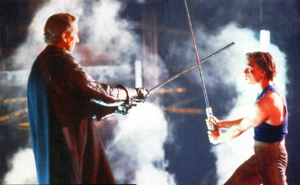
We can see there is no effects added at this point in the process. |
|
 |
 |
|
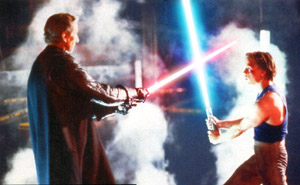
later keyed out to transparency. |
a exciting visual effect, signature to the Star Wars franchise. |
Now lets take a look at this process, in sequential order, as if it were a strip of film.
 Raw Footage.
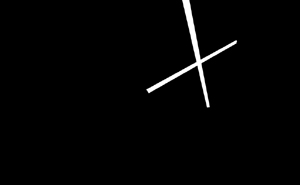
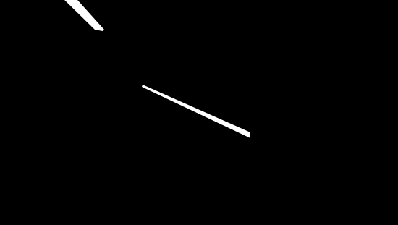 Hand Cut/Drawn
Matte.
Hand Cut/Drawn
Matte.
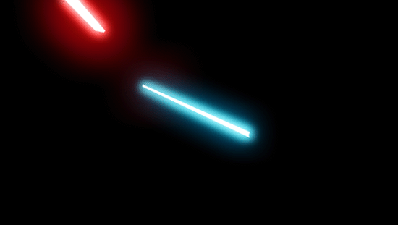 Gel/Airbrushed
Blades.
Gel/Airbrushed
Blades.
 Final
Composite.
Final
Composite.
The final composite of lightsaber rotoscoping as seen in The Empire
Strikes Back here.
Effects Animation.
The effects in Star Wars were not simply lightsaber
blades but the same process shown above was also applied to blaster bolt
effects, starship
blaster fire, and most memorable, Emperor Palpatine's
devastating lightning in Return of the Jedi.


View the final composite of Palpatine's rotoscoped lightning as seen
in Return of the Jedi here.

