
Coral reefs and tide pools are full of undiscovered biomedical resources that have just recently begun to become explored. Reefs and tide pools protect coastal communities from storms, wave damage, and erosion. Their tourist attraction ability is important to the economy. Monitoring of coral reefs and tide pools can identify changes in water quality or impacts from activities on land
Natural
Induced Problems:
Coral
Reefs and tide pools recover quickly from short-term natural catastrophic
events, like hurricanes
and other strong storms
Human
Induced Problems:
However,
long-term stress from agricultural and industrial runoff that includes
human sewage and toxic discharges is harder for coral reefs and tide pools
to recover from. Surface waters from watersheds that discharge into
coastal waters negatively affect coral reef and tide pool communities.
“June 11, 1998, Clinton issued an executive order on coral reef protection "to preserve and protect the biodiversity, health, heritage, and social and economic value of U.S. coral reef ecosystems and the marine environment."
U.S.
Coral Reef Task Force:
The Task Force
researches coral reefs by mapping and monitoring the reefs. They
work to conserve, mitigate, and restore coral reefs through their research
and international cooperation.
International
and U.S. Coral Reef Initiatives:
The
International and Coral Reef Intiatives were formed in 1994.
The initiatives are organizations working together to preserve and protect
coral reefs.
Point
Pinos Tidepool Task Force:
The city
of Pacific Grove decided to establish the public-based organization.
The task force focuses on three important intiatives: "improve public
awareness about tidepool conservation through signage; improve public awareness
about tidepool conservation through on-site volunteer interpreters; and
conduct research to increase the understanding about the role of human
impact in changes that occur in rocky intertidal communities. Research
and education subcommittees were established to help implement the three
initiatives" (http://www.mbnms.nos.noaa.gov/Intro/press_releases/010208.html).
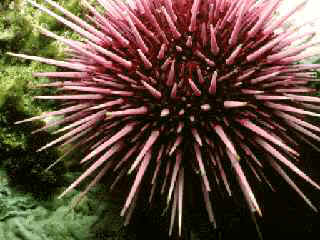
Sea Urchin
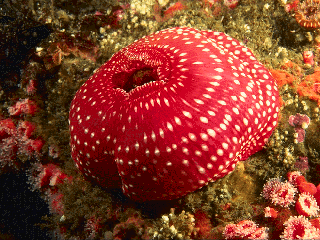
Sea Anenome; both live and survive on coral reefs and tidepools.
