
Acorn Barnacle
Spray zone
Description
Size: usually 3/4" across
Color: whitish to dingy gray
Acorn barnacles have a volcano shaped shell made of 6
plates joined by thinner pieces of shell.
Diet: The barnacle feeds on plankton by opening its shell
and using its feather like "feet" to pull in its food.
Predators: Barnacles are eaten by sea stars and gulls
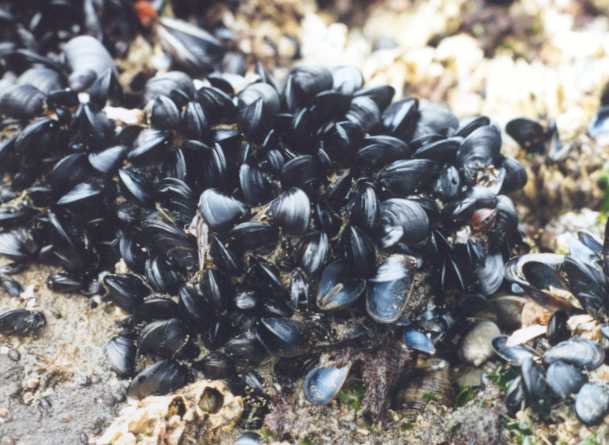
Blue Mussels
High Tide
Diet: The mussel eats by opening the shell to filter out
small particles of organic matter from the sea water.
Predators: Ochre stars, shore birds, crabs, some snails,
and humans eat mussels.
Behavior: Mussels live in clusters on intertidal rocks.
They close their shells tightly while the tide is out to hold in moisture
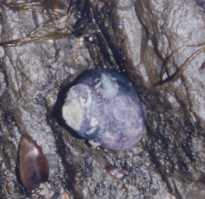
Turban Snail
Mid-tide Range
The turban snail can be found along the entire west coast
of North America.
Diet: Algae Predators, Sea stars, gulls and other shore
birds
Behavior: The turban snail can crawl amazingly fast to
evade predators. If it is on a sloping surface, the snail may use another
method of escape, and release the rock to roll to safety.
Ochre Stars
Low tide
Diet: Ochre stars eat snails, barnacles and other
things. A star grips its prey with its tube feet and pulls open the shell.
Its stomach is inserted from the star's body into the prey, where it digests
the food. The process can take 2 or 3 days.
Predators: Birds and large snails
Behavior: Ochre Stars move by using their tube feet.
These are operated by a water vascular system very similar to the sea urchin's.
Sculpins
Sub Tide
Diet: Small invertebrates
Predators: Large fish, birds
Behavior: If separated far from their home tidepool,
sculpins will find their way back. During the winter, the saddleback sculpin
is more common.
Blue Mussels
A Turban Snail
