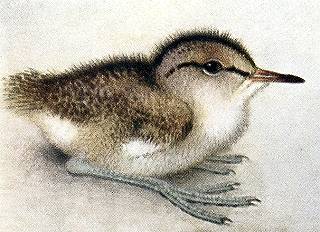
Far away on the Western Coast of Scotland, there was once a fisherman’s cottage near the tiny coastal town of Lochinver. There, on the shores of the Loch, lived a couple and their small son, Colin. Colin was a fast little boy of 5, with dark red hair. His mother couldn’t catch him as the wee scamp ran around the tiny cottage and off to the craggy beach. There, he liked to collect purple mussels shells and to play with the luminescent white pools of jellyfish that puddled in between the sharp, black rocks.
On the beach the sandpipers would scuttle across the sand, making soft cries into the air, while the gulls and terns soared overhead, hunting for fish. Wee Colin pulled down his breeks and jumped into the water to play, as his mother came running up behind him to stop him.
“You’ll catch yer deith!” Mairi, Colin’s mother, cried. “Come back, Colin!”
With regret, Colin returned to his mother. He seemed born to spend his life by the sea, for he loved it so much, loved the smell of the ocean and the sound of the waves.
Years passed, and Colin grew to manhood helping his father, the local fisherman, catch the haddock, mussels, crayfish, and crab that was sold in the local market to Lochinver town. He loved spending days in the small fishing boat with the net at the ready. The call of the sea was his life.
One day, Colin went to Lochinver town to the local pub for a wee pint. There, he saw a young lady with long blonde hair and lovely green eyes, like a living mermaid, or selkie, turned into mortal form. She laughed and talked to the other young ladies with a life and a zest that no other girl had. His eyes could not leave her all evening, and finally, Colin came up to the young lady.
“My name is Colin MacIntyre,” he said to her. “May I ask, who you are, for you have the loveliest smile I’ve ever seen, and the grace of an angel.”
At this the lady blushed pink. “My name is Helen Lingley, and I’m from Boston.” She said. “I came to Scotland for a visit, and I wanted to tour the North a little.”
At this, Colin was sad, though Miss Lingley’s voice was lovely and musical. She was an American, and would likely be leaving soon for America, her home, once more.
“You’re quite handsome, and I thank you for the compliment.” Said Helen. “Could you show me the village tomorrow?” she asked.
“Well, I do have the day’s catch to make, but I may could be free in the afternoon.”
“That sounds fine,” said Miss Lingley.
“How about I’ll meet you at 3 by the church and we can walk around town a wee while?”
“That would be my pleasure. I love the way your voice sounds.” She said with a bonny smile, and took his hand to shake it. “Agreed.”
The next day Colin explained to his father that he had an engagement for the afternoon, and left early to meet up with Miss Lingley.
“Colin, over here!” she called, as she appeared from around the church where she had been standing waiting for him. They strolled about the town of Lochinver, and Colin showed her what he knew, telling her the stories of the locals and of a fisherman’s life, of which there was precious little to relate, mostly only in words of his love of the sea, of which he also spoke poetically. And as they talked and dined that evening, he felt very much that he loved Miss Lingley.
“When will you be leaving?” he asked her late that night, as he was sensing it was time to take his leave of her.
“Tomorrow,” she said, and her voice was sad.
“Can I give you a kiss?” asked Colin. Miss Lingley blushed, and leaned forward a little as he leaned forward to kiss her.
They pulled apart, sad, and quiet. The fisherman talked in the pub all around them, about the sea life, about family, about everything. The sound of the sea birds was in the air, even if only as a distant echo.
“Did I ever tell you the story of the Sandpiper?” asked Colin.
“No, you didn’t,” said Helen. “Is that the name of your boat?”
“No,” laughed Colin, “but a bonny wee bird that plays on the beach. He’s a quick wee one, always find him about the nets when we’re up in the morning. He likes to make a nest out of old twine and driftwood.”
“Sounds charming,” said Helen. “When I was a child in Boston, I used to play with the sea gulls and feed them all the time.”
“Oh the gull, he’s always looking for some food,” said Colin. “Noisy bird, too. But the little sandpiper is my friend.”
“You never got lonely, living all the way out here?” asked Helen.
“Not until now,” replied Colin. “I mean to say that I will be lonely again when you leave. You’ll stay in touch, won't you?” asked Colin.
“Here’s my address in America,” said Helen, passing him a white note that she took out of her purse. “My telephone number’s there, too. Maybe you could come and visit me,” she suggested.
Colin laughed, surprised, and scratched the back of his head. “I wouldn’t know how to begin to go all that way,” he said. But in his heart, he yearned for Helen to stay instead.
“You could stay here, if you ever thought to,” said Colin suddenly. Helen looked hard at him, with a yearning but resolute gaze.
“I’m afraid I can’t. The sea is your life, but I’m not a part of the life here. Taking you to America would not be good for you, and I couldn’t live here, alone, so far from my family.”
“I love you.” Said Colin.
Helen gasped. She blushed again. “I’ll always remember you,” she said.
Two years later, Colin was working on the boat coming into the Lochinver harbour when he saw Helen Lingley standing at the dock.
“I thought you might need a hand.” She offered shyly. He smiled at her.
“Not married?” he asked.
“No,” she said.
“Care to step aboard then, Miss Lingley?” Colin asked with a laugh.
© 2011