Section 11: Lakes of Africa
Lakes of Africa
Section 11: Lakes of Africa
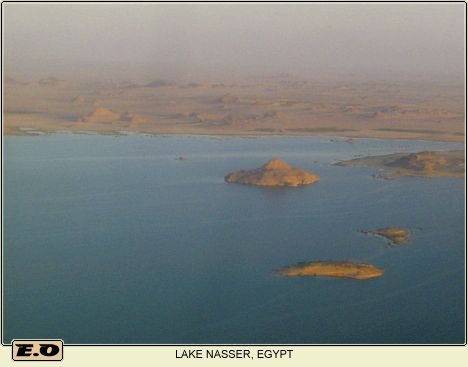
The Aswan dam or Sadd el-Ali, its Egyptian name, is a colossal work and one of most impressive in the world. It is 980 meters thick at the base, 40 meters at the top, 600 meters in length and 111 meters in height. The Aswan Dam created an artificial lake, the Lake Nasser, with 500 km length of which 150 belong to Sudan, over a width going from 10 to 30 km, it is by its capacity of volume of water (157 billion m3) the second largest in the world after that of the Zambezi.

Lake Volta is formed by Aksombe Dam. This is the largest man made lake with a length of 400 km and an area of 8482 sq. km. The purpose of Aksombe Dam is to encourage industry, stimulate agriculture and provide opportunities for fishing, water transportation and power. The Aksombe Dam supplies energy to thousands of people.

Lake Tana is the largest lake in Ethiopia and is also the source of the Blue Nile River which runs into the great Nile River. On Lake Tana are more than 30 islands, 20 of these have historical churches or monasteries on them. Hippos and other wildlife abound in these waters, which draws tourists yearly to its shore.

Lake Turkana was known formerly as Lake Rudolfe. It is in the Rift Valley of East Africa. It is approximately 240 km long and 40 km wide with an average depth of about 35m.
Water flows into it from the Oma River, which provides more than 80% of the water to the lake. The lake has no outlet and lies in an arid area. It is the largest and most northern of the Rift Valley lakes, and covers an area of 7,500 km. The lake itself is surrounded by barren volcanic lava beds with little or no vegetation. Until 2 million yeas ago this great body of water fed from the north by the Oma River in Ethiopia. Today Turkana has no outlets and the water is highly alkaline and barely drinkable. Despite the harsh climate and water, several tribal groups have adjusted to the desert heat.

Where is Lake Victoria?
Lake Victoria is located in Kenya, that is connected to Tanzania and Uganda.
What are some problems that effecting the lake?
The ecological health of Lake Victoria has been affected profoundly as a result of rapidly growing population, clearance of natural vegetation along the shores, a booming fish-expert industry, the disappearance of several fish species native to the lake.
What are the Kenyans trying to do to solve the problem?
They cleared the surrounding natural vegetation denuding the forest and draining swamps to plant crops such as tea, coffee, and sugar.
How did it get its name?
The name came from the great Queen of England.

Lake Tanganyika is a series of lakes and is one of the largest lakes of the East African Rift. This is also the second oldest lake in the world. Lake Tanganyika became a spot of biological evolution during the lengthy and complex geological past. Hundreds of species of vertebras and invertebrates are endemic to the lake. More then 15,000 species have been described from the lake, making it one of the richest lakes in the Earth.
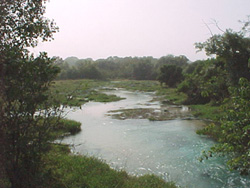
Lake Chad is located in Africa. Fresh water is a resource that we cannot afford to contaminate. It is bordered by four west Africa countries: Nigeria, Niger, Chad, and Cameroon. The lake is now 1/20 the water level it was 35 years ago.

Lake Malowi us a very small lake. It is located in the southeastern part of Africa. Despite the warmth and beauty, Malawi has one of the lowest per capita income levels in the world. The people of Malawi find it extremely difficult to acquire even the basic necessities of life.
One of the biggest problems facing Malawi today is AIDS. The World Health Organization estimates that as many as 30% of the adults are HIV positive.
Children of Malawi are often the innocent victims of AIDS. The nature of the typical African family structure has usually been more then adequate to care for the orphan. But with so many parents dying so suddenly, the extended family system of Malawi has been taxed beyond it’s limit.
Return to homepage

