|
Year |
Event |
Graphics |
|
1795 |
The
first reference to the terms “Yellow Stone” were used by an explorer in the
British Fur Trade, David Thompson, who probably was describing the “Yellow
Rock” which can be found around the canyon walls of the River. |
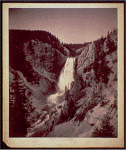
The "Yellow Rock" of the Grand Canyon of the Yellowstone from
which Yellowstone National Park probably received its name
1892 |
|
1808 |
One
of Lewis and Clarks co-expeditioners, John Coiter, who was the first white
man to visit the area. The scenes at Yellowstone were considered to be tall
tales once they were uttered and all who heard had disbelief in such
outrageous landscaping in the mid-west. |

Old Faithful area 1916-1930 |
|
1834 |
Warren Angus Ferris
visited the area and spoke of the thermal features, or geysers, as he
referred to them. At this point the United States had yet to officially
explore the park and through the 1860’s this was still the case due to the
American Civil War. |
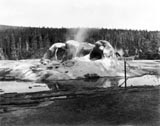
Grotto Geyser 1916-1930 |
|
1865 |
A
Jesuit priest, Father Francis Xavier Kuppens visited the park and shared
with the territories governor Thomas Francis Meagher. Governor Meagher was
the first to make mention of the Yellowstone area becoming preserved as a
national park. |
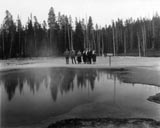
Emerald Pool
1916-1930 |
|
1870 |
Henry D. Washburn, of
the Washburn Party, was credited with the actual discovering of Yellowstone.
One of the members of the Washburn Party was Pitt Langford who was actually
the first Park Superintendent. This expedition was also responsible for the
naming of “Old Faithful” by Washburn himself. |

Old Faithful
1900-1930 |
|
1871 |
United States officially sent out Ferdinand V. Hayden who at the time was
head of the government’s geological survey. Accompanying Hayden was a group
of scientists, including geologists, botanists and zoologists, an artist
Thomas Moran, and a photographer William H. Jackson. The 500-page report
put together by the Hayden Expedition accompanied by the watercolors and
photographs was the proof that was needed to describe the unbelieveable
landscape of the Yellowstone area. The overall result of the expedition was
the push for lobbying to officially designate Yellowstone as a “national
park.” |
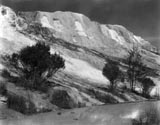
Terrace of calcerous hot spring deposits with terraces and basins 1916-1930 |
|
1872 |
President Ulysses S. Grant officially named Yellowstone as the world’s first
national park. “The 2.2 million acres of wilderness was set aside for ‘the
benefit and enjoyment of the people’.” |
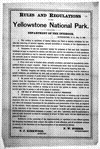
Posted
Rules and Regulations
1881 |
|
1883 |
The
National Hotel at Mammoth Hot Springs was built so as to allow for more
people to visit the park. This was a terrible misallocation of money
because it lost money consistently and was soon out of commission. |
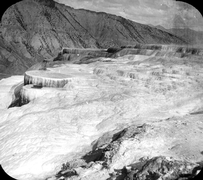
Terraces at Mammoth Hot Springs
1891-1936 |
|
1886 |
The
Lake Hotel at Yellowstone Lake and the Fountain Hotel near Old Faithful were
built. |

Lake Hotel
1898 |
|
1894 |
The
Lacey Act was passed by Congress as an order to protect all wildlife in the
park from poaching and hunting with the exception of coyotes and wolves.
|
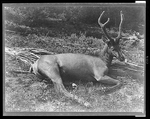
Elk
1871 |
|
1895 |
There was an official count of all the visitors to the park and it totaled
5,438 people. |
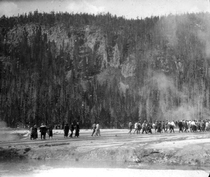
Visitors from the University of Chicago
1891-1936 |
|
1902 |
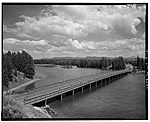
The
Fishing Bridge was built in 1902 which was later officially named “The
Fishing Bridge” in 1914. |
Fishing Bridge
1968 |
|
1903 |
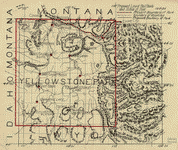
The park was serviced by
the railroads. |
Proposed railroads and hotels
early 1900's |
|
1904 |
The
Old Faithful Inn was built from Park materials. |

Old Faithful Inn
1904 |
|
1911 |
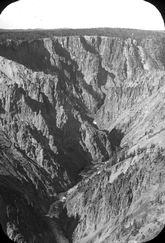
The
Canyon Hotel was completed in 1911 at the rim of the Canyon. |
Probable view from Canyon Hotel |
|
1912 |
National Geographic Magazine did a feature story to draw in more visitors to
the park and recommended a 5 ½ days stay to enjoy the park. |

Visitors posing in Hell's Kitchen
1891-1936 |
|
1915 |
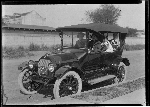
The
fate of the Park would be changed dramatically when the first automobile, a
Model T Ford passed through the gates of the park. |
Model T Ford |
|
1916 |
President Woodrow Wilson put the National Park Service into commission. |
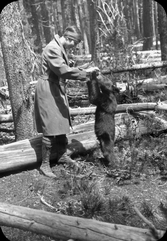
Woman feeding bear cub
Shows the need for a National Park Service |
|
1917 |
There were nearly 5000 automobiles entering the park during the summer
season. |
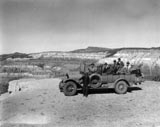
President Harding and cabinet members touring
1923 |
|
1927 |
Telephone exchanges were installed in the Park. |
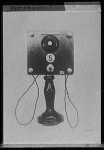
Telephone
1915-1925 |
|
1929 |
Both the east and northwest areas of the park were enlarged. |
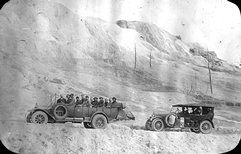
Botany Field Trip in 1923 |
|
1932 |
A
winter grazing area was opened near the north entrance of the park. |
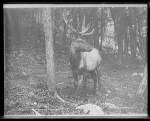
Elk at Tower Falls 1907 |
|
1951 |
It
was estimated that the traffic traveling through Yellowstone added $19
million to the area. |
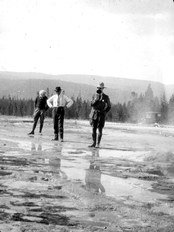
Visitors standing near thermal pool 1891-1936
|
|
1950’s |
The
Canyon Village was set up for visitors. And Park officials
first began to control the populations in the park. They decided that there
were too many elk in the park and began a plan to reduce their numbers. |
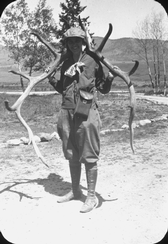
Student with elk antlers
1891-1936 |
|
1967 |
The
Park Service takes on a “natural management” policy in regards to
Yellowstone’s wildlife. |
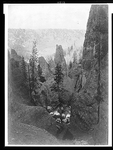
Volcanic breccia near Tower Falls 1871 |
|
1970’s |
The
park was thought of less as a playground and more as an “ecological
treasure.” |
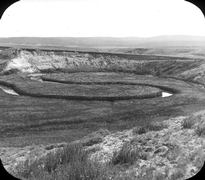
Meandering creek
1891-1936 |
|
1974 |
Fishing is prohibited from Fishing Bridge to protect spawning cutthroat
trout. |
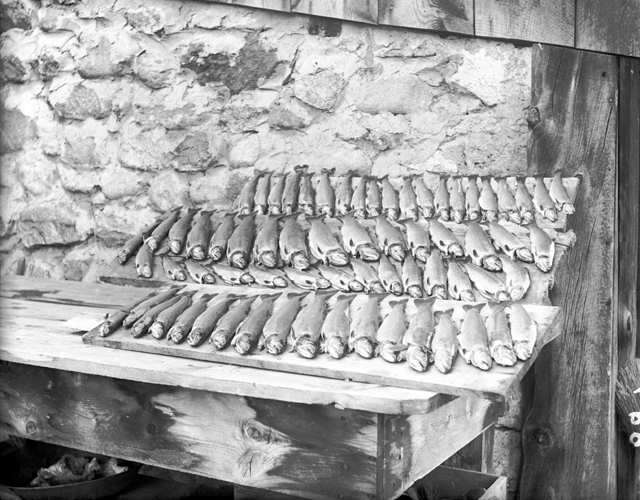
Large catch of trout
1899-1904 |
|
1976 |
Yellowstone was named a Biosphere Reserve. |

View of a Yellowstone Lake
1891-1936 |
|
1978 |
Declared a World Heritage Site. |
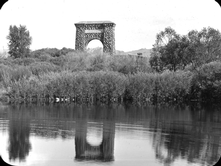
Gardner entrance to Yellowstone from Montana
1891-1936 |
|
1988 |
The
worst fire in Yellowstone History occurred which burned 1.4 million acres in
5 months in spite of the use of 25,000 firefighters and $120 million
dollars. |
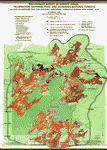
Survey of 1988 Fires of Yellowstone |
|
1995 |
Wolves were reintroduced into Yellowstone at the same time it was considered
a “World Heritage Site in Danger.” |
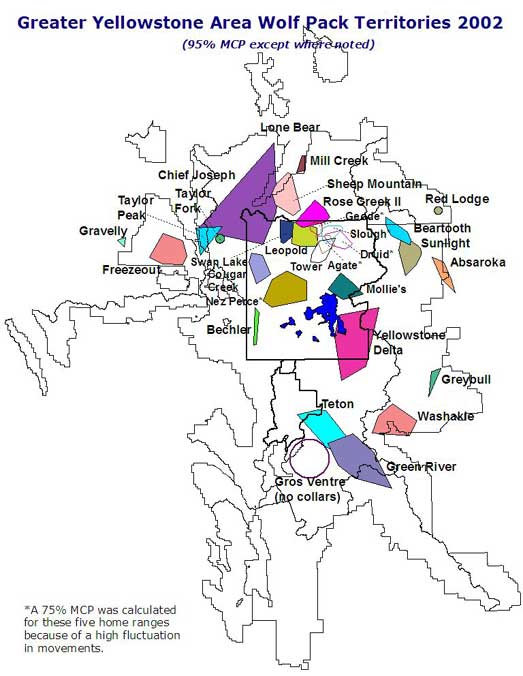
1995 reintroduced wolves pack growth by 2002 |
|
1997 |
1,100 bison were killed due to a brucellosis outbreak in the population. |
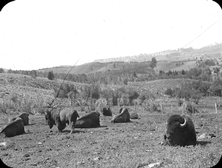
Bison held in a coral 1891-1936 |
Graphics courtesy of the American Memory
Collection from the Library of Congress.

