
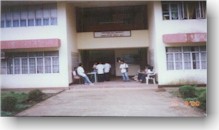
Pangasinan State University College of Agriculture
San Carlos City Campus : It's Capsule History
Pursuant to presidential Decree No. 1497, dated 11 June 1979, issued by His Excellency, President Ferdinand E. Marcos, the Pangasinan State University was born. The institution was conceived in the concept of the umbrella system, thus all college level courses of the state owned college within their province of Pangasinan were integrated into the university system.
One of the component colleges which came into fruition by virtue of the decree is the PANGASINAN STATE UNIVERSITY COLLEGE OF AGRICULTURE, San Carlos City (Pangasinan) which was originally the college department of the Speaker Eugenio Perez National and Agricultural School (SEPNAS).
The Pangasinan State University College of Agriculture, San Carlos City campus is presently offering the two year General Education (GEN. EDUC.) course which is a preparation in the pursuit of a baccalaureate degree with specialization and the four year Agricultural Teacher Education (BSAED) course leading to the degree of Bachelor of Science in Agricultural Education, major in either crop Science or Animal Science.
Presently the institution is related to the main administration at Lingayen, Pangasinan. It is headed by an able and resourceful College Dean with the support of seventeen administrative facilitative staff and thirty members of the faculty who are all seriously engaged in the prosecution of their sworn duties and responsibilities by giving the students the best service and in imparting knowledge and skills to turn out citizen workers who will be assets in their respective communities.
The future looks bright for this college because of the excellent opportunities. With the continued upgrading of its staffs competencies and expertise, the bolstering of facilities and the putting up of more edifices and projects that will enhance the acquisition of theoretical and practical know how by the student population coupled with the "Earn while you earn" scheme, the PSU College of Agriculture, San Carlos City campus stands four square in its mission as an ideal center of student training, research and extension. The University is leaving no stone unturned in its venture of expansion and extension as a major chunk of its budget is earmarked for buildings, facilities and extension sites.
No doubt will the College succeed in its pledge of proliferating the best it could give its constituents and clientele to carve a niche in the field to transfer of technology, instruction, research and extension and such other agriculturally related endeavors because a good cause will never fail-it will always triumph in the end.
